基于分子分型的老年难治性胶质母细胞瘤的大分割与常规分割放疗效果对比
2021-09-07张玺炜吴学勇高洪元许莉
张玺炜 吴学勇 高洪元 许莉

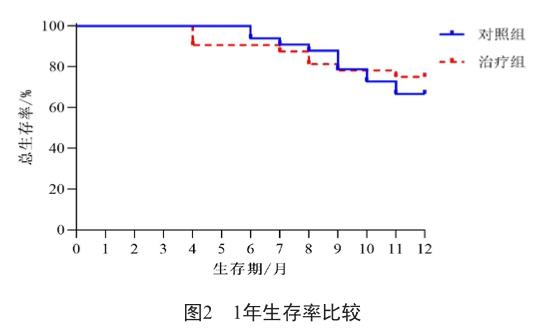
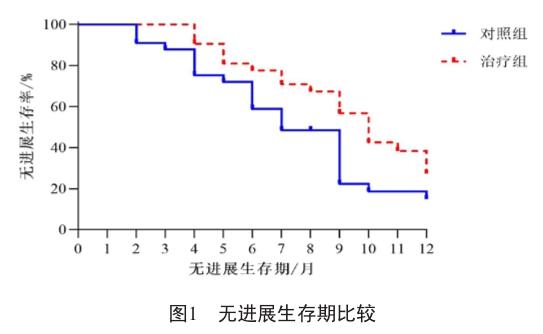
摘 要 目的:在基于分子分型的O6-甲基鸟嘌呤DNA甲基转移酶(O6-methylguanine-DNA methyltransferase, MGMT)基因启动子未甲基化的老年难治性胶质母细胞瘤(glioblastoma, GBM)术后患者中比较短程大分割放疗联合同步替莫唑胺化疗与标准常规分割放疗联合同步替莫唑胺化疗的效果。方法:选择MGMT基因启动子未甲基化的新诊断的老年幕上GBM术后患者65例,随机分为对照组(进行标准放疗联合替莫唑胺化疗)和治疗组(进行短程大分割放疗联合替莫唑胺化疗)。比较2组患者的无进展生存期、1年生存率和治疗相关不良反应。结果:治疗组患者的中位无进展生存期显著长于对照组患者(分别为8.6和6.9个月, P<0.05),但1年生存率无显著差异(分别为75.0%和66.7%, P>0.05)。2组患者均未出现≥3级的急性毒性反应,骨髓抑制、消化道癥状和疲乏的发生率也均相当。结论:MGMT基因启动子未甲基化的老年GBM患者对放疗和替莫唑胺化疗均不敏感。对这类患者,短程大分割放疗联合替莫唑胺化疗能获得较标准放疗联合替莫唑胺化疗更优的效果,且不良反应未显著增加,具有进一步研究的价值。
关键词 难治性胶质母细胞瘤 替莫唑胺 大分割放疗 老年
中图分类号:R739.41; R730.55 文献标志码:B 文章编号:1006-1533(2021)15-0024-04
Comparison of the effects of hypofractionated radiotherapy and conventional fractionated radiotherapy in elderly with refractory glioblastoma based on molecular typing
ZHANG Xiwei, WU Xueyong, GAO Hongyuan, XU Li
(Department of Oncology, Jingan District Central Hospital, Shanghai 200040, China)
ABSTRACT Objective: To compare the effects of the short-course hypofractionated radiotherapy combined with synchronous temozolomide (TMZ) chemotherapy and standard conventional fractionated radiotherapy combined with synchronous TMZ chemotherapy in elderly patients with refractory glioblastoma (GBM) based on molecular typing, to whom the promoter of a gene coding for O6-methylguanine-DNA methyltransferase (MGMT) was not methylated. Methods: Sixtyfive elderly patients with newly diagnosed supratentorial GBM without methylation on MGMT gene promoter were randomly divided into two groups, and the control group was treated with standard radiotherapy combined with TMZ chemotherapy and the treatment group was treated with short-course hyperfractionated radiotherapy combined with TMZ chemotherapy. The progression-free survival, the one-year survival rate and the related adverse reactions were compared between the two groups. Results: The median progression-free survival was 8.6 months in the treatment group and 6.9 months in the control group(P<0.05). The one-year survival rate was 75.0% in the treatment group and 66.7% in the control group (P>0.05). The acute toxicity of grade 3 or higher was not found in either group. There were no statistically significant differences in the incidence of bone marrow suppression, gastrointestinal discomfort and fatigue between the two groups. Conclusion: For the elderly patients with GBM who are not sensitive to TMZ chemotherapy and radiotherapy, the short-course hypofractionated radiotherapy combined with TMZ chemotherapy may achieve better effect than standard radiotherapy and chemotherapy, and the adverse reactions have not been significantly increased, which is worthy of further study.
KEY WORDS refractory glioblastoma; temozolomide; hypofractionated radiotherapy; elderly
胶质母细胞瘤(glioblastoma, GBM)是最常见的颅内原发性恶性肿瘤,占高级别胶质瘤的85%以上,恶性程度高,患者生存期短。老年人的GBM发病率呈上升趋势,占比已>50%,新诊断为GBM的患者的中位年龄是64岁[1]。
手术、放疗和替莫唑胺化疗是老年GBM患者的主要治疗手段。老年GBM多起病隐匿且发展快,患者常出现明显的偏身感觉障碍、偏瘫、共济失调等神经系统定位症状和精神、智力障碍。老……