泸州市医学新生牙龈出血现状及影响因素分析
2020-04-22舒春霞陈强杨娟罗祥王瑶
舒春霞 陈强 杨娟 罗祥 王瑶
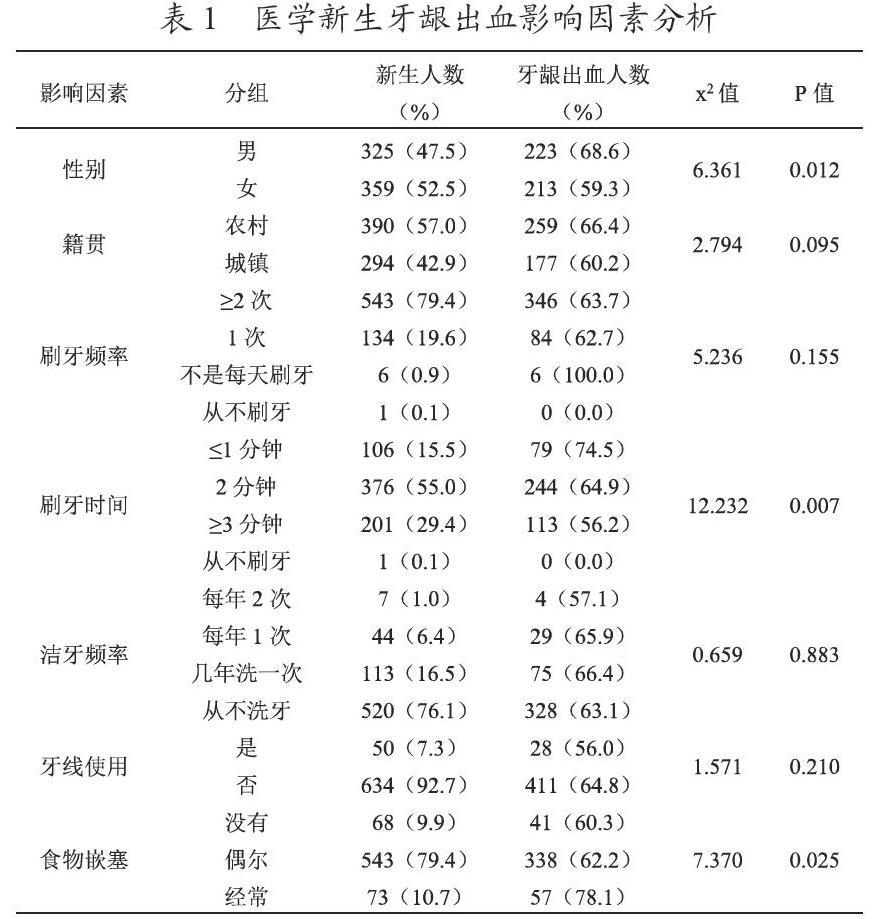
摘 要 目的 通过分析泸州市医学新生口腔健康行为对牙龈出血的影响,促进早期牙周疾病防治。方法 采用整群随机抽样的方法对西南医科大学713名医学新生进行问卷调查,采用检验进行分析。结果 医学新生牙龈出血总体发生率为63.7%;其中男生牙龈出血发生率为68.6%,女生为59.3%,差异有统计学意义(=6.361,P<0.05);刷牙时间≤1分钟/次者牙龈出血发生率(74.5%)高于≥3分钟/次者(56.2%)(=12.232,P<0.01);经常发生食物嵌塞者牙龈出血发生率(78.1%)高于未发生食物嵌塞者(60.3%)(=7.370,P<0.05)。定期洁牙率为7.5%,牙线使用率为7.3%。结论 医学新生牙龈出血发生率较高,口腔健康行为欠佳,应加强医学生口腔预防保健以及口腔健康教育,提高定期洁牙率和牙线使用率。
关键词 医学新生 牙龈出血 口腔健康行为 问卷调查
中图分类号:R781.4 文献标识码:A DOI:10.16400/j.cnki.kjdks.2020.01.055
Abstract Objective To promote the prevention of early periodontitis by analyzing the effects of oral health behaviors of medical freshmen in Luzhou on gingival bleeding. Methods: A self-report questionnaire was used to investigate the condition of gingival bleeding and oral health behaviors of medical freshmen. Chi-square test was used. Results the overall incidence of gingival bleeding was 63.7%. The incidence of boys (68.6%) was higher than that of girls (59.3%)(=6.361, P<0.05). The incidence of those whose brushing time was less than 1 minute/time (74.5%), higher than those whose brushing time was more than 3 minutes/time (56.2%) (=12.232, P<0.0)1. The incidence of those with frequent food contamination (78.1%) were higher than those without food contamination (60.3%)(=7.370, P<0.05). Conclusion The incidence of gingival bleeding is high in medical freshmen, and the oral health behaviors are poor. Oral prophylaxis and hygiene and oral health education should be strengthened, and the rate of regular dental cleanings and floss utilization should be improved.
Keywords medical freshmen; gingival bleeding; oral health behaviors; questionnaire survey
牙齦出血是牙龈炎症的表现之一,常见于牙龈炎和牙周炎,[1]已被用于指示牙龈炎性病变的存在,并且被认为是早期牙龈病变的最敏感指标。[2,3]若牙龈出血最终发展为牙周炎,则可能导致拔牙。[4]第四次全国口腔健康流行病学调查[5]结果显示,各个年龄组牙龈出血发生率均处于较高水平,但是本次调查忽视了大学生人群。医学生作为大学生人群中特殊的一部分,具备专业医疗知识,其对口腔健康的认知与行为不仅会影响自身健康,还会随着日后的医疗工作在改善口腔公共卫生工作方面发挥关键作用,对全民口腔健康有着重要意义。[6,7]本次调查通过了解医学新生牙龈出血现况,分析性别、籍贯、刷牙频率、刷牙时间、洁牙频率、牙线使用以及食物嵌塞对川渝地区医学新生牙龈出血的影响,为有针对性开展医学生早期牙周疾病防治工作提供参考。
1 资料和方法
1.1 研究对象
西南医科大学2018级713名新生。调查对象知情同意,均自愿参加本次调查。
1.2 方法