基于改进YOLOv5的海珍品目标检测算法
2021-04-04马志强
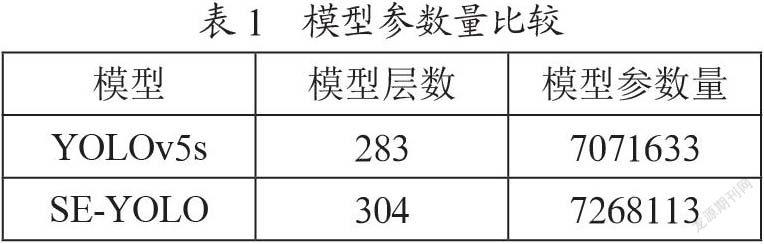

摘 要:为掌握水下海珍品分布情况,本文结合YOLOv5s算法和注意力机制,得到一种新的轻量化目标检测模型——SE-YOLO模型。实验结果显示,相较于原YOLOv5s模型,该模型的准确率提升了1.1%、召回率提升了0.7%,并且在设计对比实验的过程中,发现传统图像增强算法并不具备提升目标检测准确度的可能。由此可见,本文提出的改进模型符合轻量化模型标准并兼具检测准确度高的优点,能够很好地完成对水下海珍品资源评估的任务。
关键词:深度学习;海珍品检测;YOLOv5
中图分类号:TP391.4 文献标识码:A 文章编号:2096-4706(2021)18-0080-06
Abstract: In order to master the distribution of underwater treasures, a new lightweight target detection model, SE-YOLO model, is obtained by combining YOLOv5s algorithm and attention mechanism. The experimental results show that compared with the original YOLOv5s model, the accuracy of the model is increased by 1.1% and the recall rate is increased by 0.7%. And in the process of designing the comparison experiment, it is found that the traditional image enhancement algorithm does not have the possibility to improve the accuracy of the target detection. It can be seen that the improved model proposed in this paper conforms to the lightweight model standard and has the advantages of high detection accuracy, and can well complete the task of evaluating underwater treasure resources.
Keywords: deep learning; sea treasure detection; YOLOv5
0 引 言
海珍品具有很高的營养价值和经济价值,有效获取海珍品具有重要意义。在获取海珍品的过程中,需要掌握海珍品的分布范围以及对海珍品进行资源评估。这些任务需要耗费大量的人力和物力。近些年来,深度学习[1,2]发展迅速,诞生了基于CNN(Convolutional Neural Networks)的目标检测算法[3-7]。目标检测算法能够定位图像中的目标,并且能够做到将目标分类。为此,目标检测算法在渔业与农业方面拥有广泛的发展前景[8-14]。使用目标检测算法对海珍品进行检测,能够有效地减少人力成本和时间成本。袁利毫等[15]使用YOLOv3算法对水下机器人采集的图片进行训练,实现对水下小目标的识别与检测。赵德安等[16]通过在投饵船上安装摄像头,使用YOLOv3对水下河蟹进行识别与检测。Cai Kewei[17]等使用YOLOv3算法实现对红鳍东方鲀的精确识别与计数。然而,为了准确地掌握水下海珍品的分布情况以及对海珍品进行资源评估,需要设计开发出检测精度更高、检测速度更快的目标检测模型。……