黑龙江省基本养老保险对居民消费变动影响的研究
2020-09-02褚文杰祖培福倪妍
褚文杰 祖培福 倪妍
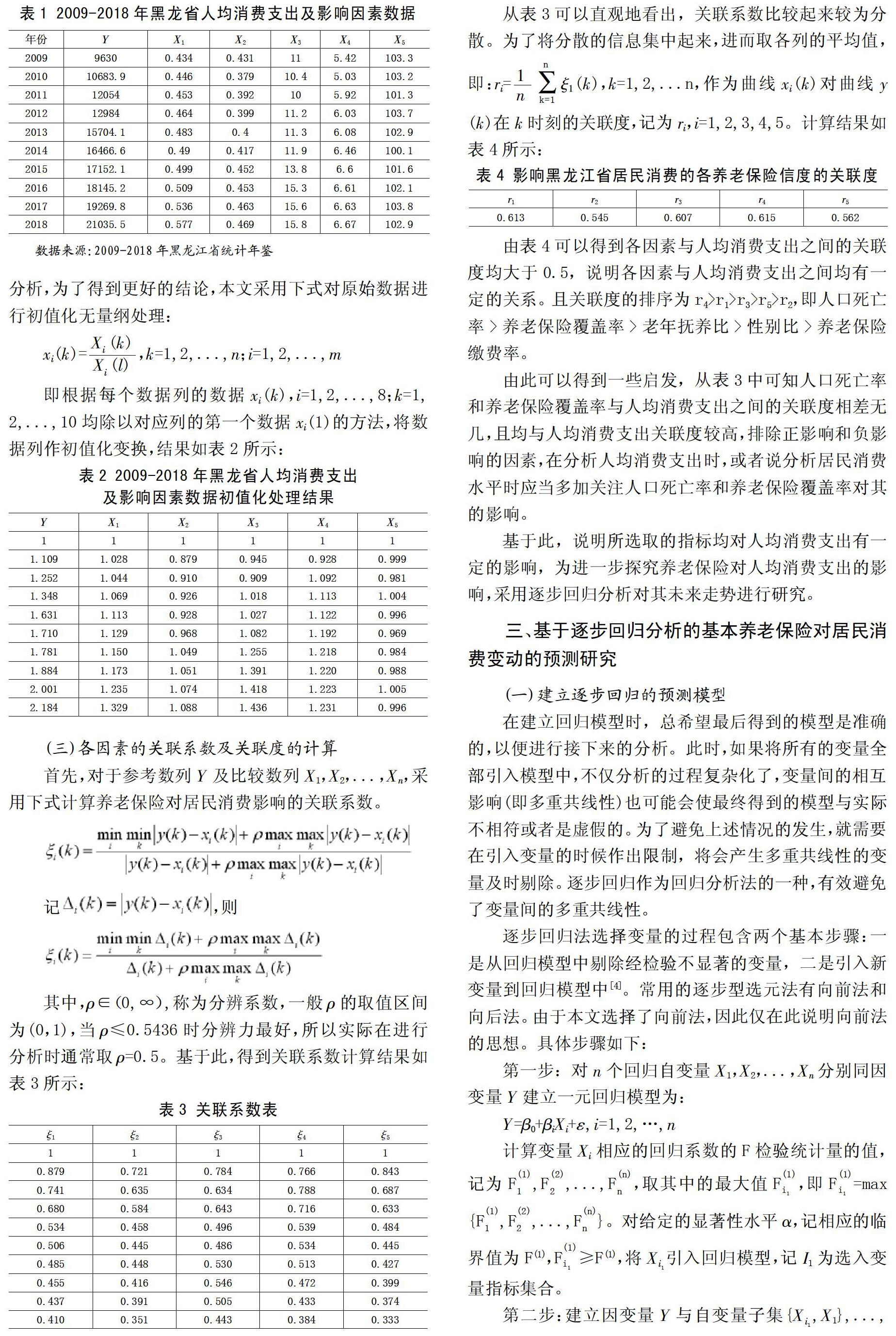
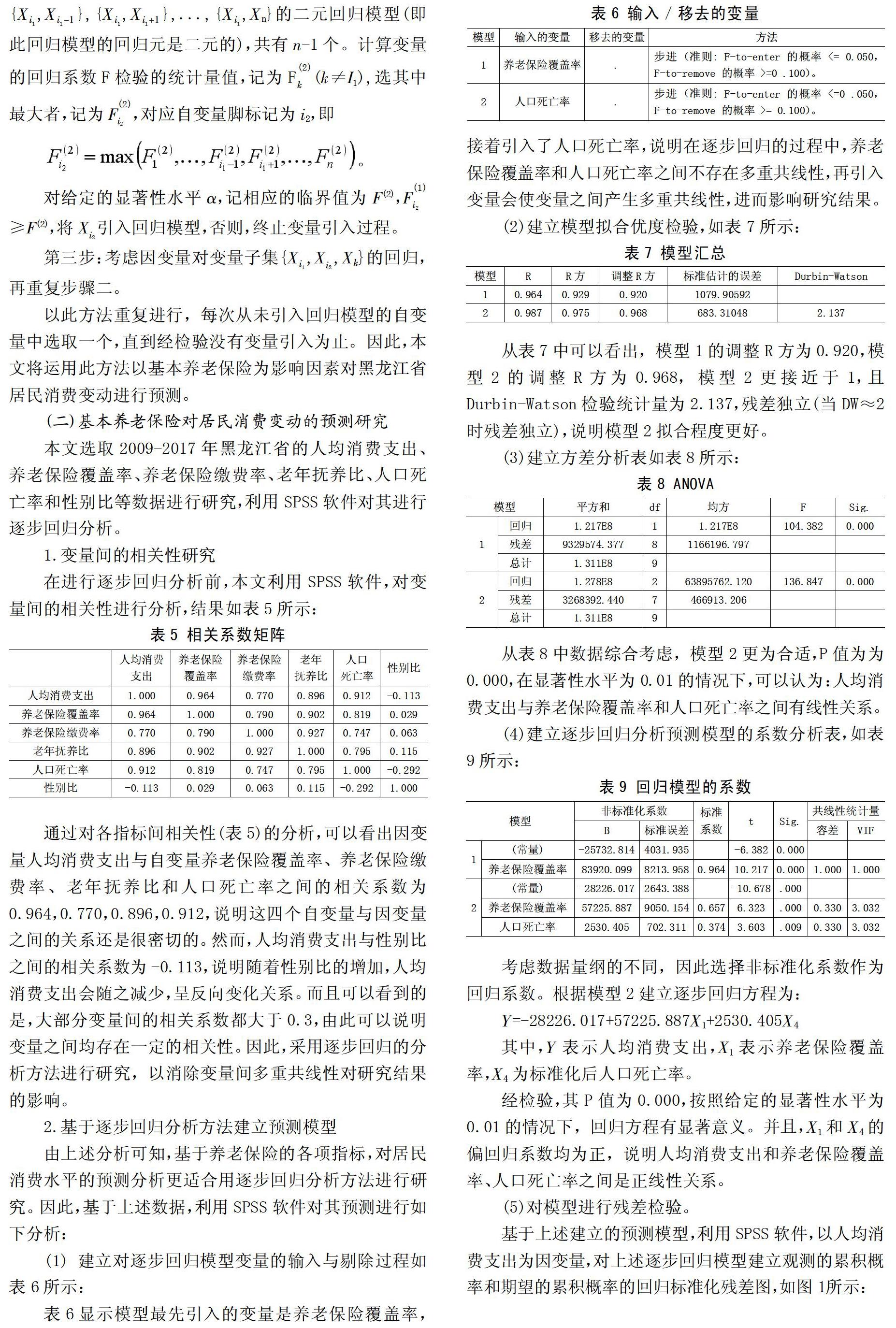
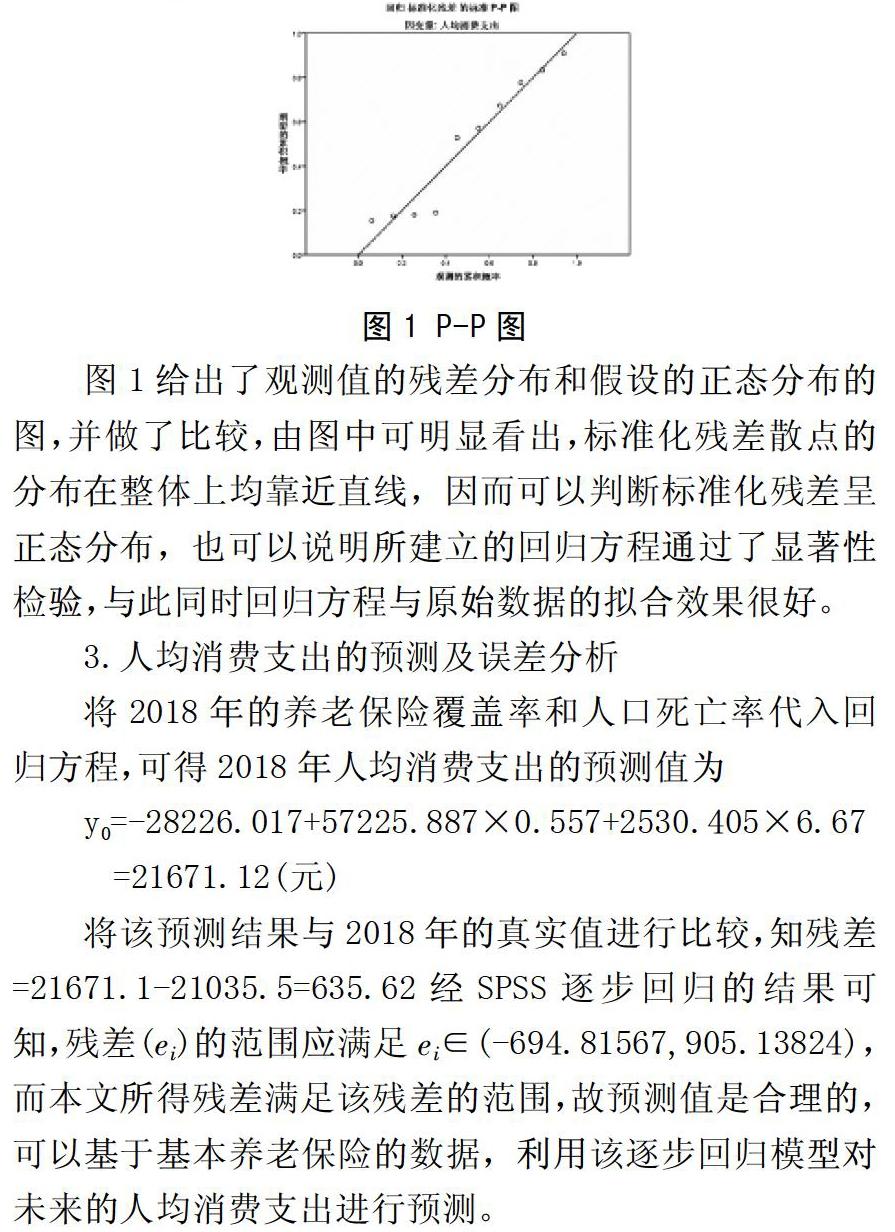
[摘 要] 基于黑龙江省2009-2018年的数据,通过灰色关联分析将影响居民消费水平的城镇人均消费支出、养老保险覆盖率、养老保险缴费率、老年抚养比、人口死亡率和性别比六个基本养老保险指标进行排序,进而利用逐步回归分析建立二者之间的回归模型,并对模型进行了误差分析。研究结果表明,基本养老保险水平的提高对居民消费水平有着促进作用。
[关键词] 基本养老保险;居民消费水平;灰色关联分析;逐步回归分析
[中图分类号] O29[文献标识码] A[文章编号] 1009-6043(2020)07-0006-03
Abstract: Based on the data of Heilongjiang Province from 2009 to 2018, through the grey correlation analysis, this paper sorts out the six basic endowment insurance indicators, namely, urban per capita consumption expenditure, endowment insurance coverage rate, endowment insurance payment rate, elderly dependency ratio, population mortality rate and gender ratio, and then establishes a regression model between them by using stepwise regression analysis, and carries out a model error analysis. The results show that the improvement of basic endowment insurance level can promote the consumption level of residents.
Key words: basic endowment insurance, consumption level of residents, grey correlation analysis, stepwise regression analysis
一、引言
一直以来,养老保险制度是否能夠刺激消费动力的增长是学术研究的焦点。学术界认为,健全的养老保险制度对于降低居民的储蓄和增加居民消费有明显的促进作用。王绿荫等(2018)利用中国31个省城镇居民家庭的宏观面板数据研究得出:城镇居民人均养老保险支出每增加1%,城镇居民人均消费性支出增加0.585%[1]。Gormley T等(2010)也指出:如果不存在养老保险制度,那么理性消费者将会增加现期储蓄,从而减少消费[2]。
就我国人口结构而言,我国已经迈入了老龄化社会,为了能够使老年人的基本生活得到保障,拥有稳定可靠的生活来源,养老保险制度显得愈发重要。然而,养老保险制度从最初的“现收现付”模式发展到社会统筹与个人账户相结合的“部分累积制”模式,其制度本身的改变与社会经济发展是息息相关的,而社会经济发展又是与居民消费密不可分的,在一定程度上养老保险会引起居民消费水平的波动。……