油炸过程中淡水小龙虾理化性质与品质变化
2021-10-12李新汪兰乔宇石柳吴文锦丁安子熊光权
李新 汪兰 乔宇 石柳 吴文锦 丁安子 熊光权

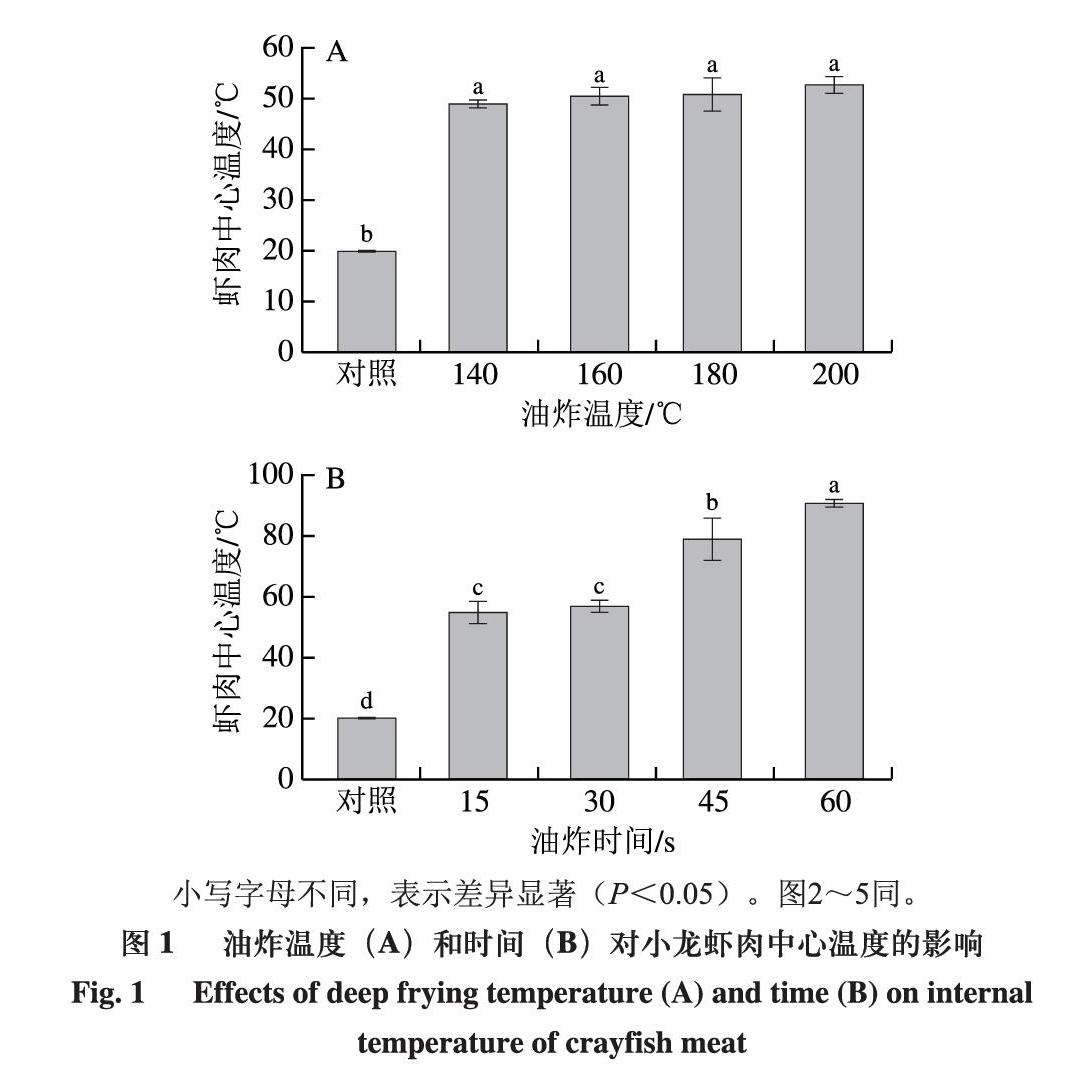
摘 要:研究分析油炸工艺(油炸温度(140、160、180、200 ℃)和油炸时间(15、30、45、60 s))對淡水小龙虾(虾壳、虾肉、虾黄)理化性质及品质的影响。测定淡水小龙虾中心温度、油炸损失率、色泽、质构特性、挥发性盐基氮(total volatile basic nitrogen,TVB-N)含量、硫代巴比妥酸反应物(thiobarbituric acid reactive substances,TBARs)值以及菌落总数(total plate count,TPC)的变化。结果表明:油炸温度对虾肉中心温度影响不显著,而油炸时间对虾肉中心温度影响显著(P<0.05);油炸温度180 ℃、油炸45 s时,虾肉中心温度可达到肌肉熟制标准温度;随着油炸温度升高及油炸时间延长,小龙虾油炸损失率显著上升(P<0.05);虾壳、虾肉、虾黄亮度值、红度值均呈上升趋势,而黄度值呈下降趋势;虾肉硬度、回复性、弹性、黏性、咀嚼性均显著增加
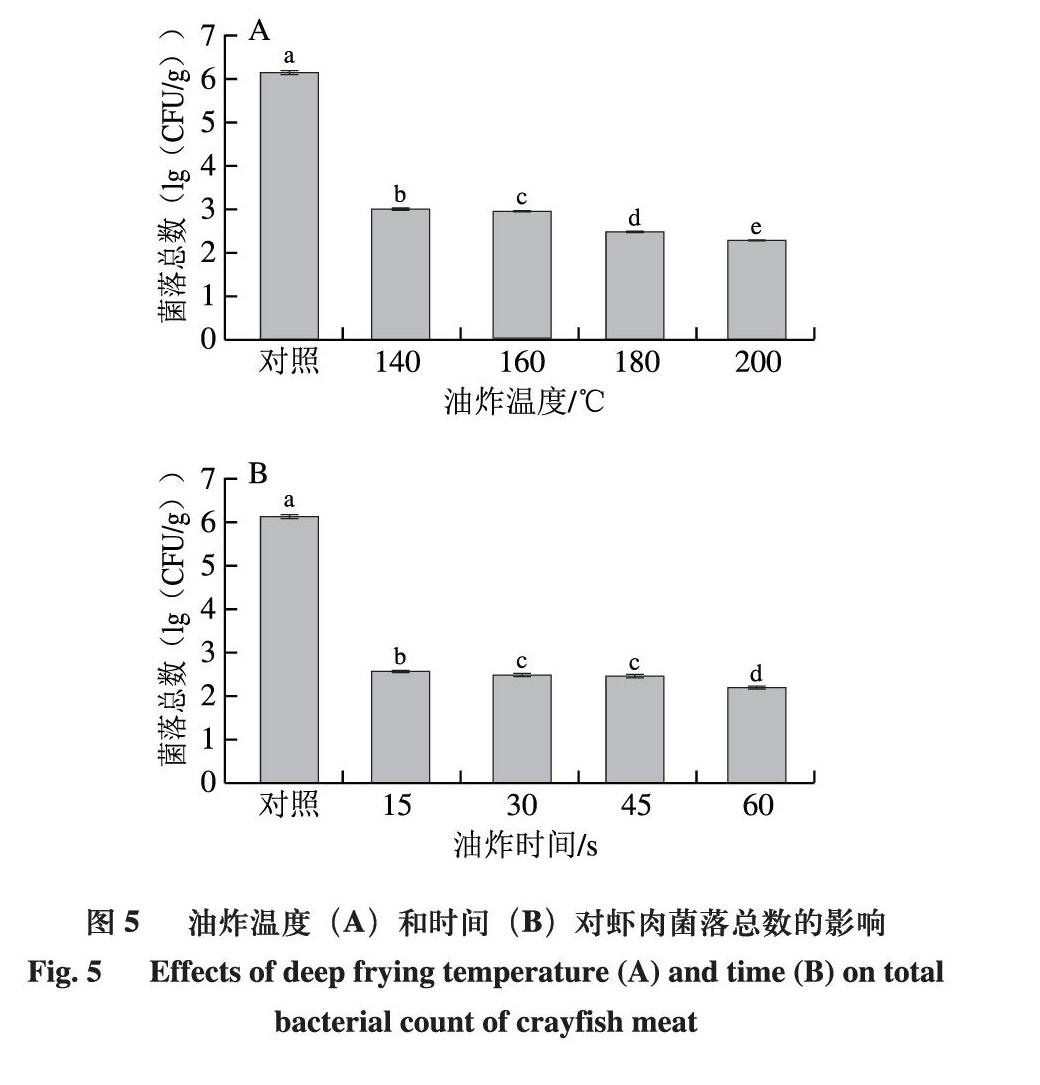
(P<0.05);油炸过程中,虾肉TVB-N含量显著增加(P<0.05),但均低于10 mg/100 g,表明虾肉油炸后保持较好的新鲜度;虾肉TBARs值随油炸温度升高、油炸时间延长而增加,其中油炸时间对TBARs值影响较明显;新鲜虾肉初始带菌量非常高,油炸处理后虾肉TPC显著降低(P<0.05),油炸时间对虾肉TPC影响不明显。
关键词:小龙虾;油炸;理化性质;品质
Changes in Physicochemical Properties and Quality Attributes of Freshwater Crayfish during Deep-Fat Frying
LI Xin, WANG Lan, QIAO Yu, SHI Liu, WU Wenjin, DING Anzi, XIONG Guangquan*
(Hubei Innovation Center of Agricultural Science and Technology, Institute of Agro-Products Processing and Nuclear-Agricultural Technology, Hubei Academy of Agricultural Sciences, Wuhan 430064, China)
Abstract: The effects of deep-fat frying at different oil temperatures (140, 160, 180 and 200 ℃) and for different durations (15, 30, 45 and 60 s) on the physicochemical properties and quality attributes of different parts of freshwater crayfish (shell, meat and gonad) were studied. The changes in the internal temperature, frying loss rate, color texture characteristics, total volatile basic nitrogen (TVB-N) content, thiobarbituric acid reactive substances (TBARs) value and total plate count (TPC) of crayfish were monitored. The results showed that frying oil temperature had no obvious effects on the internal temperature of crayfish meat, while deep frying time had a significant effect on it. After being deep-fried for 45 s at 180 ℃, the internal temperature of crayfish meat reached the standard temperature for muscle cooking. The frying loss rate increased significantly with increasing oil temperature and frying time (P < 0.05). The L* and a* values of crayfish shell, meat and gonad showed an increasing trend, while the opposite trend was observed for the b* value. The hardness, resilience, elasticity, viscosity and chewiness of crayfish meat increased significantly (P < 0.05). The TVB-N content of crayfish meat increased significantly with deep-frying time, finally reaching a level lower than 10 mg/100 g, indicating that the freshness of crayfish meat was maintained well after deep frying. The TBA value of crayfish meat increased with oil temperature and deep frying time, with the latter having more obvious effect on it. The TPC of fresh crayfish meat was very high, which decreased significantly after deep-frying treatment (P < 0.05), but deep-frying time had no significant effect on it.
Keywords: freshwater crayfish; deep-fat frying; physicochemical properties; quality attributes
DOI:10.7506/rlyj1001-8123-20210430-122
中图分类号:TS254.4 文献标志码:A 文章编号:1001-8123(2021)09-0001-06
引文格式:
李新, 汪兰, 乔宇, 等. 油炸过程中淡水小龙虾理化性质与品质变化[J]. 肉类研究, 2021, 35(9): 1-6. DOI:10.7506/rlyj1001-8123-20210430-122. http://www.rlyj.net.cn
LI Xin, WANG Lan, QIAO Yu, et al. Changes in physicochemical properties and quality attributes of freshwater crayfish during deep-fat frying[J]. Meat Research, 2021, 35(9): 1-6. DOI:10.7506/rlyj1001-8123-20210430-122. http://www.rlyj.net.cn
淡水小龙虾(Procambarus clarkii)是我国重要的淡水水产品资源,2019年总产量达208.96 万t,经济总产值达4 110 亿元[1]。小龙虾鲜活销售量占总产量的65%~70%,在加工保鲜方面,冷冻虾尾、虾仁、调味虾产量约占加工品总产量的70%以上[2-3]。近年来,受到中美贸易战以及“新型冠状病毒肺炎”疫情的影响,小龙虾冷冻加工制品出口受到打压与限制。因此有必要针对国内市场,开发小龙虾调理食品,应对出口受阻带来的影响,从而促进小龙虾产业可持续发展。
调理小龙虾是一种新型水产调理制品,小龙虾经油炸熟制后与调味、香辛料液一起浸泡或煮制,其主要特点是方便即食、风味浓郁,深受广大消费者的喜爱。油炸工艺是调理小龙虾加工关键步骤,主要起到熟制、塑形、呈色与增香作用,同时可以有效地去除腥味物质[4-6]。油炸工艺是一种传统的食品烹饪加工方式,油炸过程中食品的物化特性与感官品质发生改变,如食品脱水、油水交换、食品组分高温分解或聚合、风味物质形成等[7-8]。……