基于卷积神经网络的麦穗目标检测算法研究
2021-09-06王宇歌,张涌,黄林雄,赵奉奎
王宇歌,张涌,黄林雄,赵奉奎
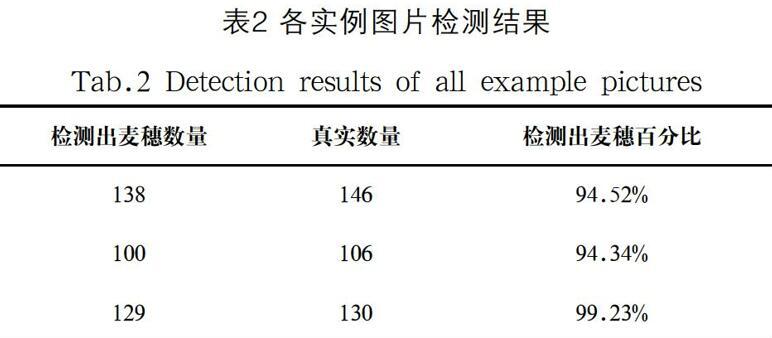
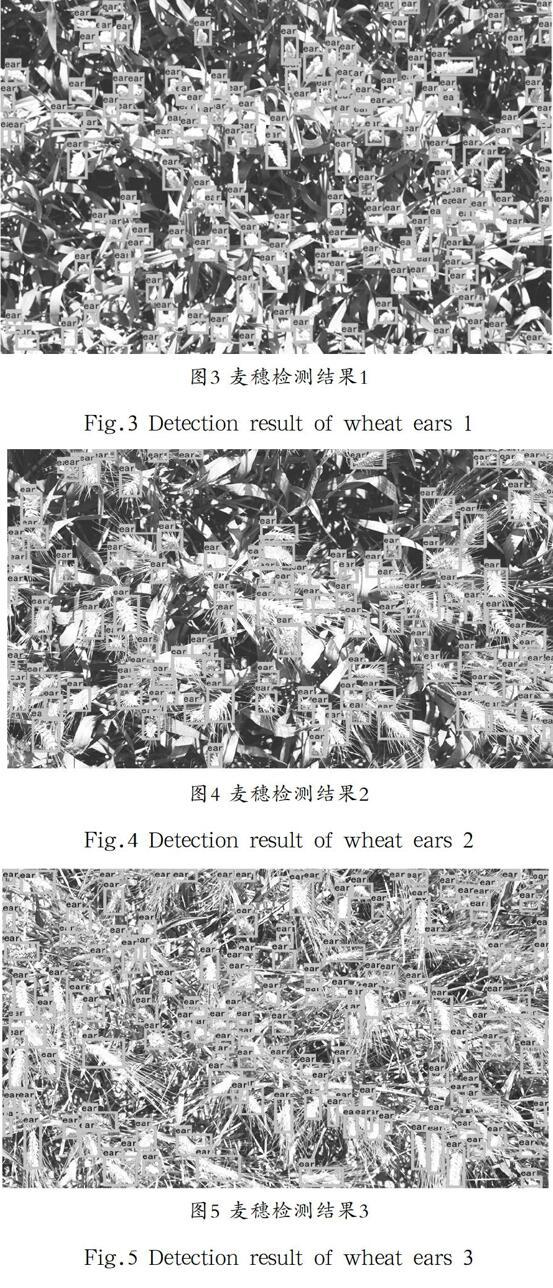
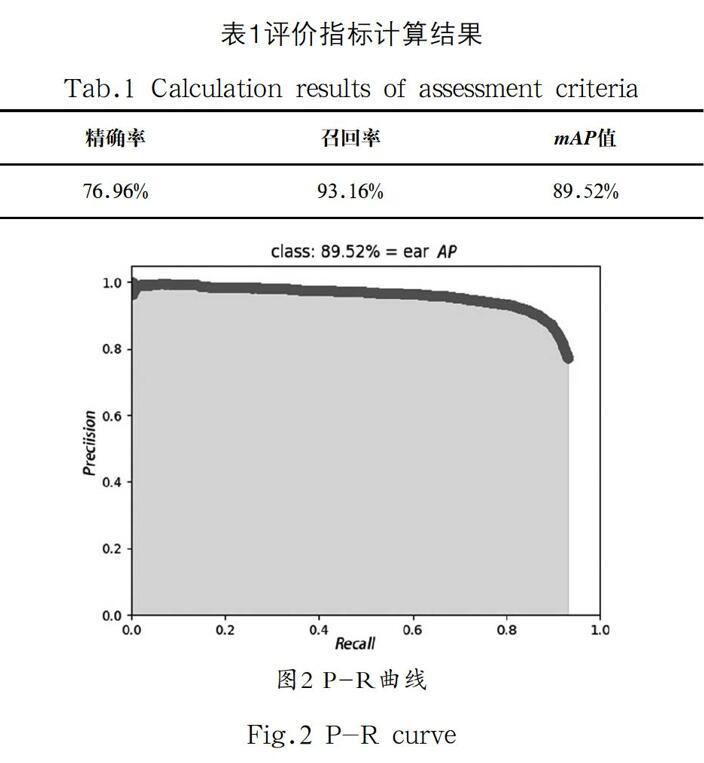
摘 要:麦穗数量检测对于作物表型参数计算、产量预测和大田管理都具有重要的意义。为了解决人工计数工作量大且容易出错的问题,提出了一种基于You Only Look Once (YOLO)的麦穗目标检测与计数方法。首先利用大量小麦图像对深度神经网络进行训练,然后利用神经网络对小麦图像进行麦穗目标检测与计数,最后对神经网络目标检测的准确率和召回率进行计算评估,并通过分析检测结果验证其鲁棒性。分析结果显示,所训练网络对麦穗检测的精确率为76.96%,召回率为93.16%,均值平均精度mean Average Precision (mAP)为89.52%。此外,该模型可以检测不同生长时期的麦穗,具有较高的鲁棒性。研究表明,该方法对比其他麦穗计数方法准确高效,可以实际应用到小麦的产量估算上。
关键词:目标检测;产量预测;YOLO;深度学习
中图分类号:TP391.4 文献标识码:A
Research of Wheat Ear Target Detection based on Convolutional Neural Network
WANG Yuge, ZHANG Yong, HUANG Linxiong, ZHAO Fengkui
(College of Automobile and Traffic Engineering, Nanjing Forestry University, Nanjing 210037, China)
515400100@qq.com; zyjs111@126.com; 1773361196@qq.com; zfk@njfu.edu.cn
Abstract: Detecting the number of wheat ears is of great significance to the calculation of crop phenotypic parameters, yield prediction and field management. In order to solve the problem of heavy workload and error-prone manual counting, this paper proposes a wheat ear target detection and counting method based on You Only Look Once (YOLO). First, a large number of wheat images are used to train the deep neural network. Then, the neural network is used to detect and count wheat ears in the wheat images. Finally, the accuracy and recall rate of the neural network target detection are calculated and evaluated, and the robustness is verified by analyzing the detection results. The analysis results show that the trained network has an accuracy rate of 76.96% for wheat ear detection, a recall rate of 93.16%, and a mean Average Precision (mAP) of 89.52%. In addition, the model can detect wheat ears in different growth periods, and has high robustness. Studies have shown that this method is more accurate and efficient than other wheat ear counting methods, and can be applied to wheat yield estimation.
Keywords: target detection; output prediction; YOLO; deep learning
1 引言(Introduction)
小麦种植密度估算是小麦产量预测的重要手段,也是小麦大田管理的重要依据。目前,小麦产量预测方法有人工预测、年景预测[1]、基于遥感图像预测[2]和基于多元线性回归预测[3]等。人工预测费时费力,容易出错;年景预测只适合地区大范围产量预测;基于遥感图像预测准确率低;基于多元线性回归预测受降水等变量影响较大,准确率难以保证。相比之下,视觉传感器可以获取丰富的纹理和颜色信息,且成本较低。近年来,机器视觉在麦穗检测研究中发挥着越来越大的作用。传统图像处理技术常使用移动窗法[4]或超像素分割法[5]采样子图像,从子图像中提取颜色或纹理特征,然后训练分类器,利用分类器识别麦穗,完成计数;或者通过图像处理方法突出麦穗,如将图像进行二值化处理,在去除粘连后识别麦穗[6]。……