基于航空倾斜摄影影像的建筑物提取方法研究
2021-03-10焦云清
焦云清
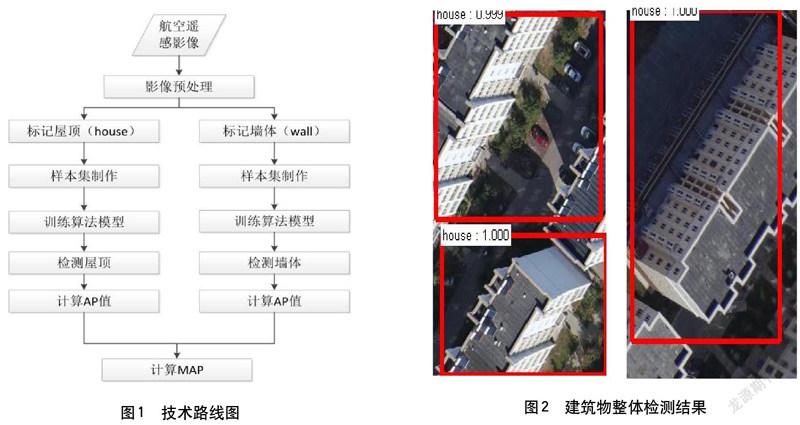
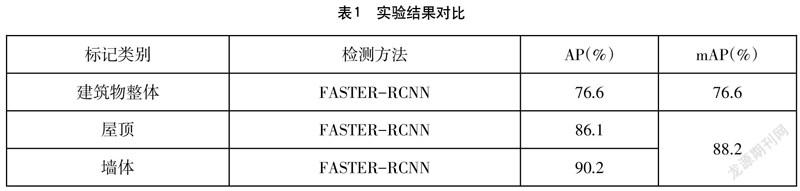
摘 要:传统的建筑物遥感提取主要是基于人工设计特征在滑窗内提取建筑物信息,具有特征鲁棒性差、检测率不稳定等缺点。本文通过分析航空倾斜摄影影像中建筑物的特点,提出倾斜摄影影像中的建筑物提取必须将建筑物屋顶与建筑物墙体分别提取的观点,在此基础上,引入计算机视觉领域主流的Faster R-CNN目标检测模型,采用改进的Faster RCNN分别对屋顶与墙体进行检测。本文以武汉市航空倾斜摄影影像作为数据集开展实验,将图像中单体建筑作为一类的平均精度均值为89.8%,将建筑物屋顶与墙体分开检测的mAP值为93.5%,表明该方法可有效提高航空倾斜摄影影像中建筑物提取的精度,下一步研究方向为降低墙体的漏检率。
关键词: 航空倾斜摄影 建筑物提取 深度学习 目标检测
中图分类号:P231
Abstract: Traditional building remote sensing extraction is mainly based on artificial design features to extract building information in sliding Windows, which has disadvantages such as poor feature robustness and unstable detection rate. Based on the analysis of the characteristics of buildings in aerial oblique photography images, this paper proposes that buildings must be extracted from roof and wall separately. On this basis, the mainstream Faster R-CNN target detection model in the field of computer vision is introduced, and the improved Faster RCNN is used to detect roof and wall respectively. In this paper, Wuhan aerial oblique photography image is used as the data set to carry out the experiment. The average accuracy of taking the single building in the image as a class is 89.8%, and the mAP value of detecting the building roof and wall separately is 93.5%. It shows that this method can effectively improve the accuracy of building extraction in aerial oblique photography image. The next research direction is to reduce the missed detection rate of wall.
Key Words: Aerial oblique photography; Building extraction; Deep learning; Target detection
建筑物是反映人類活动的主要标志,建筑物提取是遥感目标检测与识别领域中的重要方向,该方向的研究成果在灾害应急、军事侦察、城市规划等方面具有广阔的应用前景[1]。建筑物根据其用途有娱乐、居住、观赏、存储、办公等不同类型,外形多种多样,更新速度快,这使得建筑物的提取和检测难度很大。
传统的建筑物提取主要基于光谱、形状、纹理、等影像特征检测建筑物。建筑物提取的研究思路主要有两种——数据驱动型和模型驱动型。前者把目标看作众多低层特征结构的组合,通过某种规则将这些结构合并成为目标整体;后者把建筑物目标抽象为一个整体模型,从全局特征出发基于模型将其从图像背景中提取出来[2]。……
