异常胎监图形和新生儿脐动脉血气pH值的关系
2021-01-25张湘玲
张湘玲
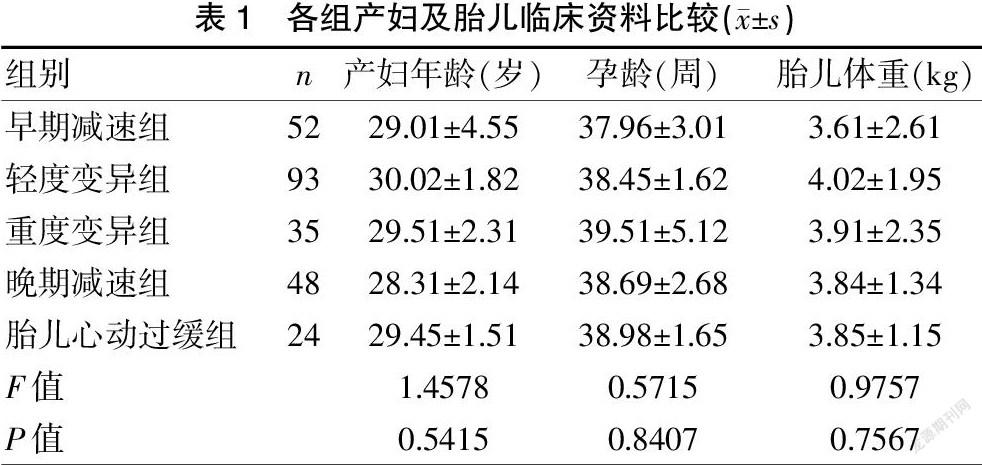


[摘要] 目的 研究异常胎监图形和新生儿脐动脉血气酸碱度的关系。方法 选择2019年2月至2020年8月收治的在我院成功经阴道分娩且持续电子胎心监护中出现异常图形的产妇共252例。其中早期减速组52例,轻度变异组93例,重度变异组35例,晚期减速组48例,胎儿心动过缓组24例。胎儿分娩后,立即检测脐動脉血酸碱度(pH)、乳酸(Lac)、剩余碱(BE)、氧分压(PO2)、二氧化碳分压(PCO2)。结果 早期减速组pH值为(7.30±0.04),BE为(6.10±1.05)mmol/L,SB为(18.45±2.84)mmol/L,PCO2为(48.21±10.35)mmHg;轻度变异组pH值为(7.29±0.02),BE为(7.51±1.81)mmol/L,SB为(17.51±1.51)mmol/L,PCO2为(47.58±5.21)mmHg;重度变异组pH值为(7.12±0.06),BE为(10.65±1.14)mmol/L,SB为(14.62±2.62)mmol/L,PCO2为(49.51±6.25)mmHg;晚期减速组pH值为(7.13±0.07),BE为(10.84±1.98)mmol/L,SB为(14.84±1.52)mmol/L,PCO2为(49.31±5.31)mmHg;胎儿心动过缓组pH值为(7.12±0.03),BE为(7.64±1.62)mmol/L,SB为(15.92±1.38)mmol/L,PCO2为(50.62±6.25)mmHg;五组新生儿脐动脉血气数值相比,差异有统计学意义(P<0.05);新生儿窒息发生率随着脐动脉血pH值降低而升高,且随着新生儿pH值下降,低Apgar评分呈现出逐渐增多的现象,新生儿出现窒息的发生率逐渐增高,且产前胎心监护异常发生率也会随之增高。结论 新生儿pH值下降,低Apgar评分逐渐增多,窒息的发生率逐渐增高,且产前胎心监护异常发生率也会随之增高。胎心监护对胎儿窘迫现象发生的预估具有极大作用,联合脐动脉血气pH值分析可作为临床产前验证手段,对于诊治和评估围产期窒息和新生儿预后有着重要作用。
[关键词] 胎儿;分娩;异常胎监图形;脐动脉血;酸碱度
[中图分类号] R722.1 [文献标识码] A [文章编号] 1673-9701(2021)32-0026-04
[Abstract] Objective To study the relationship between abnormal fetal monitoring patterns and the blood,gas,and pH values of neonatal umbilical artery. Methods The puerpera who were admitted to our hospital and underwent vaginal delivery from February 2019 to August 2020 were selected,whose continuous electronic fetal heart rate monitoring showed abnormal patterns. There were 252 cases in total,including 52 cases in the early deceleration group,93 cases in the mild variant group,35 cases in the severe variant group,48 cases in the late deceleration group,and 24 cases in the fetal bradycardia group. After the delivery,the umbilical artery blood pH (pH),lactic acid (Lac),base excess (BE),oxygen partial pressure (PO2),and carbon dioxide partial pressure (PCO2) were immediately tested. Results The pH value in the early deceleration group was (7.30±0.04),BE was (6.10±1.05) mmol/L,SB was (18.45±2.84) mmol/L,and PCO2 was (48.21±10.35) mmHg; the pH value in the mild variant group was (7.29±0.02),BE was (7.51±1.81) mmol/L,SB was (17.51±1.51) mmol/L,and PCO2 was (47.58±5.21) mmHg; the pH value in the severe variant group was (7.12±0.06),BE was (10.65±1.14) mmol/L,SB was (14.62±2.62) mmol/L,and PCO2 was (49.51±6.25) mmHg; the pH value in the late deceleration group was (7.13±0.07),BE was (10.84±1.98) mmol/L,SB was (14.84±1.52) mmol/L,and PCO2 was (49.31±5.31) mmHg; the pH value in the fetal bradycardia group was (7.12±0.03),BE was (7.64±1.62) mmol/L,SB was (15.92±1.38) mmol/L,and PCO2 was (50.62±6.25) mmHg; the blood gas indices of the neonatal umbilical artery were compared between the five groups,and the differences were statistically significant (P<0.05); the incidence rate of neonatal asphyxia increased as the pH value of umbilical artery blood decreased,and as the pH value of newborns decreased,the low Apgar score showed a gradual upward trend. The probability of asphyxia in the newborns gradually increased,and the probability of abnormal prenatal fetal heart monitoring also increased. Conclusion As the pH value of newborns decreases,the number of newborns with low Apgar score gradually increases,the probability of asphyxia gradually increases,and the probability of abnormal prenatal fetal heart monitoring also increases. Fetal heart rate monitoring plays a great role in predicting the occurrence of fetal distress,which,combined with blood,gas,pH analysis of the umbilical artery,can be used as a clinical prenatal verification method,and plays an important role in the diagnosis,treatment and evaluation of perinatal asphyxia and neonatal prognosis.
[Key words] Fetus; Delivery; Abnormal fetal monitoring patterns; Umbilical artery; pH values
我国开展的产时胎兒电子评估是按照美国妇产医师学会制定的评价系统制定的,其中Ⅰ级指的是正常图形,即指胎儿健康没有出现缺氧、酸碱度不平衡现象;Ⅲ级图形指……
