一种XNet-CNN糖尿病视网膜图像分类方法
2020-05-21陈宇周雨佳丁辉
陈宇 周雨佳 丁辉

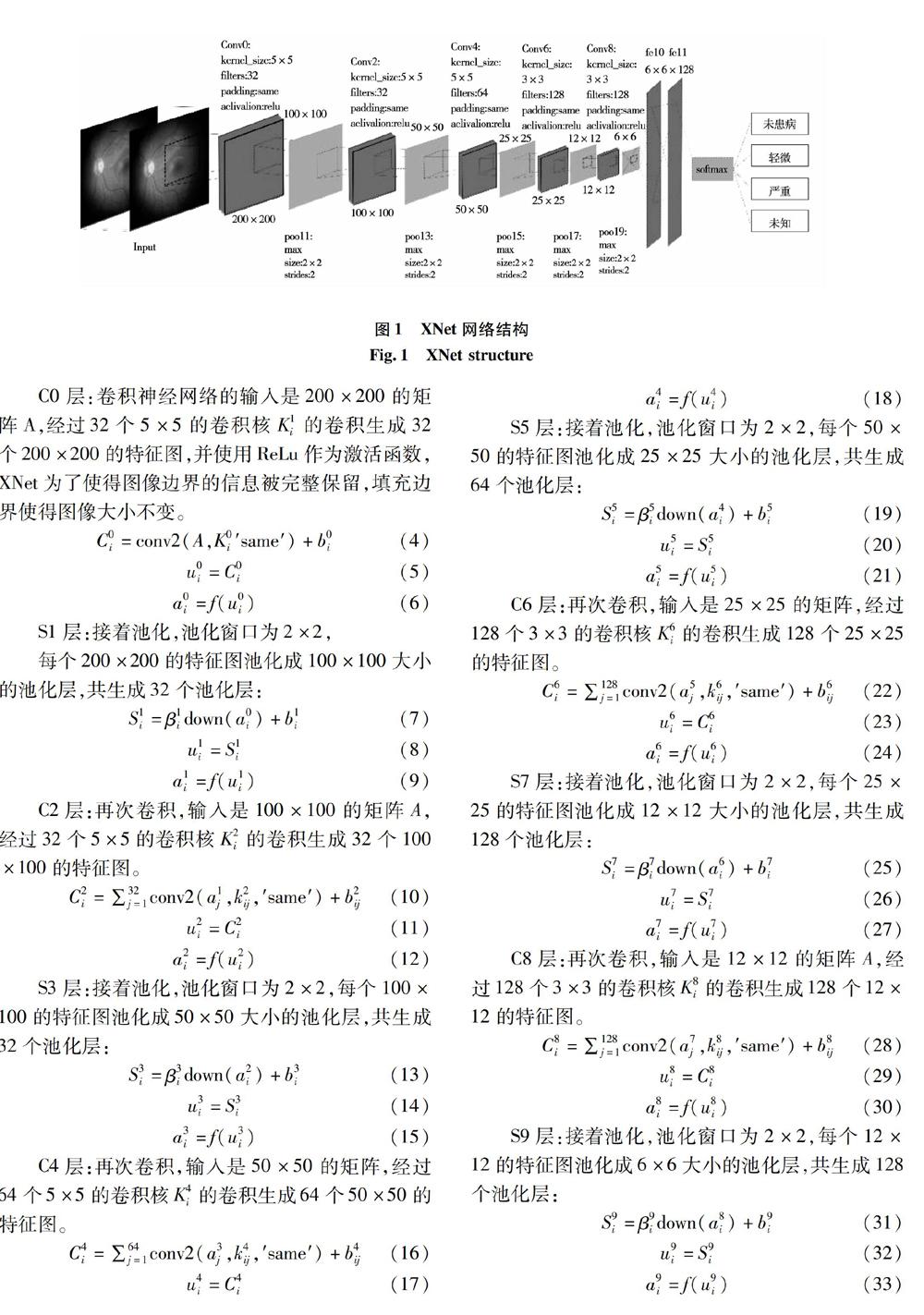
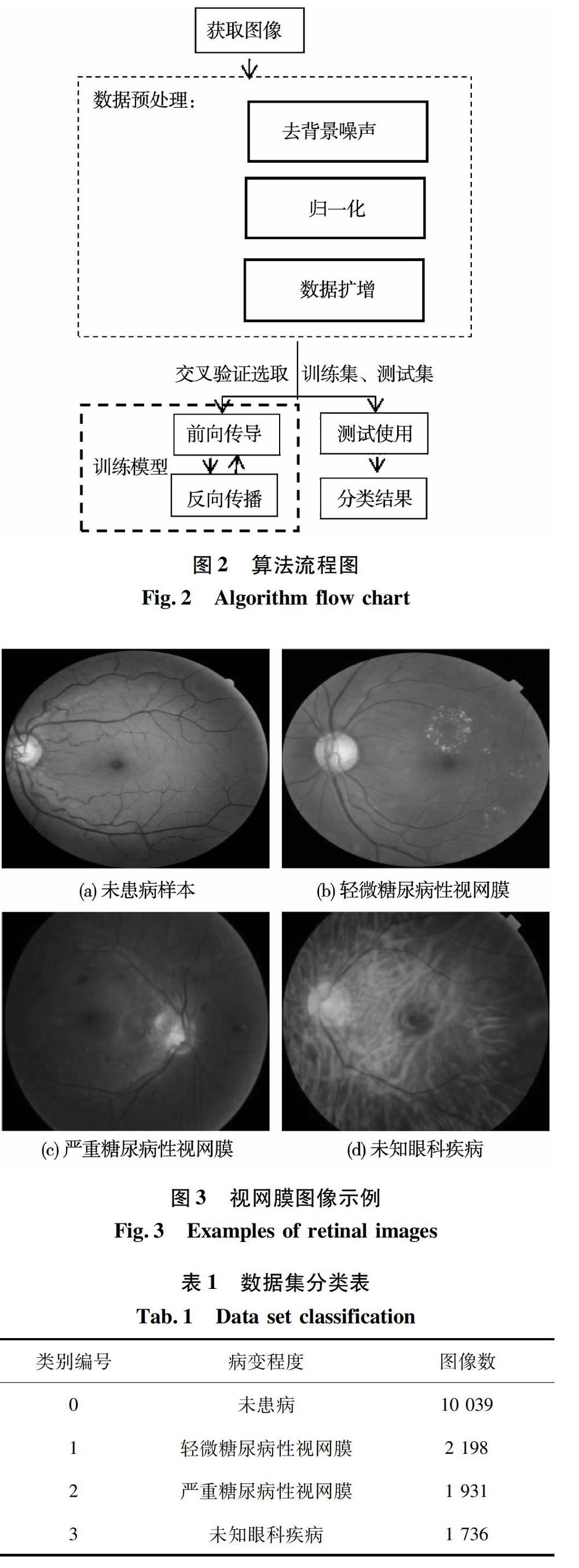
摘 要:本文针对传统的视网膜图像处理过程繁琐、鲁棒性差的缺点,提出设计了一种基于深度卷积神经网络(Convolutional Neural Network,CNN)的视网膜图像自动识别系统。首先,对图像预处理包括去除噪声、数值归一化、数据量扩增;然后,设计提出了一种新的神经网络模型——XNet,XNet中和了LeNet和Inception网络的深度,网络参数根据训练样本进行适应性调整;最后,针对不同的网络结构进行了准确率和迭代次数的比较。实验结果表明,XNet网络的结构要优于LeNet和Inception,准确率可以达到91%;并通过实验证实了数据扩增的必要性。
关键词:卷积神经网络; 深度学习;视网膜分类;糖尿病视网膜图像
DOI:10-15938/j-jhust-2020-01-011
中图分类号: TP391-4
文献标志码: A
文章编号: 1007-2683(2020)01-0073-07
Abstract:In this research,a retina image automatic recognition system based on Convolutional Neural Network(CNN) is proposed for the disadvantages of the traditional retina image processing process which is cumbersome and poor in robustnessFirst, image preprocessing includes noise removal, numerical normalization, and data volume amplification; then, a new neural network model, XNet, is designedXNet inherits the advantages of LeNet and Inception networksThe network parameters are based on trainingThe samples were adjusted adaptivelyFinally, the comparison of accuracy and number of iterations was performed for different network structuresThe experimental results show that the XNet network structure is superior to LeNet and Inception, and the accuracy rate can reach 91%; and the necessity of data amplification is confirmed through experiments-Keywords:convolution neural network;deep learning; retinal images classification;Diabetic Retinal Images
0 引 言
糖尿病視网膜病变(diabetic retinal,DR)是糖尿病微血管病变的主要表现,是具有特殊变化的眼底病变[1]。据世界卫生组织报道,预计2030 年糖尿病患者将达到全世界人数的 4-4%,其中50%的患者会出现 DR。现在,我国是糖尿病患者最多的国家,
而且此病发病率随潜伏期增长,病程 10~15 年出现并发症的人数为 25%,病程 25 年以上出现并发症的人数为 60%,病程 30 年以上出现 并发症的人数为 95%[2]。除了白内障、青光眼,糖尿病视网膜病也会导致眼盲,从而降低糖尿病患者的生活质量。为了降低病情,我们需要尽早发现、尽早诊断、尽早治疗,因此,如何尽早判断糖尿病视网膜成为近期的重点,如何对视网膜图像进行分类逐渐变成目前研究的热点。
在过去,视网膜图像的处理需要经过四个阶段,在每个步骤,视网膜图像处理都需要至少一种的计算机视觉的技术。……