机构投资者异质性与盈余管理?
2015-07-30李争光等
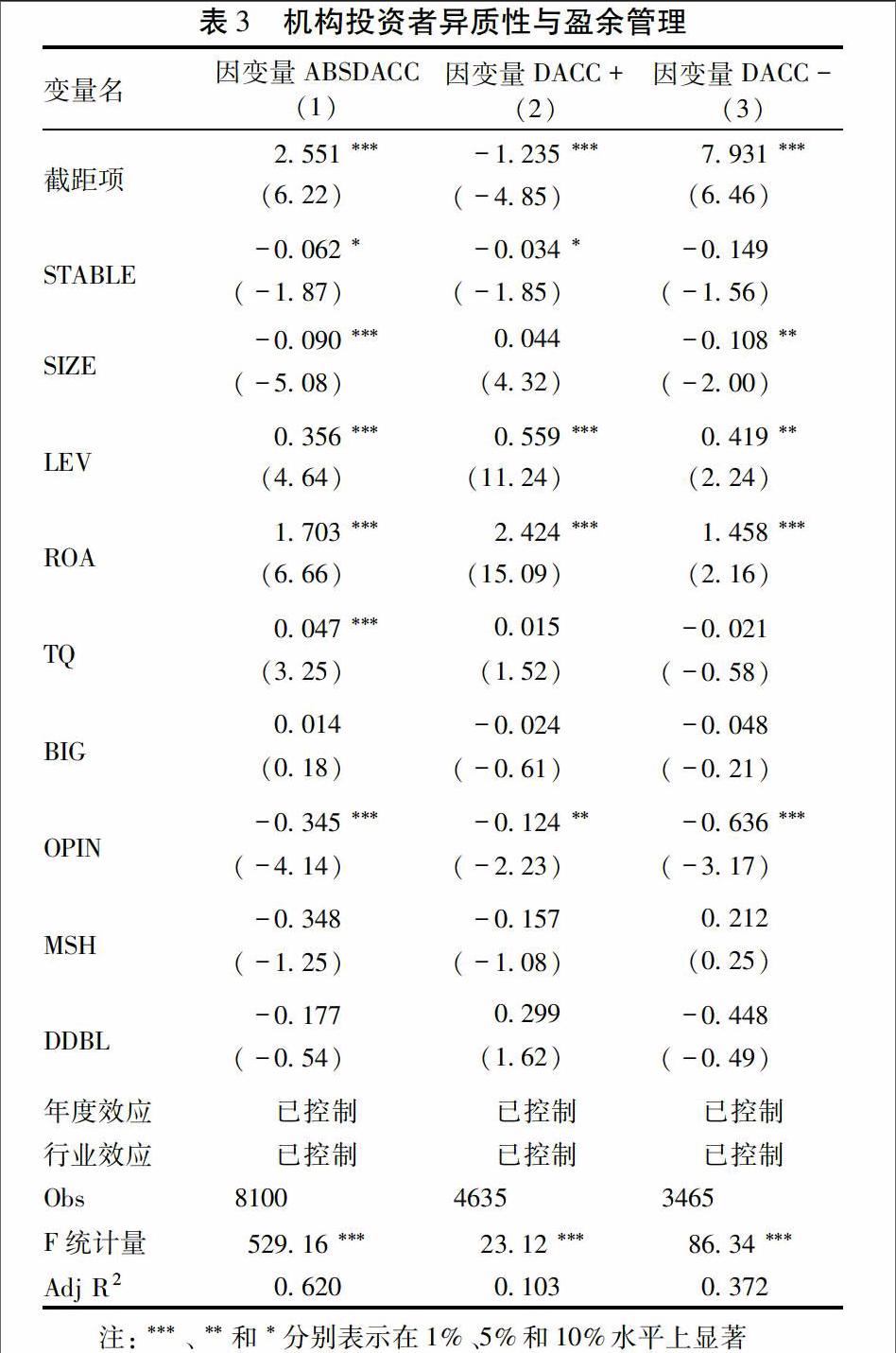
摘要:在将机构投资者划分为稳定型与交易型的基础上,以20072012年我国A股上市公司为研究对象,考察了机构投资者异质性对盈余管理的影响。经验证据表明,与交易型机构投资者相比,稳定型机构投资者显著抑制了公司盈余管理行为。进一步分析发现,稳定型机构投资者对公司正向盈余管理行为的抑制更加显著。研究结果表明,稳定型机构投资者发挥了公司外部监督者的作用,约束了公司管理层操纵盈余的机会主义行为。
关键词:盈余管理;机构投资者;异质性;稳定型机构投资者;交易型机构投资者
中图分类号:F230 文献标识码: 文章编号:
Institutional Investors Heterogeneity and Earnings Management
LI Zheng-guang1,2,ZHAO Xi-bo1,CAO Feng1
(1.School of Business, RenMin University of China, Beijing 100872 ;
2. School of Economics and Management, Yancheng Institute of Technology, Yancheng 224051)
Abstract: we divide institutional investors into the stable institutional investor and unstable institutional investor. We use the sample data of Shanghai and Shenzhen A-share listed companies between 2007 and 2012, exploring institutional investors heterogeneity impact on earnings management. Empirical evidence shows that the stable institutional investor has more effect on earnings management than the unstable institutional investor. Further analysis shows that the stable institutional investor has more effect on income-increasing earnings management than the unstable institutional investor. The findings of this paper show that the stable institutional investor can constrain managers opportunistic behavior of earnings and effectively play role in corporate governance of enteral regulator.
Keywords: Earnings management; Institutional investors; heterogeneity; the stable institutional investor; the unstable institutional investor
1 引言
近年来,大量的文献考察了公司管理层在报告公司盈余过程中的自由裁量权问题[1]。Healy and Wahlen研究发现,在公认会计原则的约束范围内,公司管理层在选择会计程序与解释公认会计原则方面有一定自由自由裁量权[2]。例如:公司管理层可以通过使用可操控性应计利润来操纵报告的利润,这种机会主义行为被称为盈余管理。虽然应计利润在未来年度会实现反转,但并不影响管理层利用该渠道将利润在各年度之间进行平滑。公司管理层被认为能够通过盈余管理来掩饰公司的真实财务业绩,以达到自利的目的,但这样会牺牲诸如机构投资者等投资者的利益。因此,机构投资者有动机监督公司管理层使用可操控性应计利润进行盈余管理的行为。但关于机构投资者对盈余管理的影响,已有文献并未形成一致观点。……