危重症患者身体约束使用现状及影响因素分析
2021-10-26胡迪屈文燕蒋茜陈建萍
胡迪 屈文燕 蒋茜 陈建萍
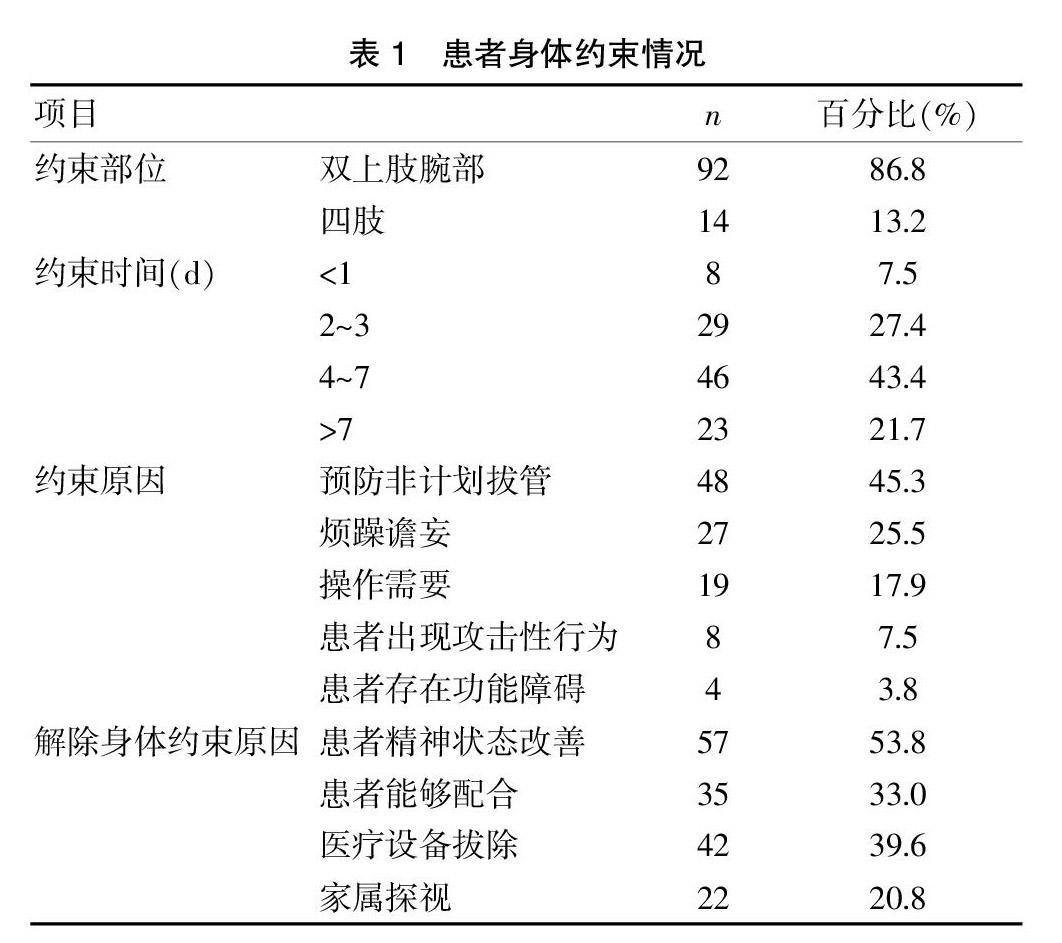
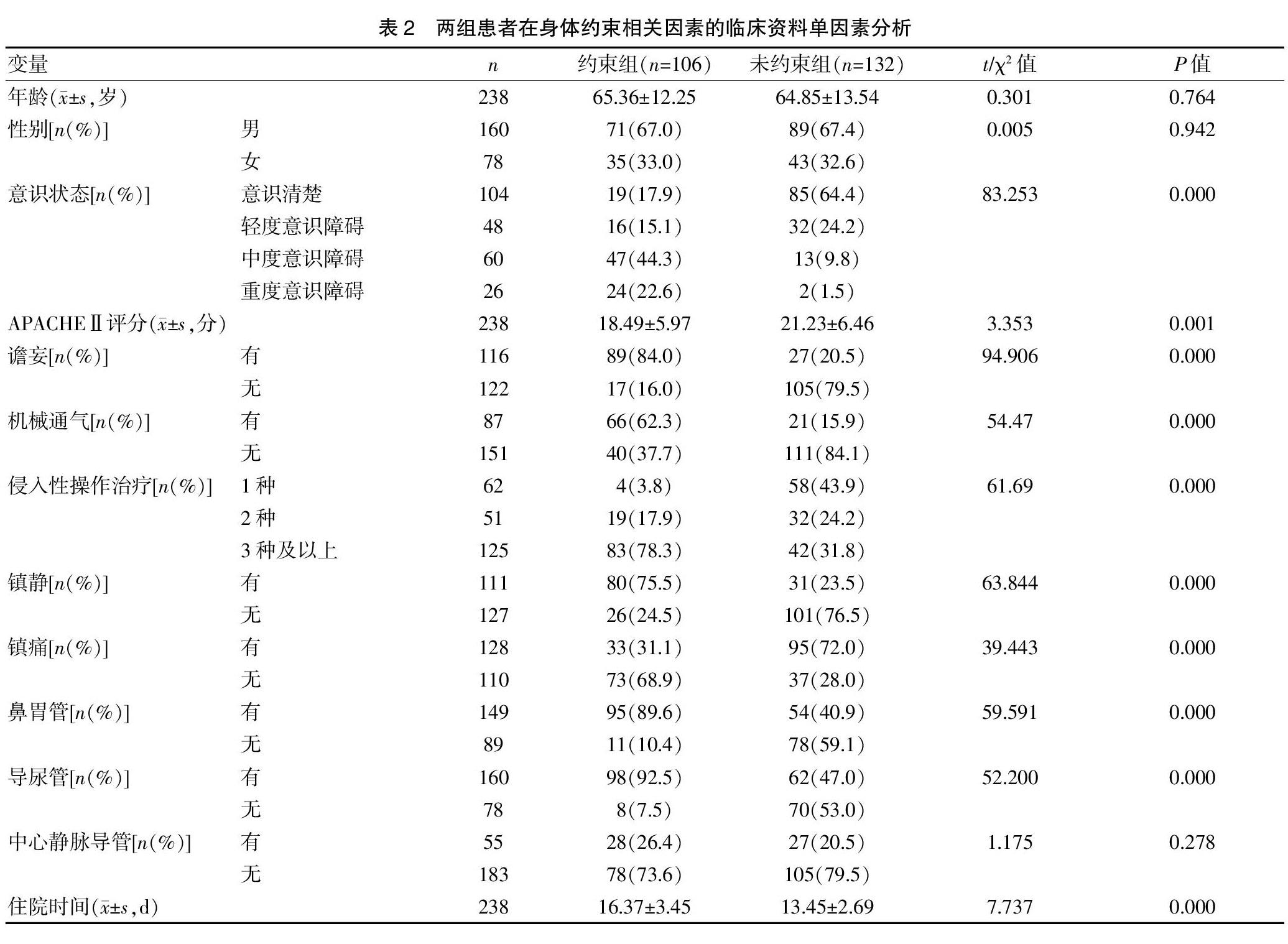
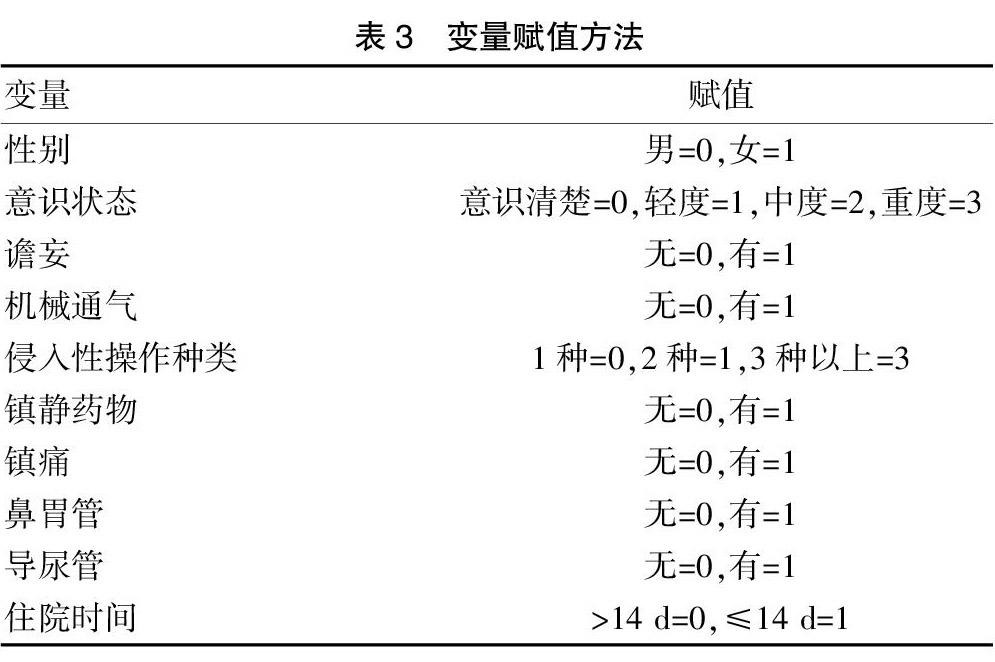
[摘要] 目的 調查重症监护室患者身体约束的实施情况,并分析其影响因素。 方法 收集我院2019年6—12月入住重症监护室的238例患者为研究对象,根据治疗护理需求,分为约束组(106例)和未约束组(132例),通过国内外文献回顾、小组讨论等方法,设计身体约束调查表,分析身体约束相关因素,如年龄、性别、APACHE Ⅱ评分、ICU住院时间、意识状态、身体约束原因、机械通气、镇静、镇痛、谵妄、鼻胃管、导尿管、中心静脉导管以及侵入性操作治疗种类使用情况,对两组之间可能发生的危险因素采用统计学方法处理。 结果 238例患者中,106例予以身体约束,身体约束率为44.5%。根据Logistic回归分析,机械通气、谵妄、侵入性操作治疗种类3种以上及镇静药物、中度意识障碍在多因素回归分析中,差异有统计学意义(P<0.05)。 结论 机械通气、谵妄、侵入性操作治疗种类及镇静药为重症监护室患者身体约束的独立危险因素。应根据我国实际情况制定重症监护室患者身体约束使用规范及标准,加强对相关人员的培训,指导临床对身体约束的合理使用。
[关键词] 重症监护室;身体约束;机械通气;谵妄
[中图分类号] R473.5 [文献标识码] B [文章编号] 1673-9701(2021)24-0184-04
Analysis on current situation and influencing factors of physical restraint in critically ill patients
HU Di QU Wenyan JIANG Xi CHEN Jianping
Department of Critical Care Medicine, Taizhou Hospital of Zhejiang Province affiliated to Wenzhou Medical University, Taizhou 317000, China
[Abstract] Objective To investigate the implementation of physical restraint in intensive care unit and analyze its influencing factors. Methods A total of 238 patients who were admitted to the intensive care unit in our hospital from June 2019 to December 2019 were collected as the study subjects. According to the needs of treatment and nursing, the patients were divided into the restrained group (106 cases) and the unrestrained group (132 cases). A physical restraint questionnaire was designed through domestic and foreign literature review, group discussion and other methods. Factors related to physical restraint were analyzed, such as age, gender, APACHE Ⅱ score, length of stay in ICU, state of consciousness, reasons for physical restraint, mechanical ventilation, sedation, analgesia, delirium, nasogastric tube, urinary catheter, central venous catheter, and types and usage of invasive procedures. The possible risk factors between the two groups were statistically analyzed. Results 106 of the 238 patients were physically restrained, and the physical restraint rate was 44.5%. According to Logistic regression analysis, the differences in the mechanical ventilation, delirium, more than three types of invasive procedures, sedative drugs, and moderate consciousness disturbance were statistically significant in the multivariate regression analysis(P<0.05). Conclusion Mechanical ventilation, delirium, types of invasive procedures and sedative drugs are independent risk factors for physical restraint in the patients admitted in the intensive care unit. The norms and standards for the use of physical restraints for patients in the intensive care unit should be formulated according to the actual situation in China, and the training of relevant personnel should be strengthened to guide the rational use of physical restraints in clinical settings.
[Key words] Intensive care unit; Physical restraint; Mechanical ventilation; Delirium
一般重症监护患者病情比较危重,入院时多数伴有不同程度的意识障碍或烦躁不安,很容易出現非计划拔管、坠床等不良事件,为防止意外事件的发生,保证患者安全,通常对患者进行身体约束[1]。身体约束是指使用物理或机械性设备、材料或工具附加在或贴近于患者的身体,来限制患者自由的身体移动或躯体活动[2]。主要用于保护躁动的患者,限制身体约束失控肢体活动,防止患者自伤或坠床。身体约束不仅是简单的捆绑技术,更多是包含着一定医疗风险的特殊护理操作技术。在精神病等特殊医院,由于患者的特殊性,为确保治疗效果,防止患者的异常行为影响治疗,对约束带的使用有明确的规定并受法律保护[3]。……