中国家庭生育二孩的边际机会成本
2021-09-12王俊石人炳
王俊 石人炳
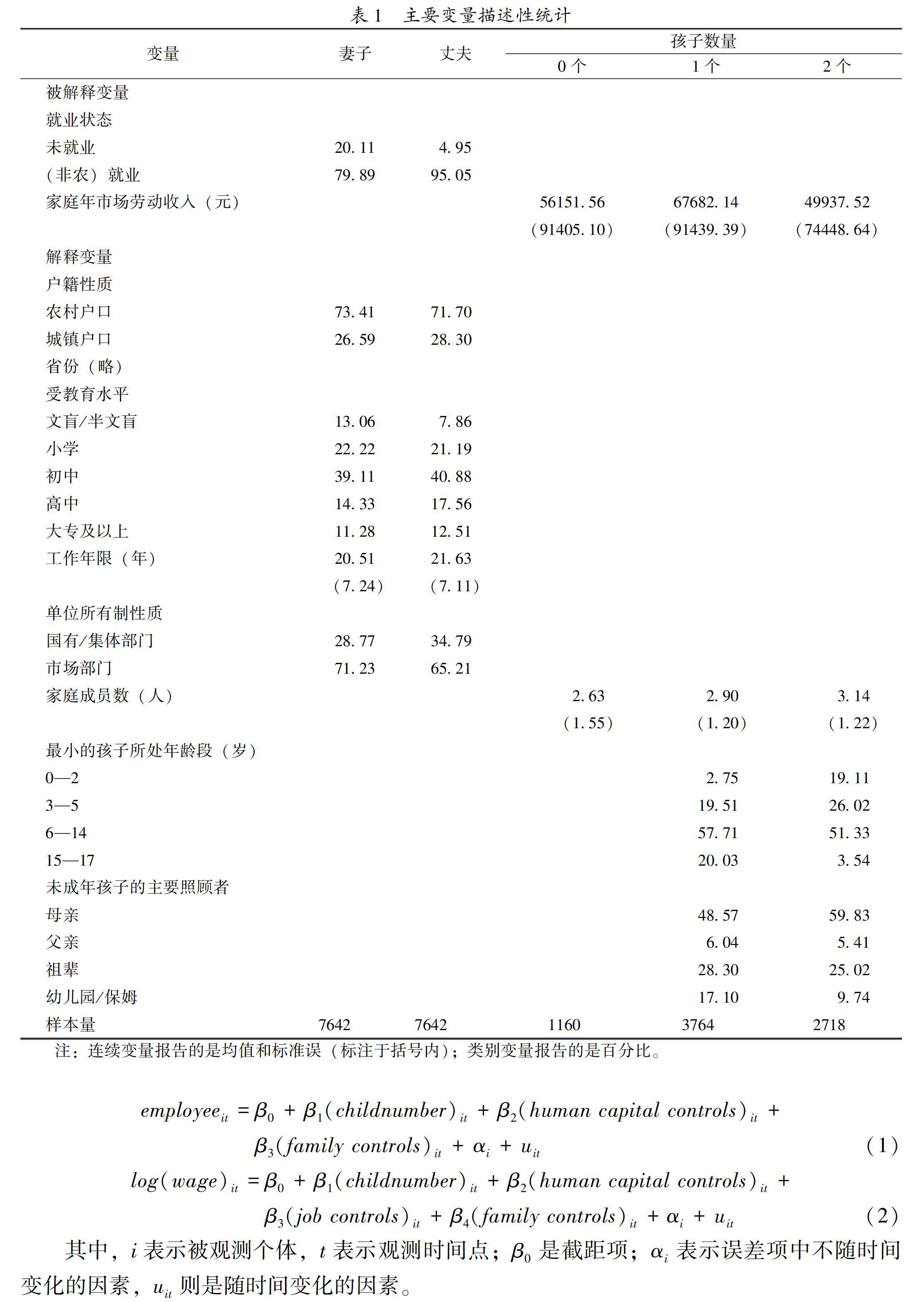
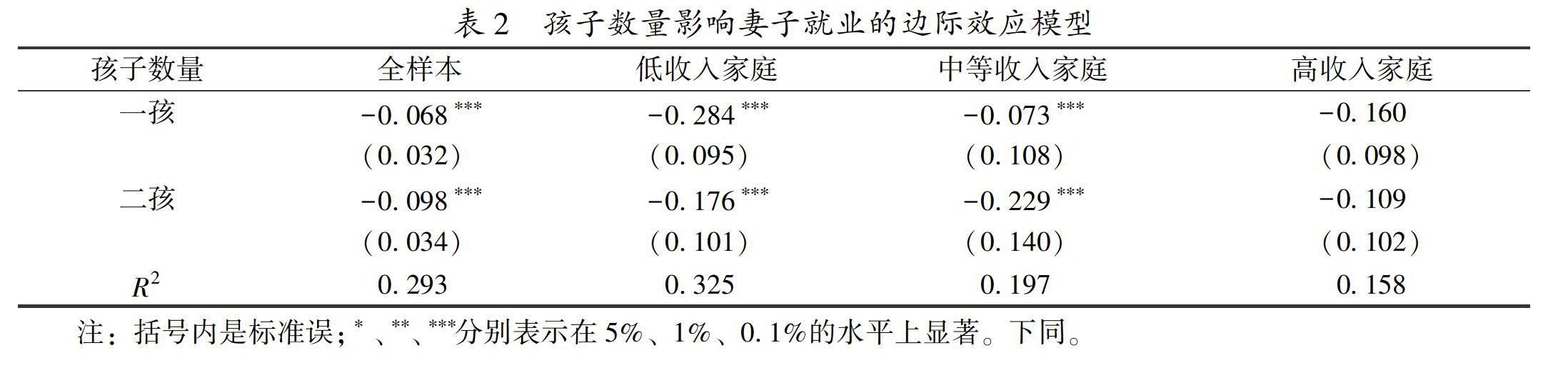
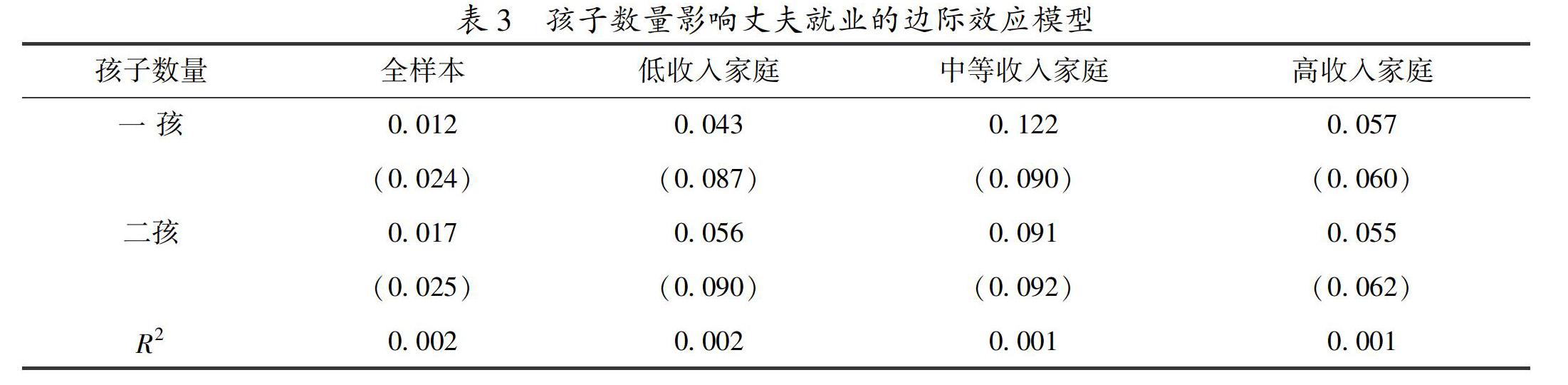
摘 要:已有研究从性别视角考察了生育孩子的机会成本在两性之间的不均衡分布,但对于其在家庭之间、孩次之间的异质性分布缺乏进一步的探讨。使用CFPS 2010—2018年5期追踪数据,分析了家庭生育二孩的边际机会成本及其阶层分化效应。研究发现,相比第一个孩子,家庭生育第二个孩子的边际机会成本更高,尤以中等收入家庭为甚。总体上,生育第二個孩子导致的家庭经济收入的下降幅度约为7.1%,妻子的就业几率下降幅度约为9.3%;对应的统计值在中等收入家庭中分别达到8.6%和20.5%。研究从经济理性的视角,为现代家庭尤其是中等收入家庭低迷的二孩生育意愿提供了可能的理论解释和实证经验。
关键词:二孩边际机会成本;中等收入家庭;经济理性
中图分类号:C92-05 文献标识码:A 文章编号:1000-4149(2021)04-0096-12
DOI:10.3969/j.issn.1000-4149.2021.00.032
Abstract: Previous studies have examined the unbalanced distribution of opportunity cost of child rearing from the perspective of gender, but there is no further discussion about the parity and social stratum divergence of the cost among families and children. The paper uses the 5-period CFPS 2010-2018 longitudinal data to investigate the marginal opportunity cost of the second child and its stratification effect. It is found that bearing a second child requires a higher marginal opportunity cost for the families, especially in middleincome groups. In general, having a second child reduces a family s income by 7.1% and a wife s chance of being employed by 9.3%; the corresponding statistics reached 8.6% and 20.5% in middleincome families respectively. From the perspective of economic rationality, the study provides a theoretical explanation and empirical experience for the depressed willingness to have a second child in modern families, especially for middle income classes.
Keywords:marginal opportunity cost of second child;middle income families;economic rationality
一、引言及文献回顾
生育的机会成本是指家庭成员投入到子女抚育过程中的时间和劳务等生产要素的市场价值[1]。已有研究从性别视角,分别考察并比较了生育行为对男性和女性的不同影响,发现生育行为降低了作为母亲的女性的劳动力市场收入[2],但与此同时却增加了作为父亲的男性的劳动力市场收入[3]。本研究感兴趣的是,若以家庭为单位,中国情境下的生育行为对家庭总体的劳动参与过程和结果的影响如何?与第一个孩子相比,生育第二个孩子的边际机会成本如何?孩子的边际机会成本是否因家庭所处的社会阶层而异?
实证研究建构了“生育的收入惩罚”(Motherhood Wage Penalty)这一理论模型,以测量生育对女性劳动力市场收入的负面影响。……