基于灰色理论对施工企业的风险成本控制研究
2021-08-06黄莹王雅慧
黄莹 王雅慧
【摘 要】论文通过对施工过程中对成本造成较大影响的风险因素进行分析,建立施工成本风险指标体系,基于灰色理论中的GM(1,1)建立风险成本的预测模型,并在此基础上进行风险成本预测,从而实现施工成本的动态控制和精细化管理。当风险成本出现偏差时,能通过该模型及时采取相应的纠偏措施,以实现企业的经济利益,提高施工企业的竞争力。
【Abstract】This paper analyzes the risk factors that have a greater impact on the cost during the construction process, establishes a construction cost risk index system, and establishes a risk cost prediction model based on GM (1,1) in the gray theory, and carries out risk cost forecast on this basis, so as to achieve dynamic control and fine management of construction cost. When there is a deviation in the risk cost, the model can be used to take corresponding corrective measures in time to realize the economic benefits of the enterprise and improve the competitiveness of the construction enterprise.
【关键词】风险成本;灰色模型;风险预测
【Keywords】risk cost; grey model; risk prediction
【中图分类号】F426;F406.72 【文献标志码】A 【文章编号】1673-1069(2021)07-0041-02
1 引言
伴随着我国经济的发展,建筑市场也在不断地规范化,施工单位要想在大浪淘沙中生存,需要改变以往的粗放化管理模式,转而采取精细化管理模式。诸多学者基于数学模型对施工企业的各类成本作了相关研究。陈国峰利用EVM-GM对成本进行预测,建立成本预测模型分析成本存在的问题[1]。徐洪刚利用集成控制的理论,建立成本、进度、质量集成控制,建立在进度和质量约束条件下的工程成本费用优化模型[2]。这些研究为施工企业的相关成本控制奠定了理论基础。
2 风险成本控制的意义
由于建筑工程建设过程具有周期长、金额大、一次性、涉及范围广等特点,因此,施工单位在进行项目建设的过程中会遇到众多的不确定因素,对项目的成本产生影响,在项目施工技术相对成熟的今天,施工單位想要增强企业竞争力就需要对项目进行精细化管理,加强对成本的管控。
3 风险成本控制基本方法
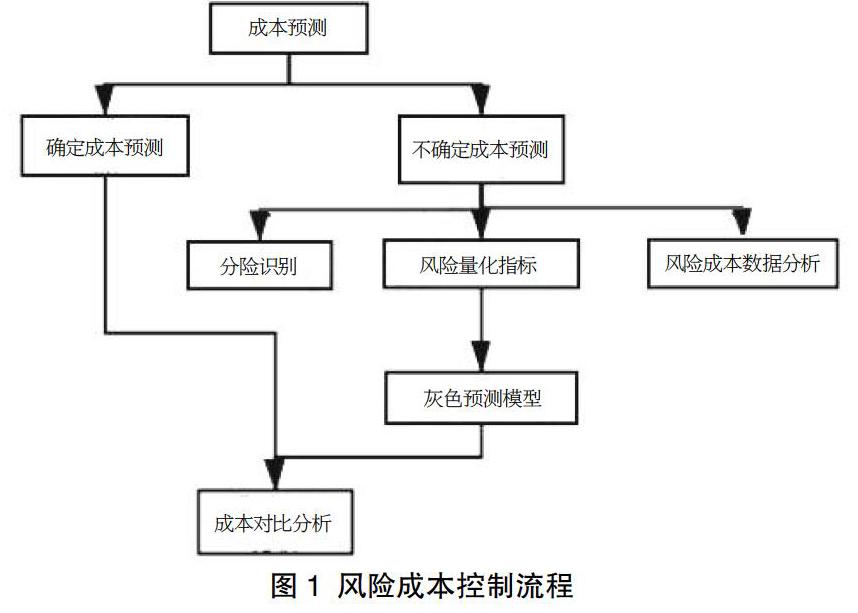
施工企业在项目建设过程承担着许多不确定因素,这些因素都会在不同的程度上影响成本。……