烤鸭鸭胚动态变压腌制加工工艺优化
2021-06-15矫丹张德权刘欢王振宇惠腾
矫丹 张德权 刘欢 王振宇 惠腾
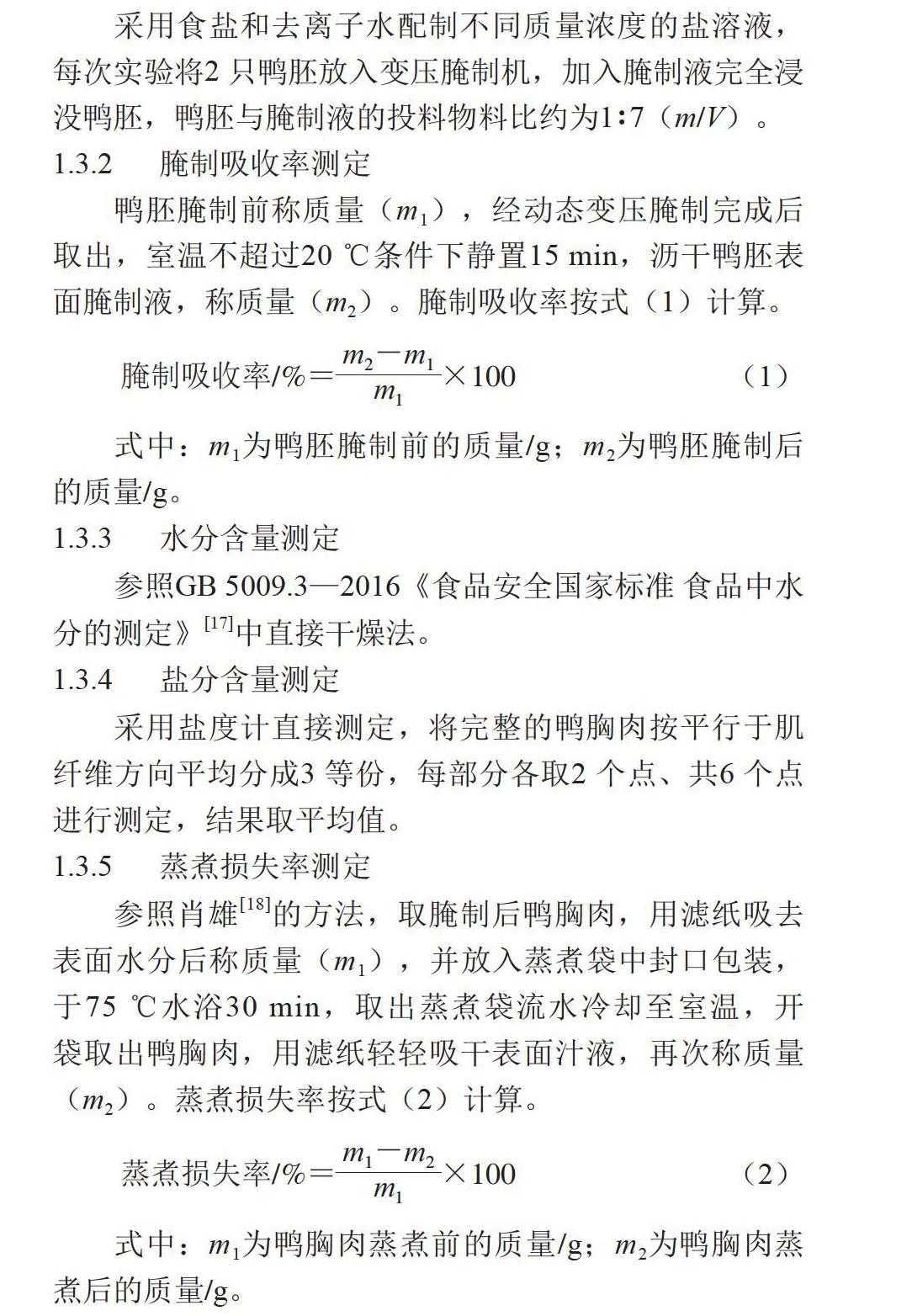
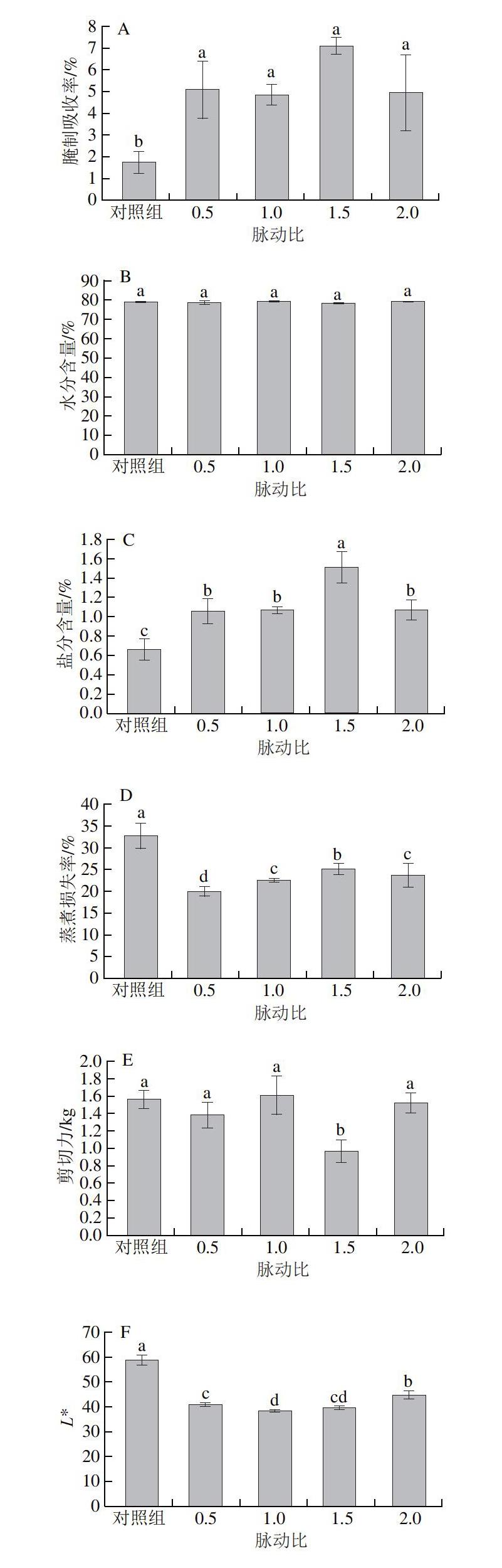
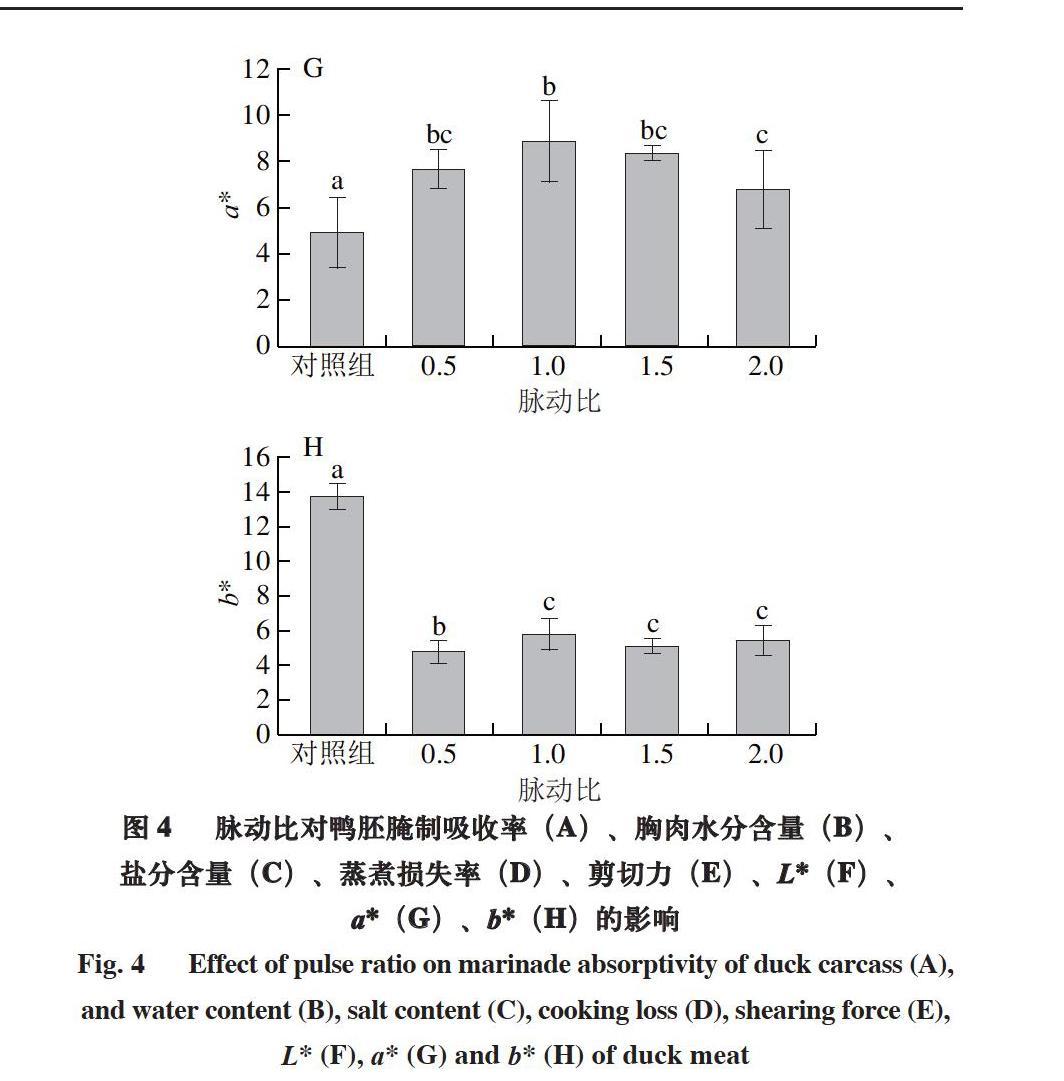
摘 要:为提高腌制效率,改善烤鸭品质,便于传统烤鸭工业化批量生产,以烤鸭鸭胚为原料,采用动态变压腌制技术,通过单因素试验和正交试验优化烤鸭鸭胚动态变压腌制的最佳腌制工艺条件。结果表明:相较于普通湿腌处理,变压腌制能显著提高鸭胚的腌制吸收率、鸭胸肉的盐分含量,显著降低鸭胸肉的蒸煮损失率和剪切力;烤鸭鸭胚动态变压腌制最优工艺为腌制时间12 h、盐溶液质量浓度8.9 g/100 mL、真空压力范围-70~-80 kPa、脉动比1.5,在此条件下鸭胸肉的盐分含量较高,嫩度和保水性较好,蒸煮损失率较低。
关键词:变压腌制;烤鸭鸭胚;腌制速率;蒸煮损失;剪切力
Optimization of Dynamic Variable Pressure Curing of Duck Carcass for Roast Duck
JIAO Dan, ZHANG Dequan, LIU Huan, WANG Zhenyu, HUI Teng*
(Key Laboratory of Agro-Products Processing, Ministry of Agriculture and Rural Affairs, Institute of Food Science and Technology, Chinese Academy of Agricultural Science, Beijing 100193, China)
Abstract: In an effort to improve the curing efficiency and the quality of roast duck and to facilitate the massive industrial production of traditional roast duck, the dynamic variable pressure curing of duck carcasses was optimized using one-factor-at-a-time and orthogonal array design methods. The results showed that dynamic variable pressure curing significantly improved the marinade absorption rate of duck carcasses and the salt content of duck breast, and reduced the cooking loss and shearing force of duck breast meat compared with traditional wet curing. The optimal processing parameters were as follows: curing time 12 h, salt concentration 8.9%, vacuum pressure ?70 to ?80 kPa, and pulsation ratio 1.5. The as-prepared product had a salt content, good tenderness and water-holding capacity, and low cooking loss.
Keywords: variable pressure curing; duck carcass; curing efficiency; cooking loss; shearing force
DOI:10.7506/rlyj1001-8123-20210305-052
中圖分类号:TS251.1 文献标志码:A 文章编号:
引文格式:
矫丹, 张德权, 刘欢, 等. 烤鸭鸭胚动态变压腌制加工工艺优化[J]. 肉类研究, 2021, 35(3): . DOI:10.7506/rlyj1001-8123-20210305-052. http://www.rlyj.net.cn
JIAO Dan, ZHANG Dequan, LIU Huan, et al. R optimization of dynamic variable pressure curing of duck carcass for roast duck[J]. Meat Research, 2021, 35(3): . DOI:10.7506/rlyj1001-8123-20210305-052. http://www.rlyj.net.cn
烤鸭历史悠久,享誉世界,深受国内外消费者的喜爱[1]。腌制是烤鸭生产的一道重要工序,即用食盐、糖、硝酸盐或亚硝酸盐及各种调味香辛料对原料鸭胚进行加工处理,通过影响鸭胚水分、食盐、腌料、氨基酸等含量,改善肉品质构、风味和色泽,提高保水性能[2]。实际生产过程中,腌制处理是采用干腌或湿腌或干湿腌结合方式对鸭胚进行处理[3-4]。干法腌制是将腌制料直接混合或涂抹在肉的表面,外渗汁液形成高浓度盐液进行腌制的方法,优点是操作工艺简单、营养流失少,缺点是人工劳动力大、盐分分布不均匀。湿法腌制是将肉放置在腌制液中,通过盐分扩散和水分渗透作用,使腌制液扩散到肉内部[5],优点是盐水分布均匀,缺点是鸭皮较厚,盐分渗透速率慢、时间长。……
