经鼻高流量湿化氧疗治疗AECOPD合并Ⅱ型呼吸衰竭的效果观察
2021-03-27叶郑福甘玉燕
叶郑福 甘玉燕
【关键词】 慢性阻塞性肺疾病 呼吸衰竭 经鼻高流量湿化氧疗 无创通气
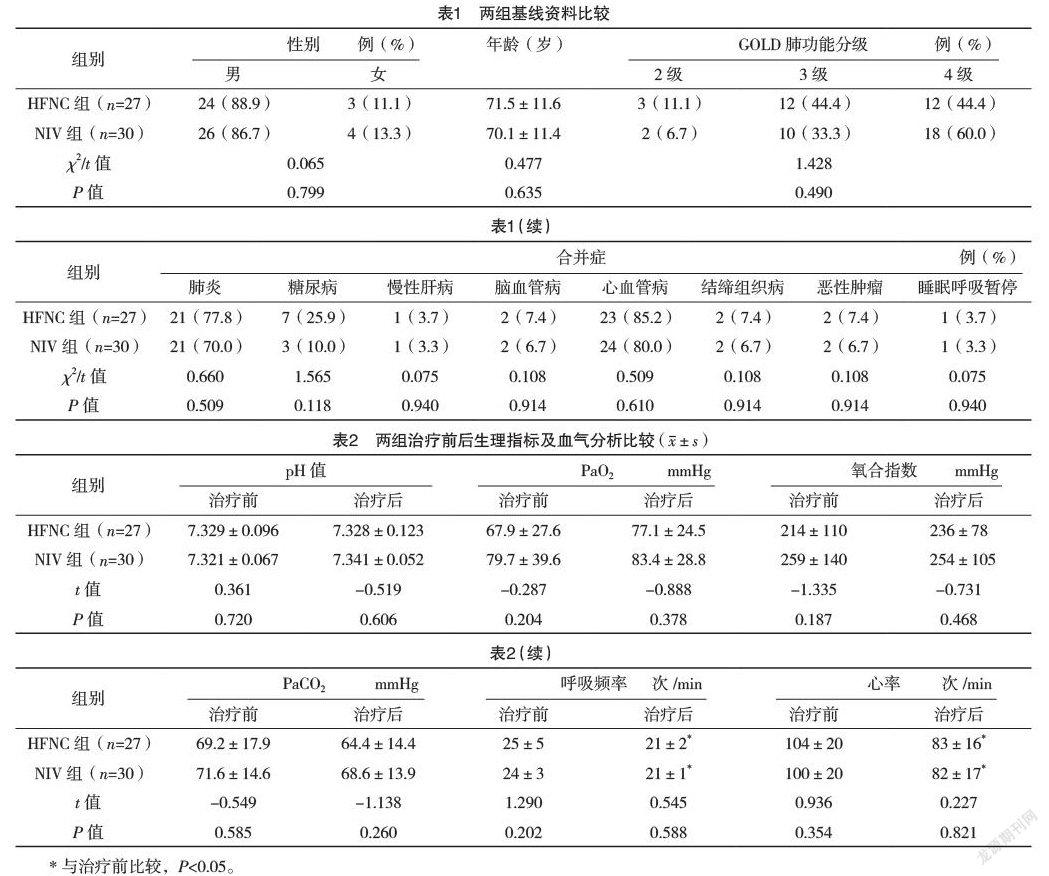
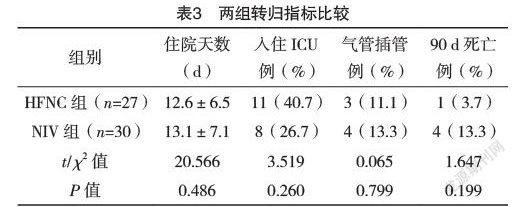
[Abstract] Objective: To investigate the clinical effect of high-flow nasal cannula oxygen therapy (HFNC) in the treatment of acute exacerbation of chronic obstructive pulmonary disease with type Ⅱ respiratory failure. Method: A total of 57 patients with acute exacerbation of chronic obstructive pulmonary disease combined with type Ⅱ respiratory failure were divided into HFNC group (n=27) and non-invasive ventilation (NIV) group (n=30) according to different treatment methods. HFNC group was treated with HFNC in addition to conventional treatment, and NIV group was treated with non-invasive BiPAP ventilation in addition to conventional treatment. PaO2, oxygenation index, PaCO2, pH, respiratory rate and heart rate were compared between the two groups after treatment. Hospital days, ICU admission rate, endotracheal intubation rate and 90 d mortality were compared between the two groups. The ratios of pneumothorax after treatment and bronchoscopic sputum aspiration were compared between the two groups. Result: Comparisons in both groups, there were no significant differences in pH, PaO2, oxygenation index and PaCO2 before and after treatment (P>0.05); after treatment, the respiratory rate and heart rate were lower than those before treatment, with statistical significance (P<0.05). Comparison between the two groups, there were no statistically significant differences in physiological indexes and blood gas analysis before and after treatment (P>0.05). There were no statistical significances in hospital days, ICU admission rate, endotracheal intubation rate and 90 d mortality in the two groups (P>0.05). The ratio of bronchoscopic aspiration in HFNC group was 66.7% (18/27), and that in non-invasive ventilation group was 63.3% (19/30), there was no significant difference between the two groups (P>0.05). There were no cases of complicated pneumothorax in HFNC group during the study period, and the incidence of pneumothorax in NIV group was 3.3% (1/30), there was no significant difference between the two groups (P>0.05). Conclusion: The efficacy of HFNC in the treatment of acute exacerbation of chronic obstructive pulmonary disease with type Ⅱ respiratory failure is not significantly different from that of non-invasive BiPAP ventilation, which could be used as an alternative strategy for patients who cannot tolerate NIV or with contraindications to NIV.
[Key words] Chronic obstructive pulmonary disease Respiratory failure High-flow nasal cannula Non-invasive ventilation
First-author’s address: Ningde Municipal Hospital of Ningde Normal University, Ningde 352100, China
doi:10.3969/j.issn.1674-4985.2021.26.008
慢性阻塞性肺疾病(chronic obstructive pulmonary disease,COPD,简称慢阻肺)以不同严重程度的反复发作为特征,以呼吸道症状急性加重为特征。呼吸衰竭常在慢阻肺急性加重期(AECOPD)发生,出现低氧血症和/或高碳酸血症,严重时危及生命[1]。经鼻高流量湿化氧疗(high-flow nasal cannula oxygen therapy,HFNC)作为一种新型的呼吸支持技术越来越受重视[2]。HFNC已广泛应用于低氧性呼吸衰竭,疗效确切,但在治疗高碳酸血症性呼吸衰竭方面证据有限。中国专家共识建议对于慢阻肺稳定期患者,存在长期氧疗指征时可以尝试应用HFNC,用于改善运动耐力和生活质量,但无针对AECOPD的应用建议[3];对于意识清楚的急性低氧血症合并高碳酸血症患者,可在密切监测下尝试HFNC,若1 h后病情加重,建议立即更换为无创通气(non-invasive ventilation,NIV)或气管插管有创通气(IMV),不建议作为常规一线治疗手段。Oto等[4]认为HFNC可用于无高碳酸血症的急性严重低氧血症呼吸衰竭。一项多中心回顾性研究显示:HFNC在治疗急性呼吸衰竭方面,对肺炎或非高碳酸血症患者比NIV更有效,但对心源性肺水肿或高碳酸血症患者无效[5]。在心源性肺水肿和高碳酸血症患者中,与NIV相比,HFNC与治疗失败的风险增加相关。2019年在法国西北部的一项评价ICU医生使用HFNC临床实践研究显示,33%ICU医生认为高碳酸血症性急性呼吸衰竭是一个良好的指征,但只有2%的人预计HFNC能成功[6]。由于传统氧疗的局限性,部分患者需要机械通气。AECOPD住院患者,如出现急……
