AECOPD合并支气管扩张患者痰培养病原菌分布及耐药性调查
2021-03-25张洁宋娇卜珊
张洁 宋娇 卜珊
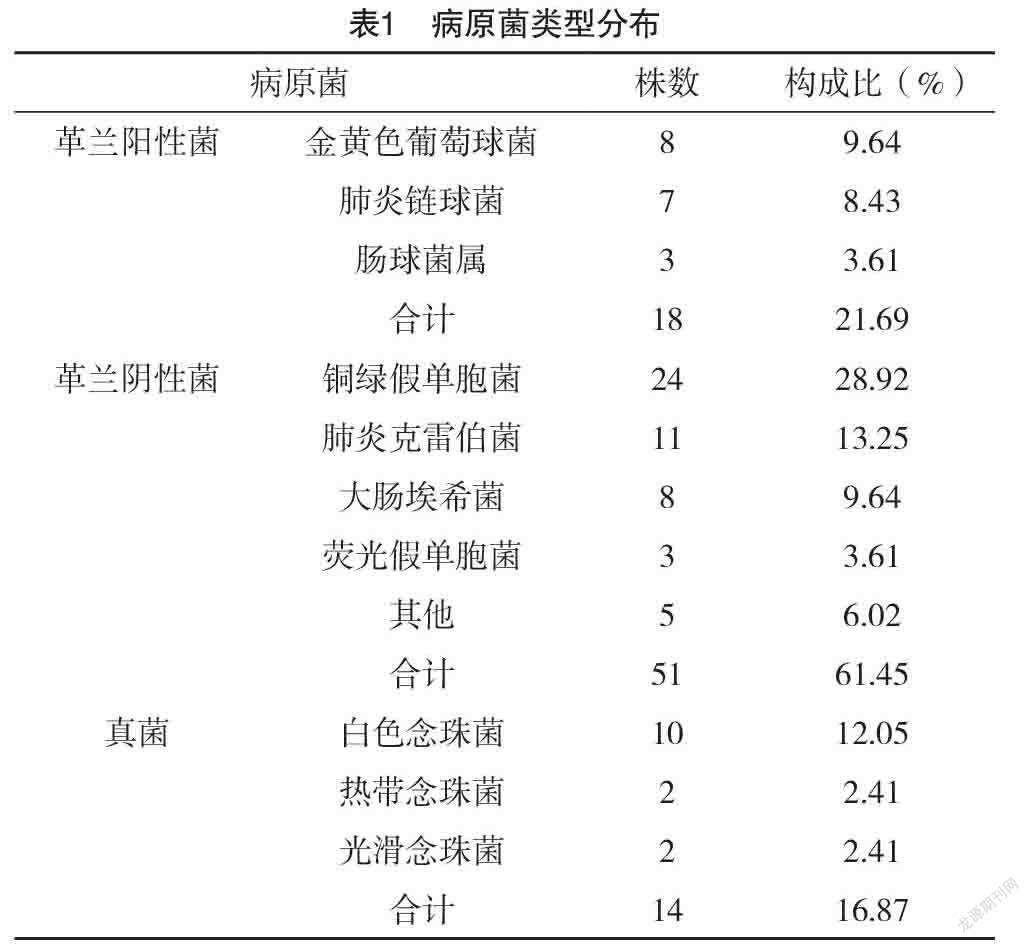



【摘要】 目的:分析慢性阻塞性肺疾病急性加重期(AECOPD)合并支氣管扩张患者痰培养病原菌分布及耐药性。方法:收集2019年1月-2020年8月本院60例痰培养阳性的AECOPD合并支气管扩张患者的临床资料,分析痰培养病原菌的分布及其耐药性情况。结果:共检测出病原菌83株,21.69%为革兰阳性菌,61.45%为革兰阴性菌,16.87%为真菌。革兰阳性菌中,金黄色葡萄球菌占9.64%,肺炎链球菌占8.43%;革兰阴性菌中,铜绿假单胞菌占28.92%,肺炎克雷伯菌占13.25%,大肠埃希菌占9.64%;真菌中,白色念珠菌占12.05%。金黄色葡萄球菌对氨苄青霉素的耐药率为100%;肺炎链球菌对左氧氟沙星、万古霉素的耐药率均为0。铜绿假单胞菌对头孢曲松、氨曲南的耐药率均为41.67%;肺炎克雷伯菌对青霉素类的耐药率为54.55%,头孢曲松为45.45%,大肠埃希菌对青霉素类、头孢类的耐药率较高,达100%。白色念珠菌的两性霉素B的耐药率为10.00%,氟康唑为50.00%。结论:AECOPD合并支气管扩张患者常由革兰阴性菌感染,且对头孢类、青霉素类抗菌药耐药性较高,耐药性较为普遍,临床用药时还需合理使用各类抗菌药。
【关键词】 慢性阻塞性肺疾病 支气管扩张 病原菌 耐药性
Distribution and Drug Resistance of Pathogens in Sputum Culture of Patients with AECOPD and Bronchiectasis/ZHANG Jie, SONG Jiao, BU Shan. //Medical Innovation of China, 2021, 18(28): 0-093
[Abstract] Objective: To analyze the distribution and drug resistance of pathogens in sputum culture of patients with acute exacerbation of chronic obstructive pulmonary disease (AECOPD) and bronchiectasis. Method: The clinical data of 60 patients with AECOPD complicated with bronchiectasis with positive sputum culture in our hospital from January 2019 to August 2020 were collected to analyze the distribution and drug resistance of pathogens in sputum culture. Result: There were 83 strains of pathogens detected out, including Gram-positive bacteria (21.69%), Gram-negative bacteria (61.45%) and fungi (16.87%). Among Gram-positive bacteria, Staphylococcus aureus and Streptococcus pneumoniae accounted for 9.64% and 8.43%, respectively. Among Gram-negative bacteria, Pseudomonas aeruginosa, Klebsiella pneumoniae and Escherichia coli accounted for 28.92%, 13.25% and 9.64%, respectively. Among fungi, Candida albicans accounted for 12.05%. The resistance rate of Staphylococcus aureus to Ampicillin was 100%. The resistance rate of Streptococcus pneumoniae to Levofloxacin and Vancomycin was 0. The resistance rate of Pseudomonas aeruginosa to Ceftriaxone and Aztreonam was 41.67%. The resistance rate of Klebsiella pneumoniae to Penicillins and Ceftriaxone were 54.55% and 45.45%. The drug resistance rate of Escherichia coli to Penicillins and Cephalosporins is as high as 100%. The resistance rate of Candida albicans to Amphotericin B and Fluconazole were 10.00% and 50.00%. Conclusion: There is Gram-negative bacteria infection in most patients with AECOPD and bronchiectasis, with high resistance to Cephalosporins and Penicillins. The resistance is common. It is necessary to use various antibacterials rationally in clinical medication.
[Key words] Chronic obstructive pulmonary disease Bronchiectasis Pathogen Drug resistance
First-author’s address: Korla Hospital, Second Division, Xinjiang Production and Construction Corps, Korla 841000, China
doi:10.3969/j.issn.1674-4985.2021.28.022
慢性阻塞性肺疾病急性加重期(acute exacerbation of chronic obstructive pulmonary disease,AECOPD)会出现气道狭窄、黏膜水肿、分泌物增多,临床症状表现为短期内咳嗽、喘息加重,且为黏液浓痰,严重者可因为呼吸衰竭而死亡[1-2]。近年来,AECOPD合并支气管扩张的发生率逐年升高,因患者的气道发生阻塞,支气管壁结构破坏,继而引起支气管持久性扩张,故患者易合并支气管扩张[3]。慢性炎症的主要因素是感染,包括细菌感染、病毒感染、非典型病原体感染,相关研究显示,多数AECOPD患者的痰液中可检测到病原菌,尤其是细菌感染[4-5]。……