江苏省不同规模药品生产企业药物警戒工作现状对比研究
2020-09-21王佳域柳鹏程陈巧云李明黄倩倩陈锦敏孙骏
王佳域 柳鹏程 陈巧云 李明 黄倩倩 陈锦敏 孙骏
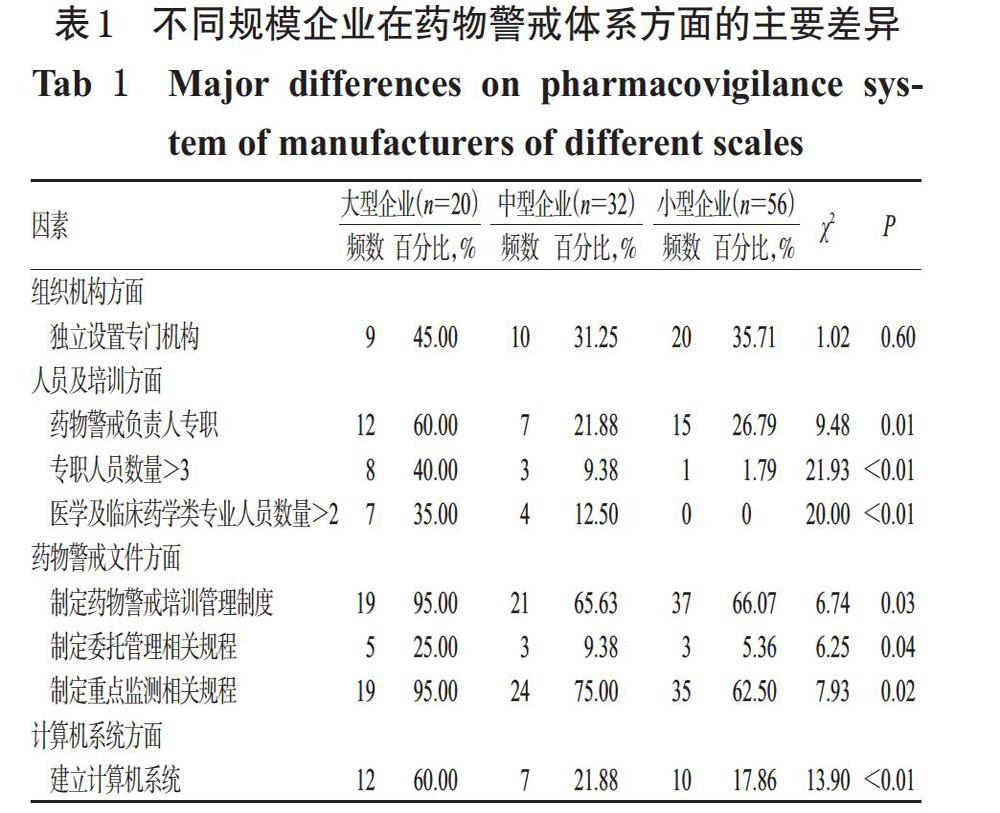
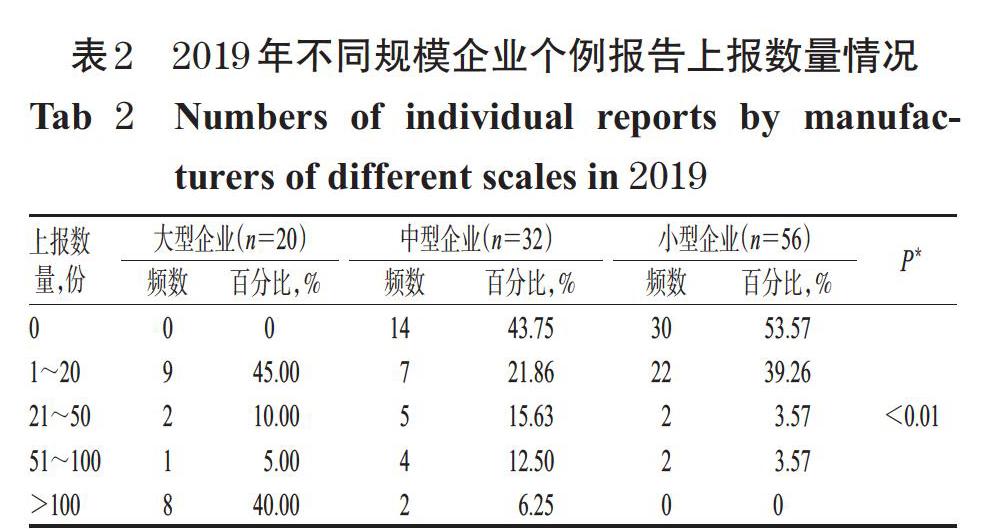

摘 要 目的:研究江蘇省大、中、小型药品生产企业的药物警戒工作现状,为不同规模企业的药物警戒工作开展提供参考。方法:通过问卷调查及检索相关网站,对江苏省内108家企业的药物警戒工作现状进行考察,调查不同规模企业的药物警戒情况(组织机构、人员及培训、药物警戒文件、计算机系统)、药品安全性监测情况(个例报道、定期安全性更新报告、上市后安全性研究)和药品风险管理情况(信号管理、风险管理计划、风险控制措施、药品安全性沟通),并分别提出建议。结果与结论:不同规模企业在组织机构设置(独立设置专门机构)方面无显著差异(P=0.60),大部分企业在独立设置药物警戒专门机构上的比例均不足五成,在人员及培训(负责人专职情况、专职人员数、其中医学及临床药学类人员数)、文件(制定培训管理制度、委托管理与重点监测相关规程)和计算机系统3个方面存在显著差异(P<0.05);不同规模企业在个例报告的主要收集途径上无显著差异,但大型企业2019年自主报告数量(P<0.01)、针对定期安全性更新报告设有质量控制流程的比例(P=0.01)、近5年开展过上市后安全性研究的比例(P<0.01)均显著高于中、小型企业;大型企业(70.00%)和中型企业(84.38%)认为“缺乏技术指导原则”是影响信号管理的重要因素的比例高于小型企业(53.57%)(P=0.01);大型企业(60.00%)和中型企业(50.00%)在近5年内开展过风险管理计划的比例高于小型企业(30.36%)(P=0.04);大型企业(50.00%)在近5年内采取过说明书修订措施的比例高于中型企业(37.50%)和小型企业(25.00%)(P=0.05);大型企业(70.00%)和中型企业(59.38%)针对药店药师实施沟通活动的比例高于小型企业(32.14%)(P<0.01)。整体而言,大型企业在药物警戒体系、药品安全性监测、药品风险管理等方面优于中、小型企业。大型企业在主动开展风险管理计划方面、中型企业在专职负责人方面、小型企业在药物警戒体系等方面均有一定程度欠缺。因此,笔者建议大型企业以有效管控品种风险为目标,主动加强风险管理;中型企业继续提升主体责任意识,加强药物警戒工作的资源投入力度;小型企业应切实提高重视程度,重点改善药物警戒体系及具体工作的合规性。
关键词 药物警戒;药品上市许可持有人;药品生产企业;企业规模;现状
ABSTRACT OBJECTIVE: To study the current situation of pharmacovigilance work in large, medium and small-scale pharmaceutical manufacturers in Jiangsu Province, and to provide reference for the pharmacovigilance development of drug manufacturers with different scales. METHODS: The situation of pharmacovigilance work in 108 manufacturers in Jiangsu province was investigated through a questionnaire survey and related websites. The pharmacovigilance work (organization, personnel and training, document, computer system), drug safety monitoring (case report, regular safety update report, post-marketing safety research) and drug risk management (signal management, risk management plan, risk control measures, drug safety communication) of different manufacturers were investigated to put forward the suggestions. RESULTS & CONCLUSIONS: There was no significant difference in the organizational structure (independently established specialized agencies) among manufacturers of different scales (P=0.60). Most of the manufacturers had less than 50% of the proportion in the independent establishment of specialized institutions for pharmacovigilance. There was significant difference in personnel and training (situation and number of full-time staff in charge, medical and clinical pharmacy personnel number), document (formulating training management system, entrusted management and key monitoring procedures), computer system (P<0.05). There was no difference in the main collection ways of case reports among manufacturers of different scales; however, the number of independent reports in 2019 (P<0.01), the proportion of quality control process for regular safety update reports (P=0.01), and the proportion of carrying out post-marketing safety research in recent five years (P<0.01) in large-scale manufacturers were all significantly higher than small- and medium-scale manufacturers. The proportions of large-scale manufacturers (70.00%) and medium-scale manufacturers (84.38%), which considered “lack of technical guidelines” as an important factor affecting signal management, were higher than that of small-scale manufacturers (53.57%) (P=0.01); the proportions of large-scale manufacturers (60.00%) and medium-scale manufacturers (50.00%), which had carried out risk management plans in the past five years, were higher than that of small-scale manufacturers (30.36%) (P=0.04); the proportion of large-scale manufacturers (50.00%), which adopted the measures in recent 5 year, was higher than medium-scale manufacturers (37.50%) and small-scale manufacturers (25.00%); the proportions of large-scale manufacturers (70.00%) and medium-scale manufacturers (59.38%), which carried out communication for pharmacists, were higher than small-scale manufacturers (32.14%) (P<0.01). Large-scale manufacturers outperformed small- and medium-scale manufacturers in terms of pharmacovigilance system, drug safety monitoring and drug risk management. Large-scale manufacturers had a certain degree of lack of initiative on performing risk management plans, medium-scale manufacturers on full-time staffs in charge, and small-scale manufacturers on pharmacovigilance system. So, it is recommended that large-scale manufacturers take effective control of variety risk as the goal and actively risk management; medium-scale manufacturers should continuously enhance the awareness of responsibility and improve the investment of resources on pharmacovigilance work; small-scale manufacturers should pay more attention to improving the pharmacovigilance system and the compliance of specific work.
KEYWORDS Pharmacovigilance; Holder of drug marketing authorization; Drug manufacturers; Manufacturer scale;Current situations
近年来,以落实药品生产企业主体责任为目的的政策与举措不断出台[1-2],企业在药品不良反应监测方面的意识和能力已有大幅提升,但其当前工作仍以“被动监测”药品不良反应/事件为主,主动监测及风险管理较为薄弱,同时大多数企业尚未建立贯穿药品全生命周期、以风险管理为核心的监测体系——药物警戒体系[3]。新修订《药品管理法……