对南派酱油原料预处理工艺优化提升的研究
2020-06-08符姜燕侯冶海赵颖易九龙李子彤
符姜燕 侯冶海 赵颖 易九龙 李子彤
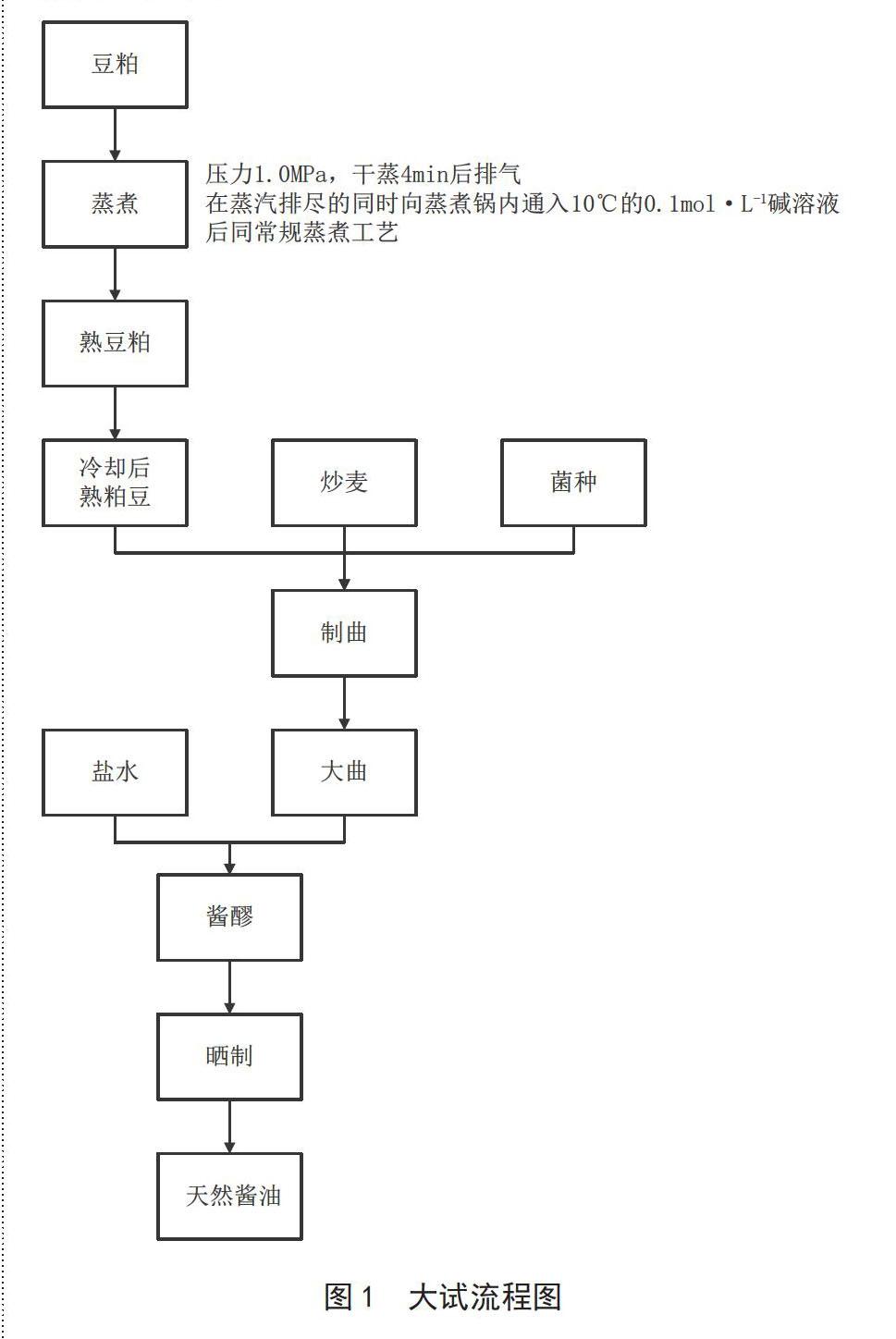


摘 要:南派酱油主要原料为豆粕,本文确定了豆粕前处理的工艺参数,在1.0 MPa的压力下,干蒸4 min后排气,在蒸汽排尽的同时,向蒸煮锅内通入10 ℃的0.1 mol·L-1的碱液;豆粕经过前处理后,使得熟料的消化率达到92.56%,采用处理后的豆粕发酵的天然酱油,氨基酸态氮均值为1.08 g/100 mL,全氮均值为1.52 g/100 mL,与未经前处理豆粕发酵的酱油相比,分别提升10.2%与6.2%。将该技术应用于南派酱油的酿造,可提升酱油品质。
关键词:豆粕干蒸;蛋白质变性;熟料消化率;原料利用率
Abstract:The main raw material of Nanpai soy sauce is soybean meal. In this paper, the process parameters of soybean meal pretreatment are determined. Under the pressure of 1.0 MPa, dry steam for 4 min, exhaust, and while the steam is exhausted, pass 0.1 mol·L-1 of 10 ℃ into the cooking pot. The alkaline solution of L and soybean meal undergoes pre-treatment, so that the digestibility of clinker reaches 92.56%. Using the natural oil fermented from the treated soybean meal, the average amino acid nitrogen is 1.08 g/100 mL, and the total nitrogen is 1.52 g/100 mL, and Compared with the soy sauce fermented without pretreatment, soybean meal increased by 10.2% and 6.2% respectively. The technology is applied to the brewing of Nanpai soy sauce, which can improve the quality of soy sauce.
Key words:Soybean meal; Protein denaturation; Clinker digestibility; Raw material utilization
醬油是调味品中需求稳定且增速可观的品类,过去5年行业CAGR接近20%,预计未来三年行业增速仍能保持在10%左右[1-3]。近年来,随着大豆原材料的转基因、供求、成本等问题[4],越来越多的企业选用蛋白质含量更高、全氮利用率较高且价格较低的豆粕作为酱油生产的蛋白质原料[5]。因此,不断优化豆粕蒸煮生产工艺,提升原料利用率,降低生产本,获得氨基酸态氮含量较高、鲜味十足的酱油是我国酱油生产企业需不断探索研究的课题。
豆粕是大豆经过适当的热处理(一般低于100 ℃),调节其水分至8%~9%,轧扁,然后加入有机溶剂浸泡或喷淋,使其中油脂被提取[6-8],再去除豆粕中溶剂(或用烘干法)得到。豆粕中蛋白质含量高,约为大豆全氮含量的1.2倍,而豆粕价格比大豆便宜,含脂肪低,水分少,易破碎,其他成分与大豆相同[9]。酱油生产的主要蛋白质原料自古以来是大豆,是由于豆粕蒸煮较难,难以得到均匀的蒸豆。同时制曲质量不稳定[10],易污染杂菌,发酵不完全,残糖高。……
