交通仿真课程中动态交通分配教学效果分析
2019-10-21章立辉
章立辉
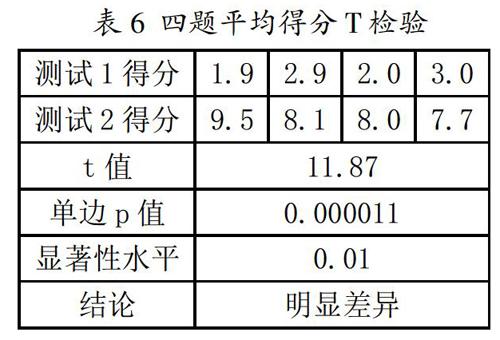
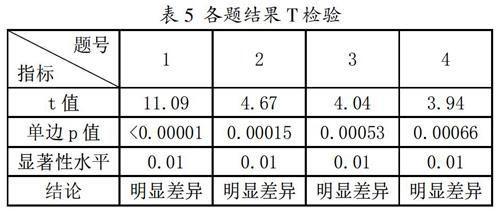
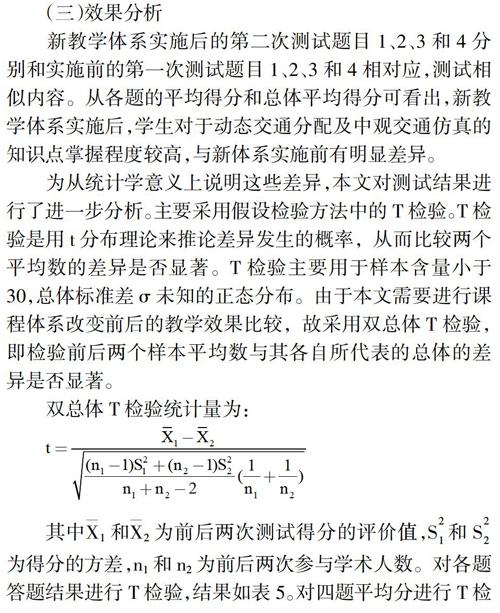
摘 要:交通仿真课程一般以微观交通仿真为主建立教学体系。而微观交通仿真越来越难以满足不断增长的工程实践需求,因此对浙江大学研究生课程《交通仿真技术》进行教学改革,将动态交通分配及中观交通仿真的知识点融入到课程体系中。为评价教学改革效果,对新课程体系实施前后,学生掌握动态交通分配相关知识进行课题测试。文章给出两次测试具体结果,并采用T检验,对比两次测试的得分情况。T检验所得p值远小于0.01,因此可以得出结论,新课程体系实施后学生对于动态交通分配及中观交通仿真相关知识掌握显著提高,置信度远高于99%。
关键词:动态交通分配;交通仿真;课程教学;效果分析
中图分类号:G640 文献标志码:A 文章编号:2096-000X(2019)17-0086-03
Abstract: Traffic simulation courses are normally built based on microscopic traffic simulation. Due to its limitations, microscopic simulation becomes unable to accommodate the needs raised in field projects, thus, course reformation was performed to fuse teaching materials related to dynamic traffic assignment and mesoscopic traffic simulation. To evaluate the effect of the course reformation, tests on dynamic traffic assignment and simulation were carried out before and after the course reformation. This paper gives the results of the two tests, and applies T-tests to compare the two groups of scores students obtained in the tests. The p-values in the T-tests are all far smaller than 0.01, so, conclusions can be drawn that students did gain knowledge about dynamic traffic assignment and mesoscopic traffic simulation through the new course study.
Keywords: dynamic traffic simulation; traffic simulation; course teaching; evaluation
一、概述
課程《交通仿真技术》为浙江大学交通工程相关专业研究生的核心课程。课程前期以微观交通仿真原理及VISSIM微观仿真操作为主要教学内容。由于微观仿真本身有一定的局限性,如:难以有效捕捉各项出行行为、难以仿真大规模路网、所需输入数据量巨大、校准方法不成熟等。微观仿真越来越难以满足不断增长的工程实践要求,而动态交通分配(DTA)技术属于宏中观仿真,可以在一定程度上克服上述缺点。为了更全方位地培养学生,对课程进行改革,将动态交通分配及中观交通仿真的知识点教学融入到课程体系中,使课题体系从微观仿真单核心体系转变为微观仿真和中观仿真双核心体系。……