基于次约束的深基坑施工风险应对能力评价
2018-09-19夏宗龙
夏宗龙
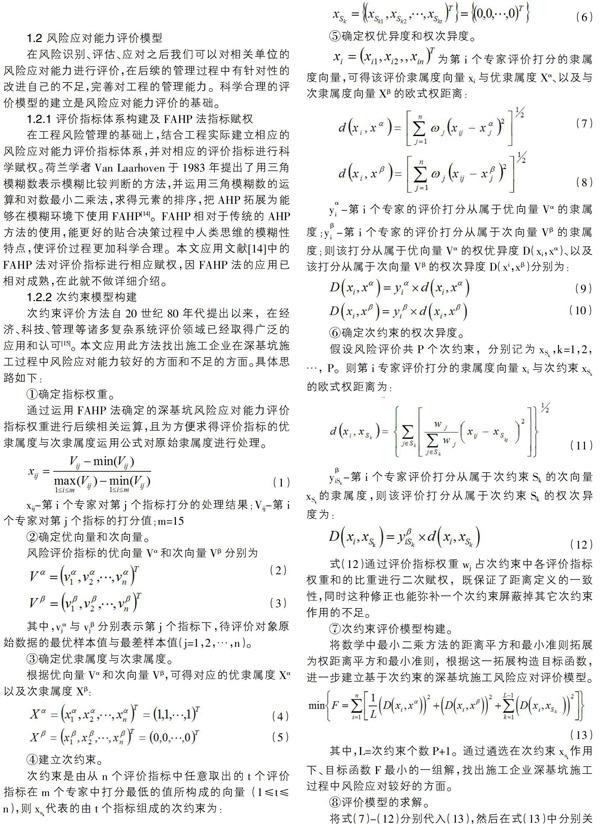
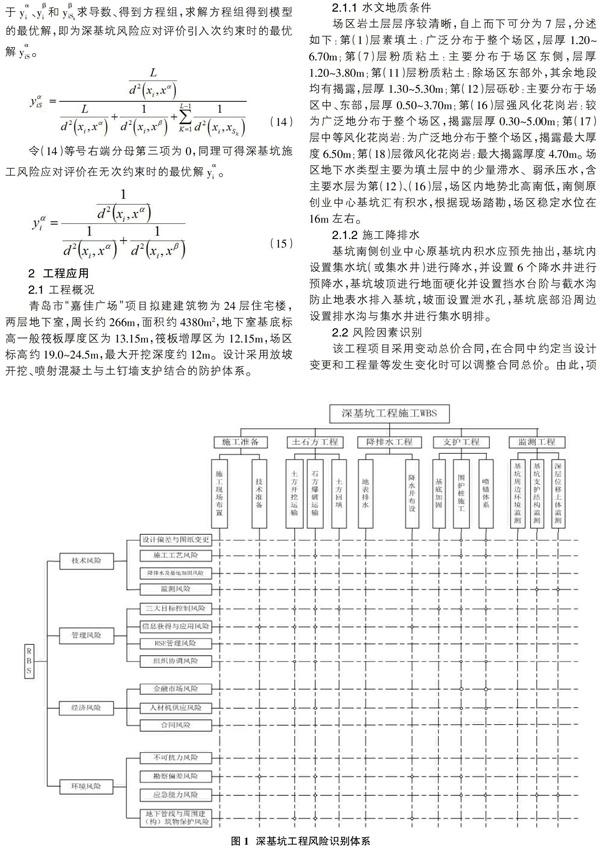
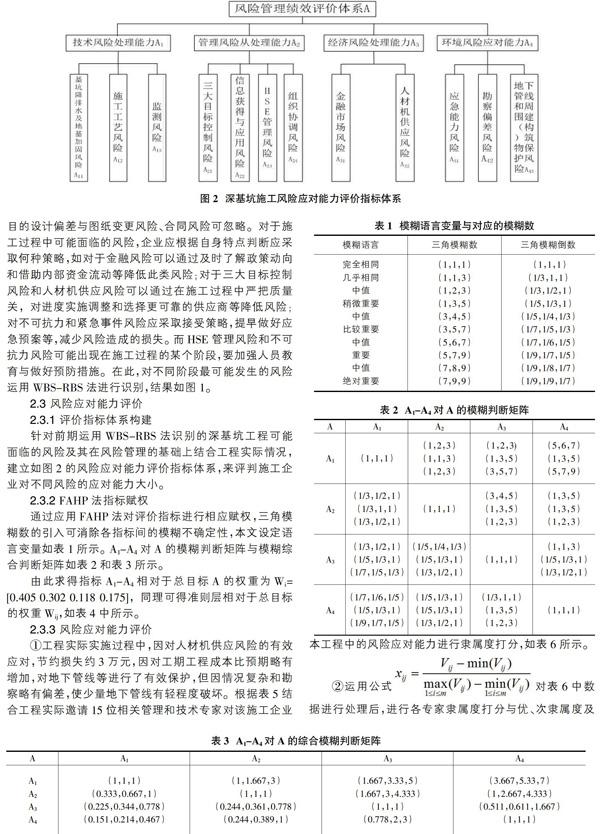
摘要:为帮助施工企业找出其在深基坑施工过程中风险应对能力的优势因素与劣势因素,使其在后续的工程管理中不断提升自身的风险应对能力。本文采用WBS-RBS方法对青岛“嘉佳广场”深基坑风险进行识别,结合工程实际构建风险应对能力评价指标体系,运用FAHP确定评价指标权重,并引入次约束理论建立评价模型对深基坑施工风险应对能力进行科学评价。为类似施工企业提供了一种自身能力考量的模型借鉴,具有一定的现实意义。
Abstract: The purpose of this article is to help the construction enterprise to find out its superiority factors and inferior factors in the risk response ability of the deep foundation pit construction process and make it continue to enhance its risk response ability in the follow-up project management. In this paper, WBS-RBS method is used to identify the risk of deep foundation pit in "Jiajia Square of Qingdao", on the basis of this, the evaluation index system of risk response capacity is established with engineering practice. The author uses the FAHP to determine the weight of the evaluation index and the sub-constraint theory is adopted to establish the evaluation model for the deep foundation pit construction risk response ability to carry out scientific evaluation. This model provides a self-reference capability considerations for similar construction enterprises, it has certain reference significance.
关键词:深基坑;风险;WBS-RBS法;FAHP;次约束
Key words: deep foundation pit;risk;WBS-RBS method;FAHP;sub-constraint
中图分类号:TU753 文献标识码:A 文章编号:1006-4311(2018)30-0018-07
0 引言
随着城市建设的快速发展,地下空间的拓展成为工程建设的重要组成部分。许多深基坑在城市中心地带施工,由于技术难度高、周边环境复杂、不可预见因素多等各种风险因素的存在,致使深基坑施工中存在许多安全隐患。如何防范和应对复杂多变的风险,一直是相关专家和学者不断探究的论题。早在1995年,Morgenstern已经研究了岩土工程中的管理风险[1]。近年来,学者采用了故障树分析法、模糊层次综合评判法、贝叶斯网络概率模型等许多方法对深基坑施工风险进行研究[2]。例如,周红波(2009)、吕超(2014)[3-4]等采用以故障樹分析为基础结合工作分解结构(WBS)-风险分解结构(RBS)对风险进行分析与识别;李朝阳(2014)、应国柱(2016)、刘俊伟(2016)等[5-7]采用模糊综合评判法对深基坑风险进行评价;赵红(2008)、吴贤国(2014)等[8-9]基于贝叶斯网络理论对工程施工风险管理进行分析,并取得了较好的效果。……