微课教学模式在烤瓷熔附金属全冠实训教学中操作能力的提升作用
2017-08-17史勇勇郝洁
史勇勇?郝洁
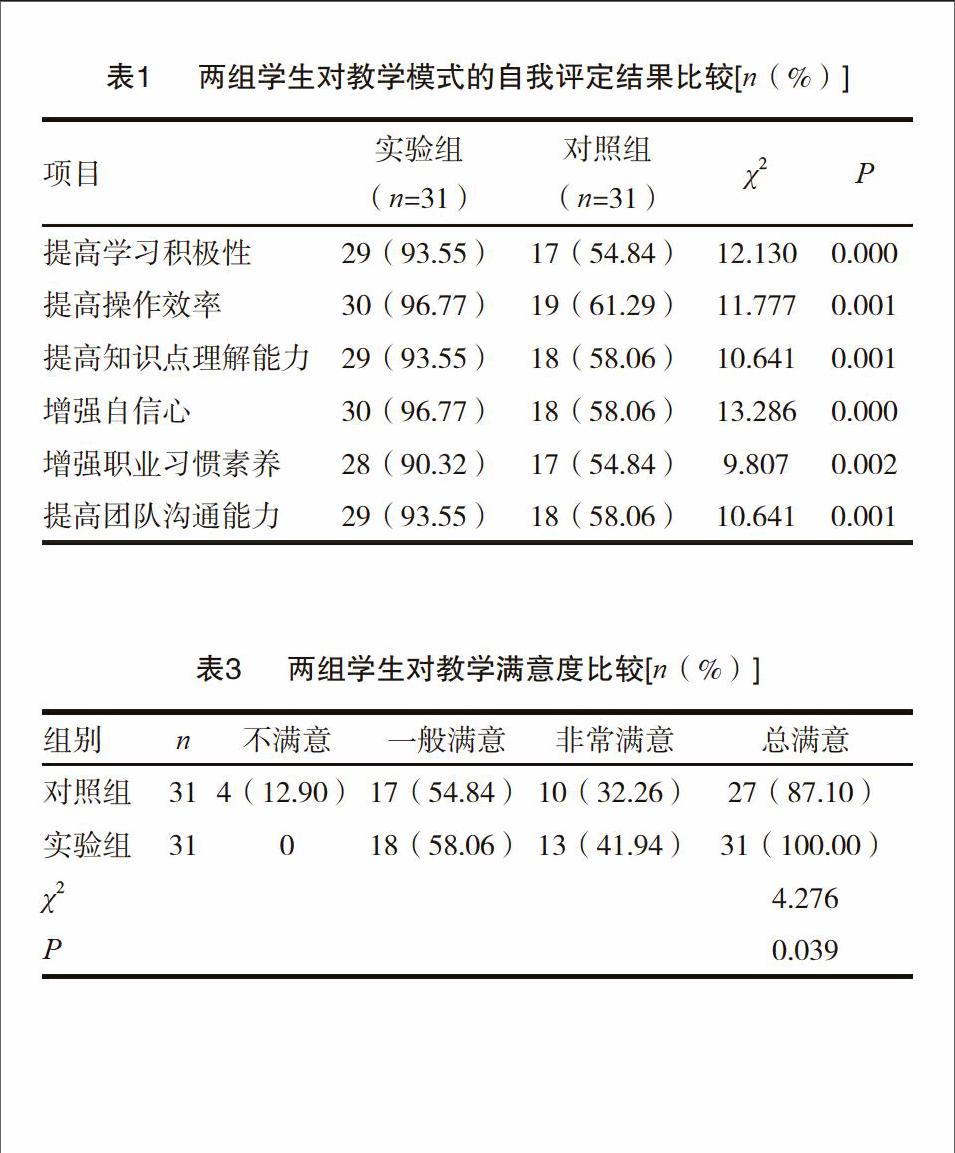
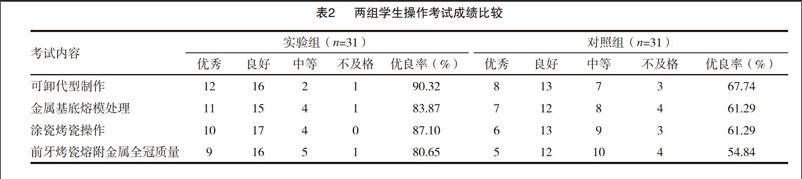
[摘要] 目的 研究并探讨微课教学模式在口腔固定修复工艺技术教材内烤瓷熔附金属全冠章节实训教学中操作能力的提升作用。 方法 选取我校2016级口腔修复工艺专业学生62例作为研究对象,分为对照组、实验组,每组各有31名学生,对照组采取传统教学模式进行教学,实验组采取微课教学模式进行教学,比较两组学生对教学模式的自我评定结果、考试成绩、教学满意度。 结果 相比于对照组,实验组自我评定结果、考试成绩、教学的满意度明显高于对照组,差异有统计学意义(P<0.05)。 结论 在口腔医学专业教学中,采用微课教学模式对学生进行口腔固定修复工艺教学,可有效提高教学效率,提高学生对口腔固定修复工艺的操作掌握程度。
[关键词] 口腔固定修复工艺;微课教学模式;临床教学;口腔医学
[中图分类号] R783-4 [文献标识码] A [文章编号] 2095-0616(2017)14-32-03
Promoting function of micro class teaching mode in practice teaching of porcelain fused to metal crown
SHI Yongyong HAO Jie
Lianzhou Medical School of Guangdong,Lianzhou 513400,China
[Abstract] Objective To explore the the promotion of operation ability of micro class teaching mode in the oral fixed repair technology,teaching materials,porcelain fused to metal full crown chapter of the teaching practice. Methods 62 students of grade 2016 oral rehabilitation were selected as the research objects.They were divided into control group and experimental group with 31 cases in each.Students in control group were with traditional teaching mode for teaching,and students in experimental group were with micro class teaching model for teaching.The students self-evaluation results,examination results and teaching satisfaction of the two groups were compared. Results Compared with the control group,the results of self-assessment,examination and teaching satisfaction of the experimental group were significantly higher than that of the control group (P<0.05). Conclusion In the teaching of Stomatology, micro class teaching model for oral rehabilitation of students can improve the teaching efficiency,improve the students proficiency in oral fixation.
[Key words] Oral rehabilitation technology;Micro teaching model;Clinical teaching;Stomatology
微課教学模式是一种较为新型的教学模式,具有学习时间短、教学内容精炼等优点,是一种更微小和碎片化的课程,着重以讲授单一知识点或重点突破某个教学问题为主,教学时间更短,往往借助网络环境,以视频和音频等多媒体的方式在线将重点、难点等知识点展现给学生[1-4]。本次研究选取2016级口腔修复工艺专业班级学生分组进行对照研究,分别采取传统教学模式、微课教学模式进行教学,并比较其教学效果及评价。
1 资料与方法
1.1 一般资料
选取我校2016级口腔修复工艺专业班级62例作为研究对象,所有学生均为初中起点。研究前,所有学生均对此次研究方法及目的进行明确,自愿参与研究,且均于2016年9~12月期间进行研究。采取随机分组法将学生分为对照组、实验组,每组各31名学生,其中对照组男19人,女12人,年龄15~17岁,平均(16.1±0.9)岁;……