抗血小板聚集药物致上消化道出血的影响因素研究
2016-08-11牛浩
牛浩
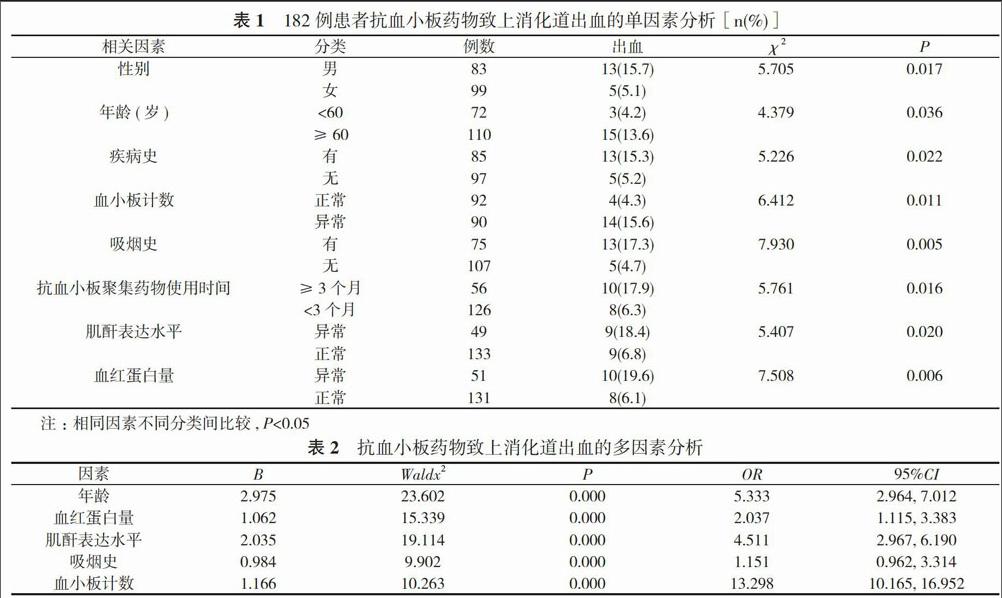
【摘要】 目的 分析抗血小板聚集药物致上消化道出血的影响因素。方法 182例接受经皮冠状动脉介入治疗(PCI)、并服用双联抗血小板聚集药物的冠心病患者, 收集其一般资料和临床资料, 对比不同因素的消化道出血情况, 分析抗血小板聚集药物致上消化道出血的影响因素。结果 182例患者中共18例患者发生上消化道出血, 发生率为9.9%。单因素分析结果显示抗血小板聚集药物致患者上消化道出血的影响因素包括性别、年龄、疾病史、血小板计数异常、吸烟史、抗血小板药物使用时间、肌酐表达水平、血红蛋白量(P<0.05), 多因素分析结果显示年龄、血红蛋白量、肌酐表达水平、吸烟史、血小板计数为独立影响因素(P<0.05)。结论 抗血小板聚集药物致患者上消化道出血的影响因素较多, 临床应积极分析, 及时采取措施预防, 以降低患者的上消化道出血发生率。
【关键词】 上消化道出血;抗血小板聚集;影响;研究
DOI:10.14163/j.cnki.11-5547/r.2016.20.005
【Abstract】 Objective To analyze influence factors by anti-platelet aggregation drug inducing upper gastrointestinal hemorrhage. Methods General and clinical data were collected from 182 coronary heart disease patients, who received percutaneous coronary intervention (PCI) and dual anti-platelet aggregation drug. Comparison was made on gastrointestinal hemorrhage with different factors to analyze influence factors by anti-platelet aggregation drug inducing upper gastrointestinal hemorrhage. Results Among the 182 patients, there were 18 cases with upper gastrointestinal hemorrhage, with incidence as 9.9%. Univariate analysis showed influence factors for anti-platelet aggregation drug-induced upper gastrointestinal hemorrhage as gender, age, medical history, abnormal platelet count, smoking history, anti-platelet aggregation drug administration time, creatinine expression level, and hemoglobin level (P<0.05). Multivariate analysis showed age, hemoglobin level, creatinine expression level, smoking history and platelet count as independent influence factors (P<0.05). Conclusion There are multiple influence factors for anti-platelet aggregation drug-induced upper gastrointestinal hemorrhage. Active clinical analysis and timely measure implement are necessary to reduce incidence of upper gastrointestinal hemorrhage.
【Key words】 Upper gastrointestinal hemorrhage; Anti-platelet aggregation; Influence; Research
现阶段经皮冠状动脉介入术已被广泛应用于冠心病患者的临床治疗中, 为进一步改善患者的临床治疗效果, 在对患者实施经皮冠状动脉介入术后, 我国临床多给予患者抗血小板聚集药物, 目的是减少患者术后心脏不良事件的发生[1]。但较长一段时间的临床应用发现, 抗血小板聚集药物在获得良好疗效的同时, 也会导致患者出现不同程度的药物不良反应, 其中以上消化道出血最为严重, 可对患者原发疾病的临床治疗产生严重影响[2]。本文选取182例冠心病患者作为研究对象, 针对抗血小板聚集药物致上消化道出血的影响因素进行研究, 现报告如下。
1 资料与方法
1. 1 一般资料 选取2014年6月~2015年5月在本院接受PCI治疗、并服用双联抗血小板聚集药物的182例冠心病患者。所有患者入选时服用抗血小板聚集药物均未超过10 d, 均排除患有消化道恶性肿瘤和其他消化系统疾病, 其中, 男83例, 女99例, 年龄32~81岁, 平均年龄(56.3±8.9)岁。……