影响极高血浆脑钠肽水平心力衰竭患者的预后因素
2016-03-24许东晴龚辉
许东晴+龚辉
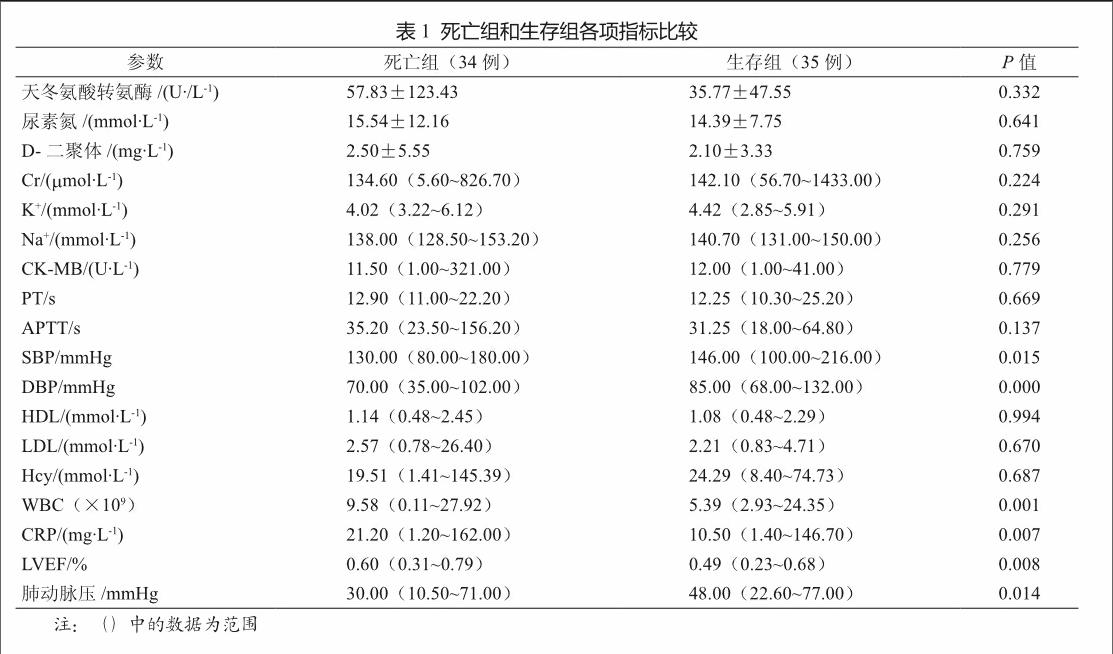
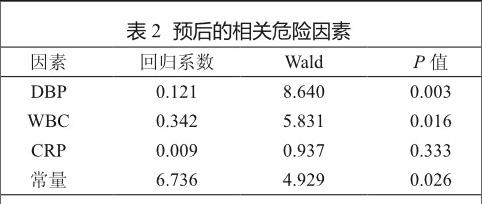
摘 要 目的:探讨影响极高血浆脑钠肽(BNP)水平(>5 000 pg/ml)心力衰竭患者的预后因素。方法:纳入2007-2013年收治的69例血浆BNP>5 000 pg/ml的心力衰竭患者,分为死亡组34例和生存组35例,回顾分析两组患者的各项临床指标,及其与患者的预后关系。结果:两组收缩压、舒张压、白细胞、C-反应蛋白、左室射血分数、肺动脉压比较差异有统计学意义(P<0.05)。Logistic回归分析发现,舒张压和白细胞是极高血浆BNP水平心力衰竭患者死亡的独立预测因子。结论:收缩压、舒张压、左室射血分数、白细胞、C-反应蛋白和肺动脉压是极高血浆BNP水平心力衰竭患者死亡预后的相关因素,舒张压和白细胞是患者死亡的独立危险因子。
关键词 心力衰竭 脑钠肽 预后
中图分类号:R541.6+1 文献标识码:A 文章编号:1006-1533(2016)04-0021-03
Prognostic factors affecting the heart failure patients with the extremely high plasma BNP level
XU Dongqing1, GONG Hui2*(1.Department of General Medicine, Zhujing Community Health Service Center of Jinshan District, Shanghai 201599, China; 2.Department
of Cardiology, Jinshan Hospital affiliated to Fudan University, Shanghai 201508, China)
ABSTRACT Objective: To investigate the prognosis factors influencing the heart failure patients with the extremely high plasma brain natriuretic peptide (BNP) level (>5 000 pg/ ml). Methods: Sixty-nine heart failure patients with the plasma BNP>5 000 pg/ ml were selected from 2007 to 2013 and divided into a death group and a survival one. All clinical data and the relationship with the prognosis of the patients in the two groups were retrospectively analyzed. Results: SBP, DBP, WBC, CRP, LVEF and pulmonary artery pressure in the two groups had the statistical significance (P<0.05). The logistic regression analysis found that DBP and WBC were the independent predictors of the death in the heart failure patients with the extremely high plasma BNP levels. Conclusion: SBP, DBP, LVEF, WBC, CRP, and pulmonary artery pressure are the prognostic factors of the death in the heart failure patients with the extremely high plasma BNP level, and DBP and WBC are the independent risk factors for the death in the heart failure patients with the extremely high plasma BNP level.
KEY WORDS heart failure; brain natriuretic peptide; prognosis
随着人们寿命的延长和社会老龄化加剧,心力衰竭(心衰)的发生率也逐年增加,已成为现今主要的公共卫生问题。心衰不仅严重影响患者的生活质量,其预后也很差,统计发现其病死率与肿瘤相差无几,约有50%的患者在5年内死亡[1]。因此,在临床工作中,需要明确影响心衰患者预后的主要因素,从而有效降低心衰患者的死亡率,改善预后。脑钠肽(brain natriuretic peptide,BNP)作为心衰的新诊断标准,受到国内外广泛关注[2]。研究证实,BNP对心衰的诊断、严重程度判断及预后评估具有重要意义,尤其在早期发现及指导临床治疗等方面表现出明显的优越性[3]。
目前,已知较低水平的血浆BNP有利于排除心衰诊断,但极高血浆BNP水平的意义仍不清楚,本研究回顾分析血浆BNP>5 000 pg/ml的心衰患者的各项临床指标,探讨影响极高水平BNP心衰患者预后的因素,为临床诊治提供帮助。
1 资料与方法
1.1 临床资料
收集2007-2013年复旦大学附属金山医院(43例)及其他医院(26例)血浆BNP值>5 000 pg/ml的心衰患者共69例,其中男性22例,女性47例。69例中死亡34例,年龄14.00~97.00岁,平均79.0岁;存活35例,年龄59.00~96.00岁,平均82.50岁。两组……