The Power of Pattern Stories for Chinese Literacy
2016-03-14
Dali Tan Northern Virginia Community College
The Power of Pattern Stories for Chinese Literacy
Helena Curtain University of Wisconsin-Milwaukee (emeritus)
Dali Tan Northern Virginia Community College
Pattern stories are stories in which elements are repeated with some variation. Pattern stories often have repeating core phrases or patterns which make it possible to predict what comes next. The rhythm or rhyme of pattern stories also helps move the language into a long-term memory. There are many different types of pattern stories but what they have in common is that at least one element is repeated. Pattern stories are available commercially but can also be teacher-created. Some pattern stories have more than one repeating element.
pattern stories; Chinese literacy; teacher-created stories
模式故事 中文读写能力 教师自编故事Tell me a story! Read me a story! These are familiar words to anyone who has spent time with children. But in the process of language learning, stories and picture books are not only for children because they build emotional connections and are the primary way humans learn about the world. Children’s picture books can be used as powerful tools to help students of all ages develop both oral and written language.
Picture books convey meaning through supportive pictures that very often connect with the text in a oneto-one correspondence and provide automatic support to help learners understand both the language and the concepts. Picture books are usually beautifully illustrated and visually appealing. Picture books provide authentic language (often in authentic cultural contexts) and examples of genuine communication. Picture books contain many kinds of stories and this article focuses on a special type of story found in picture books that is known by various names: “pattern stories”, “repetitive stories”, and “predictable stories”. For the sake of convenience, in this article we will refer to these types of stories as “pattern stories”.
What Are Pattern Stories?
Pattern stories are stories in which elements are repeated with some variation. There are repeating core phrases or patterns which make it possible to predict what comes next. Storylines, cultural sequences or concepts in pattern stories are familiar to readers. The rhythm or rhyme of pattern stories also helps move the language into a long-term memory. There are different types of pattern stories but what they have in common is that at least one element is repeated. Pattern stories are available commercially but can also be teacher-created. Some pattern stories have more than one repeating element.
What is extremely important is the fact that, even though many such stories are very simple, the narrative structure is very important and the stories must have a beginning, a middle and an end. Human brains have difficulty remembering isolated pieces of information because human brains are programmed to remember information that is organized according to the narrative structure with a beginning, a middle and an end. It is through oral stories with repetition and strong storylines that many cultures with no written language hand down their legends and traditions from generation to generation.
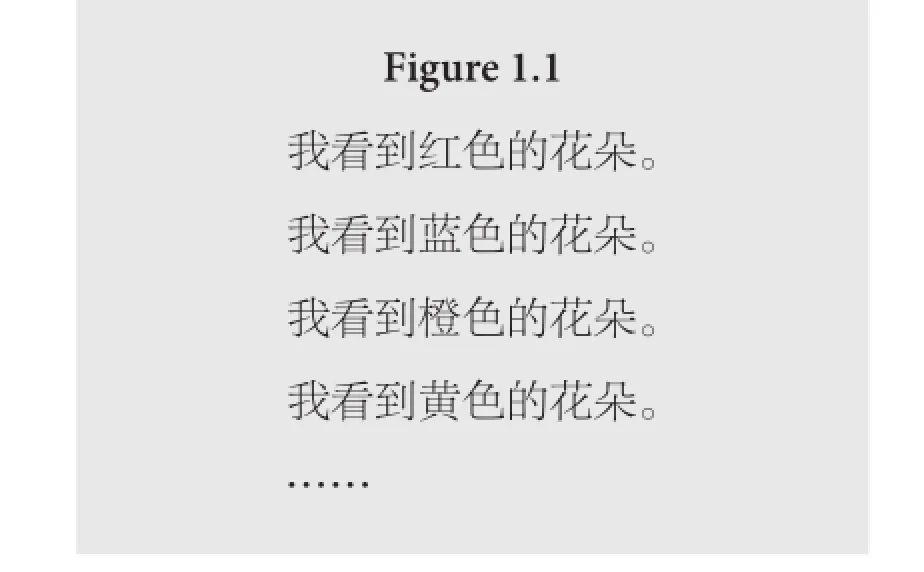
Figure 1.1 is an example of a non-story because there is no movement in the story and no satisfactory ending.
Why Choose Pattern Stories?
Pattern stories are especially helpful for the students who are working with Chinese literacy because they provide a meaningful context and thus help the brain link the meaning to the characters. The use of pattern stories encourages and requires readers to learn the characters embedded in logically-linked complete sentences rather than learn the characters through an isolated and scattered list of vocabulary items. Using pattern stories can help overcome a problem that mayoccur with Chinese literacy: Students may memorize the characters without understanding the meaning. This is often due to the fact that the characters are frequently learned and memorized out of context. Pattern stories facilitate and quicken the process for learners to make the connection between the form and the meaning of what they see on the page, and help transfer these connections into a long-term memory. The predictable design allows learners to understand the meanings of pattern stories more easily, thus lessening the “cognitive load” of the reading process.
The predictable nature of pattern stories provides many opportunities for repetition since the students can see the same words over and over again. As students repeat the line that appears throughout the text, they are matching oral language to the print and developing access to the written Chinese characters through the scaffolded use of repetition. The phrases that continually repeat throughout the story allow the readers to produce longer phrases or sentences by changing one central word.
Research in cognitive psychology shows that one of the best ways to practice and learn a language is through“tactful repetition”.3Pattern stories demonstrate some of the best practices in “tactful repetition” in which the learners are so intrigued by the stories that they do not realize that they are repeating the language focus and vocabulary items that are embedded in the instructional designs and lesson plans.
Pattern stories provide an opportunity for the extended listening experience as students listen to the story over and over again. Pattern stories also provide opportunities for speaking as they are sequenced and told and retold by the students. They provide chunks of language that can be building blocks for speaking and also for understanding the grammatical structure of the language.
Different Types of Pattern Stories
The following are explanations of various types of pattern stories which can be found, along with some examples of that type of story. The basic types are:
· Cumulative Story
· Familiar or Logical Sequence
· Question and Answer
· Repetition of a Word or a Phrase
· Rhyme
· Chain or Circular Story
· Combination Story
Cumulative Story
In a cumulative story each time something new happens, all the other events in the story are repeated.
The Napping House
There is a house,
A napping house,
Where everyone is sleeping.
And in that house,
There is a bed,
A cozy bed,
In a napping house,
Where everyone is sleeping.
And in that bed,
There is a granny,
A snoring granny,
On a cozy bed,
In a napping house,
Where everyone is sleeping.
And on that granny,
There is a child,
A dreaming child,
On a snoring granny,
On a cozy bed,
In a napping house,
Where everyone is sleeping.
And on that child,
There is a dog,
On a dreaming child,
On a snoring granny,
On a cozy bed,
In a napping home,
Where everyone is sleeping.
And so on so forth…
The story ends this way:
A wakeful flea,
Who bites the mouse,
Who scares the cat,
Who claws the dog,
Who thumps the child,
Who bumps the granny,
Who breaks the bed,
In the napping house,
Where no one now is sleeping.
(Adapted from https://clintoneslwiki.wikispaces.com/ file/view/Choral+Reading+-+The+Napping+House. pdf)
Familiar or Logical Sequence
The familiar or logical sequence in a pattern story can be days of the week, months of the year, seasons, the alphabet (in alphabetic languages), numbers, colors, mathematical patterns, nature patterns, and so on.
Here is an example of several sequences related to the topic of eating. Of course, the story can happen using any tense.
They ate one ...
They ate two....
They ate three....
And so on...
First they ate…
Second they ate…
Third they ate…
And so on...
In January they ate…
In February they ate…
In March they ate…
And so on…
On Monday they ate …
On Tuesday they ate…
On Wednesday they ate…
The story of “The Little Red Hen” follows the sequence of planting and harvesting. It also has a repetitive phrase.
One day as the Little Red Hen was scratching in a field, she found a grain of wheat.
“This wheat should be planted,” she said. “Who will plant this grain of wheat?”
“Not I,” said the Duck.
“Not I,” said the Cat.
“Not I,” said the Dog.
“Then I will do it myself,” said the Little Red Hen. And she did.
The story continues in this way with cutting the wheat, threshing the wheat, taking the wheat to the mill, and making the flour into bread. Each time the Little Red Hen asks the question about who will help her and each time the other animals answer “Not I,” and the Little Red Hen says, “Then I will do it myself.” Finally, she asks who will help to eat the bread, and all the animals answer “I will!” But the Little Red Hen says “No, No, I will eat it myself.”
Question and Answer
In a pattern story in the question and answer format, a similar question is repeated in every part of the story.
When they were hungry do you know what they ate?
They ate…
When they were hungry do you know what they ate?
They ate…
When they were hungry do you know what they ate?
They ate…
Repetition of a Word or a Phrase
In this type of pattern story, a phrase or a sentence is repeated. The examples below are traditional stories that follow this pattern.
In a Dark Dark Wood
In a dark dark wood, there was a dark dark path.
And on the dark dark path, there was a dark dark house.
And in the dark dark house, there was a dark dark (flight of) stairs.
And on top of the dark dark stairs, there was a dark dark room.
And in the dark dark room, there was a dark dark closet (wardrobe, bureau).
And in the dark dark closet (wardrobe, bureau), there was a dark dark box (chest).
And in the dark dark box (chest), there was…
A ghost!!!!!!!
The Little Red Riding Hood
(The Little Red Riding Hood is talking to the wolf who pretends to be her grandma.)
What big eyes you have.
All the better to see you with, my dear.
What big ears you have.
All the better to hear you with, my dear.
What big teeth you have.
All the better to eat you!
Rhyme
In a rhyming pattern story, rhyming words or rhyming patterns are used throughout the story. An example of a traditional European and North American fairy tale is “The Gingerbread Man”.
Run, run, run,
As fast as you can!
You can’t catch me.
I’m the gingerbread man.
Chain or Circular Story
In a chain or circular story, the ending leads back to the beginning so that the story begins and ends in the same place. For example:
If You Give a Mouse a Cookie
by Laura Joff Numeroff
If you give a mouse a cookie, he’s going to ask for a glass of milk.
When you give him the milk, he’s probably ask you for a straw.
When he’s finished, he’ll ask for a napkin.
Then he’ll want to look in a mirror to make sure he doesn’t have a milk mustache.
When he looks into the mirror, he might notice his hair needs a trim.
So he’ll probably ask for a pair of nail scissors.
When he’s finished giving himself a trim, he’ll want a broom to sweep up.
He’ll start sweeping.
He might get carried away and sweep every room in the house.
He may even end up washing the floors as well!
When he’s done, he’ll probably want to take a nap. You’ll have to fix up a little box for him with a blanket and a pillow.
He’ll crawl in, make himself comfortable and fluff the pillow a few times.
He’ll probably ask you to read him a story.
So you’ll read to him from one of your books, and he’ll ask to see the pictures.
When he looks at the pictures, he’ll get so excited he’ll want to draw one of his own.
He’ll ask for paper and crayons.
He’ll draw a picture.
When the picture is finished, he’ll want to sign his
name with a pen.
Then he’ll want to hang his picture on your refrigerator,
Which means he’ll need scotch tape.
He’ll hang up his drawing and stand back to look at it.
Looking at the refrigerator will remind him that he’s thirsty.
So he’ll ask for a glass of milk.
And chances are if he asks for a glass of milk, he’s going to want a cookie to go with it.
Patterns in Traditional Chinese Stories
There are a variety of pattern stories both in English and in Chinese. The Chinese pattern stories can be used as cultural rich authentic materials to help our students experience Chinese culture and also help teachers make connections with other school subjects such as math. The following are some examples of patterns found in traditional Chinese stories.
Combination of Familiar or Logical Sequence and Rhyme
七个果果
一二三四五六七,
七六五四三二一。
七个阿姨来摘果,
七个篮子手中提。
七个果子摆七样,
苹果、桃儿、石榴、 柿子、李子、栗子、梨。
Seven Fruits
One, two, three, four, five, six, seven,
Seven, six, five, four, three, two, one.
Seven aunties came to pick fruits,
Seven baskets they carry.
Seven kinds of fruits are displayed here—
Apple, peach, pomegranate, persimmon, plum, chestnut and pear.
乘法口诀儿歌
一只青蛙一张嘴,两只眼睛四条腿。
两只青蛙两张嘴,四只眼睛八条腿。
三只青蛙三张嘴,六只眼睛十二条腿。
四只青蛙四张嘴,扑通扑通跳下水!
Authentic Multiplication Children’s Rhyme
One frog, one mouth, two eyes, four legs.
Two frogs, two mouths, four eyes, eight legs.
Three frogs, three mouths, six eyes, twelve legs.
Four frogs, four mouths. Plop, plop into the water they go!
Combination of Repetition of a Word or a Phrase and Rhyme
登山
三月三,小三去登山。
上山又下山,下山又上山。
登了三次山,跑了三里三。
出了一身汗,湿了三件衫。
小三山上大声喊:
“离天只有三尺三!”
Up and Down the Mountain
March the third, Xiao San goes to climb the mountain.
Go up the mountain and go down the mountain,
Go down the mountain and go up the mountain again.
Climbed the mountain three times,
Covered three li1and three.
Sweating all over, soaked three shirts with sweat.
Xiao San shouted on the top of the mountain,
I am only three chi2and three away from the sky.
泥娃娃
泥娃娃,泥娃娃,一个泥娃娃,
也有那眉毛,也有那眼睛,眼睛不会眨;
泥娃娃,泥娃娃,一个泥娃娃,
也有那鼻子,也有那嘴巴,嘴巴不说话。
它是个假娃娃,不是个真娃娃,
它没有亲爱的妈妈,也没有爸爸。
泥娃娃,泥娃娃,一个泥娃娃,
我做她妈妈,我做她爸爸,
永远爱着她。
The Doll of Clay
The doll of clay.
The doll of clay.
She’s a doll of clay.
She has got eyebrows.
She has got eyes,
Which cannot wink.
The doll of clay.
The doll of clay.
She’s a doll of clay.
She has got a nose.
She has got a mouth,
Which cannot speak.
She’s but a doll of clay.
She’s not a living doll.
She has got no loving mom, no loving dad.
The doll of clay.
The doll of clay.
She’s a doll of clay.
I’ll be her mom.
I’ll be her dad.
Forever loving this doll of clay.
Repetition of a Word or a Phrase
抱
天空妈妈抱着小星,
大地妈妈抱着小草,
海洋妈妈抱着小鱼,
森林妈妈抱着小鸟,
大山妈妈抱着小溪,
祖国妈妈抱着小宝。
Carrying in Her Arms
The mother sky carries little stars in her arms.
The mother earth carries the little grass in her arms.
The mother ocean carries little fish in her arms.
The mother forest carries little birds in her arms.
The mother mountain carries little streams in her arms.
The motherland carries us all in her arms.
(Adapted from http://www.docin.com/p-305634654. html)
动物怎么叫?
小猫怎么叫?喵喵喵。
小狗怎么叫?汪汪汪。
小鸡怎么叫?叽叽叽。
小鸭怎么叫?嘎嘎嘎。
小羊怎么叫?咩咩咩。
老牛怎么叫?哞哞哞。
老虎怎么叫?噢噢噢。
青蛙怎么叫?呱呱呱。
大公鸡怎么叫?喔喔喔。
孩子们怎么说?你好,你好,你好!
What Does This Animal Say?
What does the cat say? Meow Meow Meow.
What does the dog say? Woof Woof Woof.
What does the chick say? Peep Peep Peep.
What does the duck say? Quack Quack Quack.
What does the lamb say? Ba Ba Ba.
What does the cow say? Moo Moo Moo.
What does the tiger say? Roar Roar Roar.
What does the frog say? Croak Croak Croak.
What does the rooster say? Cock a doodle do.
What do little children say? Nihao, Nihao, Nihao!
Note: Translated according to English mimetic words
(Adapted from http://wenku.baidu.com/link?url= cAls7QvUqE3IenB-duq2jemAl94CS83VNv ASGg8fWi5F966Jp39-IFo9u7k2rtktLhRu_ U6wAkl0XrrpyMYZNeMvaJR6IEr_a06IvFHl)
从前有座山
从前有座山,
山里有个庙,
庙里有个锅,
锅里有个盆儿,
盆儿里有个碗儿,
碗儿里有个碟儿,
碟儿里有个勺儿,
勺儿里有个豆儿,
我吃了,
你馋了,
我的故事讲完了。
Once Upon a Time There Was a Mountain
Once upon a time there was a mountain.
Inside the mountain there was a temple.
Inside the temple there was a large pot.
Inside the pot there was a large bowl.
Inside the large bowl there was a small bowl.
Inside the small bowl there was a small plate.
On the plate there was a spoon.
On the spoon there was a bean.
I ate the bean! And you wish you had the bean!
That is the end of my story.
(Adapted from http://baike.sogou.com/v67986995. htm)
Teacher-Created Pattern Stories
Pattern stories are easy and fun to write and many teachers find that the stories they write for their students are especially well-suited for their learning targets. When teachers create their own stories they can focus on the functional language and vocabulary that the students need and place them within a story that provides a meaningful context and an enjoyable experience with rhythm and patterns and of course has a satisfying narrative format of a beginning, a middle and an end. The two most commonly-used pattern stories are familiar or in a logical sequence, and have a question-and-answer pattern. You can see how pattern stories can be helpful in building the students’confidence and skills.
Familiar or Logical Sequence
你想吃什么?……