数字经济对我国物流业高质量发展的影响及机制研究
2024-06-21刘聪崔旋
刘聪 崔旋

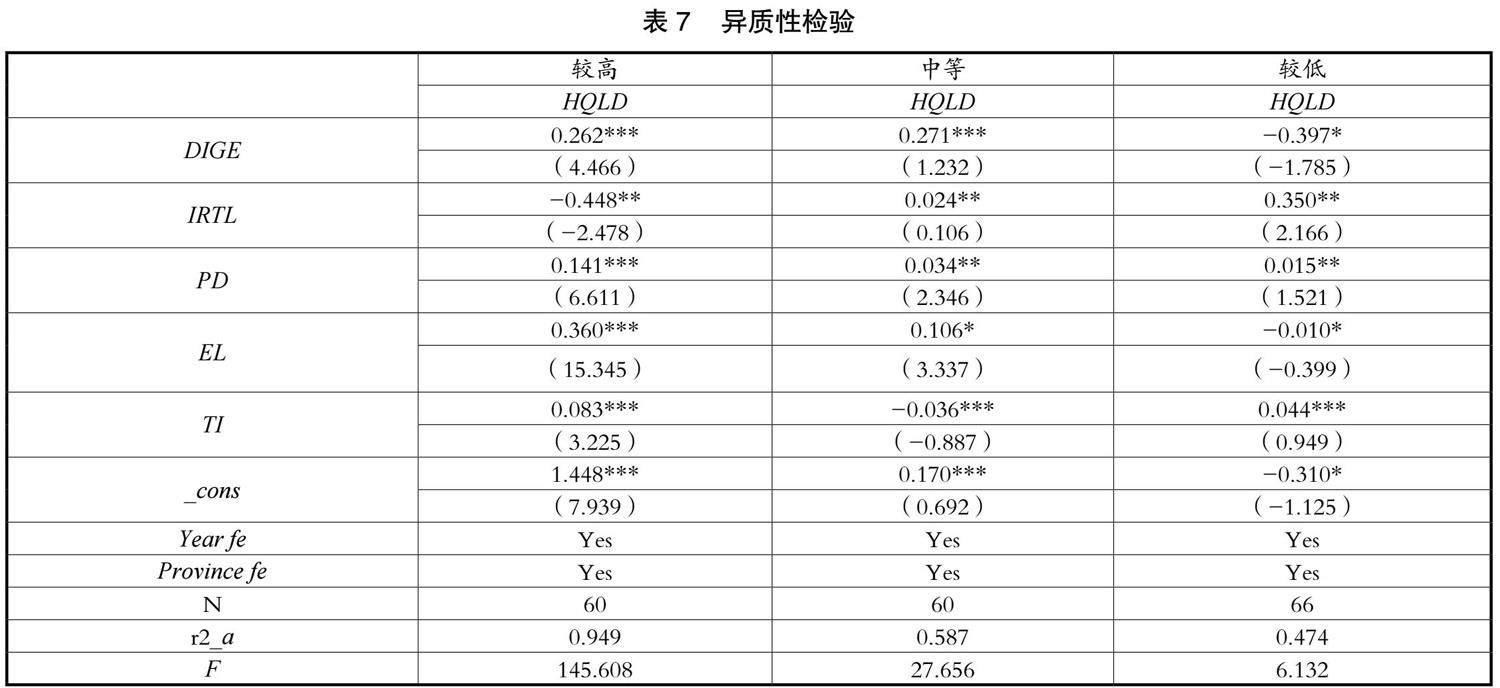

摘 要:文章选取了2015—2020年中国31个省的平衡面板数据,运用基准回归、中介效应回归、双重固定效应模型以及最小二乘法回归研究数字经济对我国物流业高质量发展的影响及影响机制。将样本按照经济发展水平分类,进行分组回归,发现数字经济对我国物流业高质量发展的影响程度在经济发展水平中等的地区最高,在经济发展水平较高的地区次之,但在经济发展水平较低的地区存在抑制作用。结果表明:数字经济明显促进了物流业的高质量发展,这一结论在进行一系列稳健性检验后仍然成立,且运输水平和地方财政支出是数字经济促进物流业高质量发展的重要作用机制。最后,提出相应的政策建议,为我国物流业高质量发展提供了新思路。
关键词:数字经济;技术改进;物流业高质量发展;运输水平;地方财务支出
中图分类号:F49文献标志码:ADOI:10.13714/j.cnki.1002-3100.2024.10.016
Abstract: This article selects balanced panel data from 31 provinces in China from 2015 to 2020, and uses benchmark regression, mediation effect regression, double fixed effect model and least squares regression to study the impact of the digital economy on the high-quality development of China's logistics industry and its influencing mechanism. The samples are divided into three categories: high, medium, and low levels of economic development, and heterogeneity analysis is conducted. The study reveales that the influence of the digital economy on the superior advancement of the logistics sector is greatest in regions with moderate levels of economic progress, followed by those with elevated economic standings. However, in areas with lower levels of economic development, there is an observed inhibitory effect. The findings suggest that the digital economy has notably boosted the high-quality development of China's logistics industry. After conducting multiple robustness tests, this conclusion still holds. Moreover, transportation level and local fiscal expenditure serve as crucial pathways for the digital economy to drive the advanced growth of the logistics sector. Finally, corresponding policy recommendations are proposed, providing new ideas for the high-quality development of China's logistics industry.
Key words: digital economy; technology improvement; high-quality development of logistics industry; transportation level; local financial expenditure
0 引 言
随着互联网和电子商务的飞速发展,物流业作为支撑这些行业的基础,其重要性日益凸显。2021年我国物流总产值达到335.2万亿元,同比增长9.2%,高于GDP增速1.1个百分点。各种物流相关投资超过3.5万亿元,为物流基础设施的建设提供了有力的支持。《“十四五”现代流通体系建设规划》《“十四五”冷链物流发展规划》以及商贸物流、数字经济等多项“十四五”专项规划从各自领域对现代物流进行战略部署,现代物流产业地位再上新台阶。但从国际形势来看,我国现代物流业的发展依然面临着严峻的挑战,需要为我国物流业高质量发展寻找新的路径。……