基于区块链和消费者敏感的供应链减排定价与模式选择研究
2024-06-21杜嘉倩梁喜
杜嘉倩 梁喜
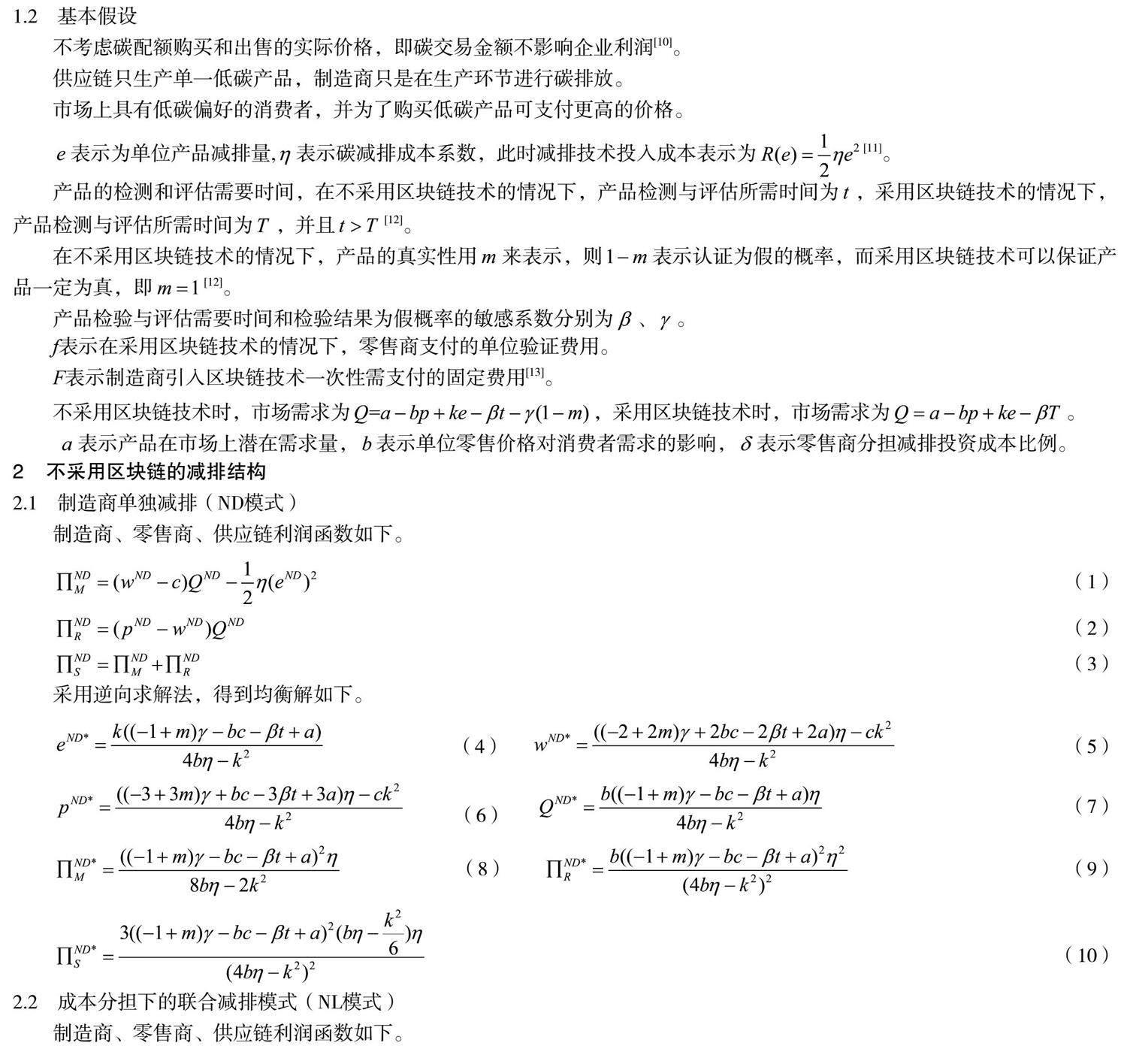
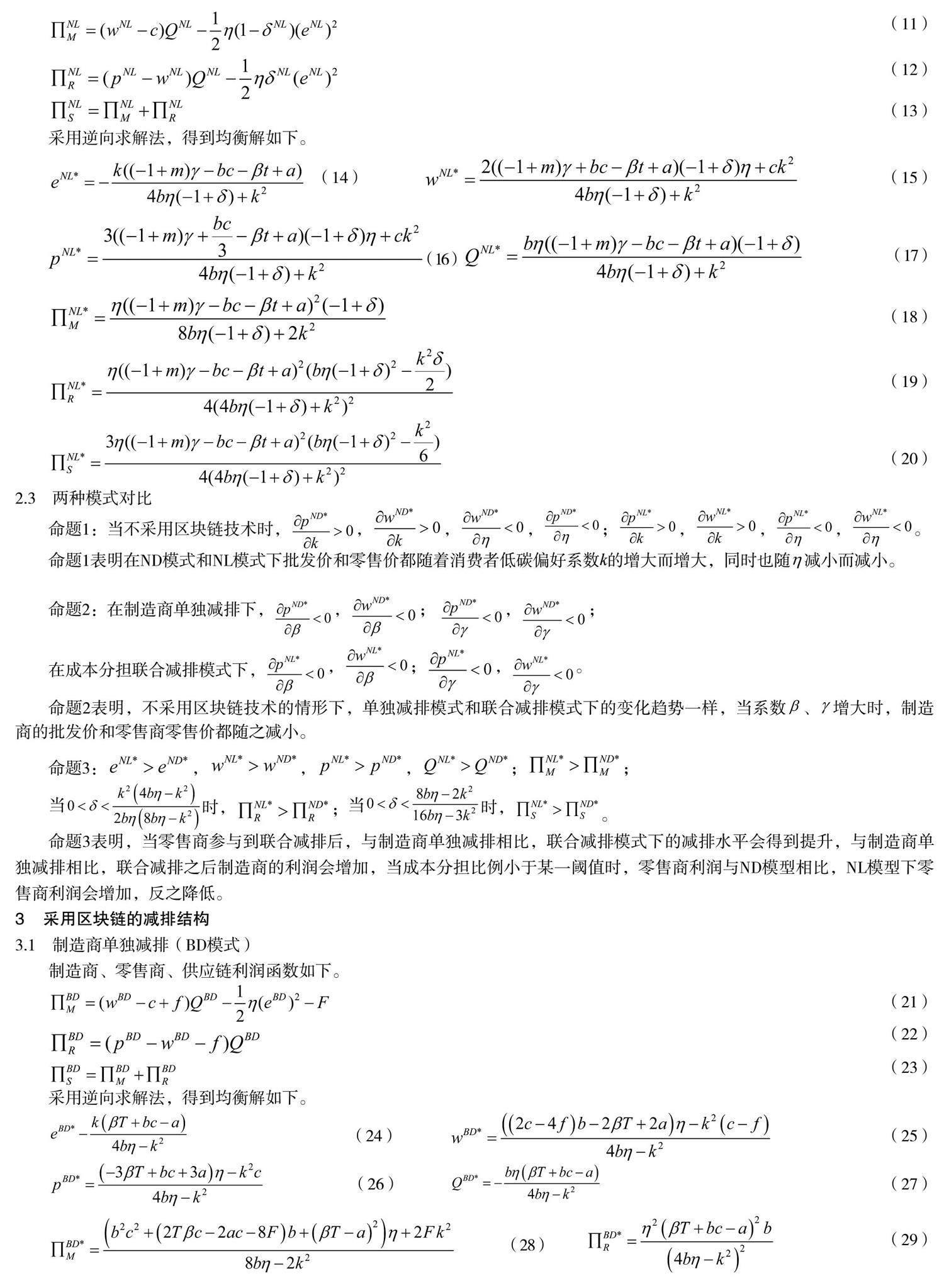
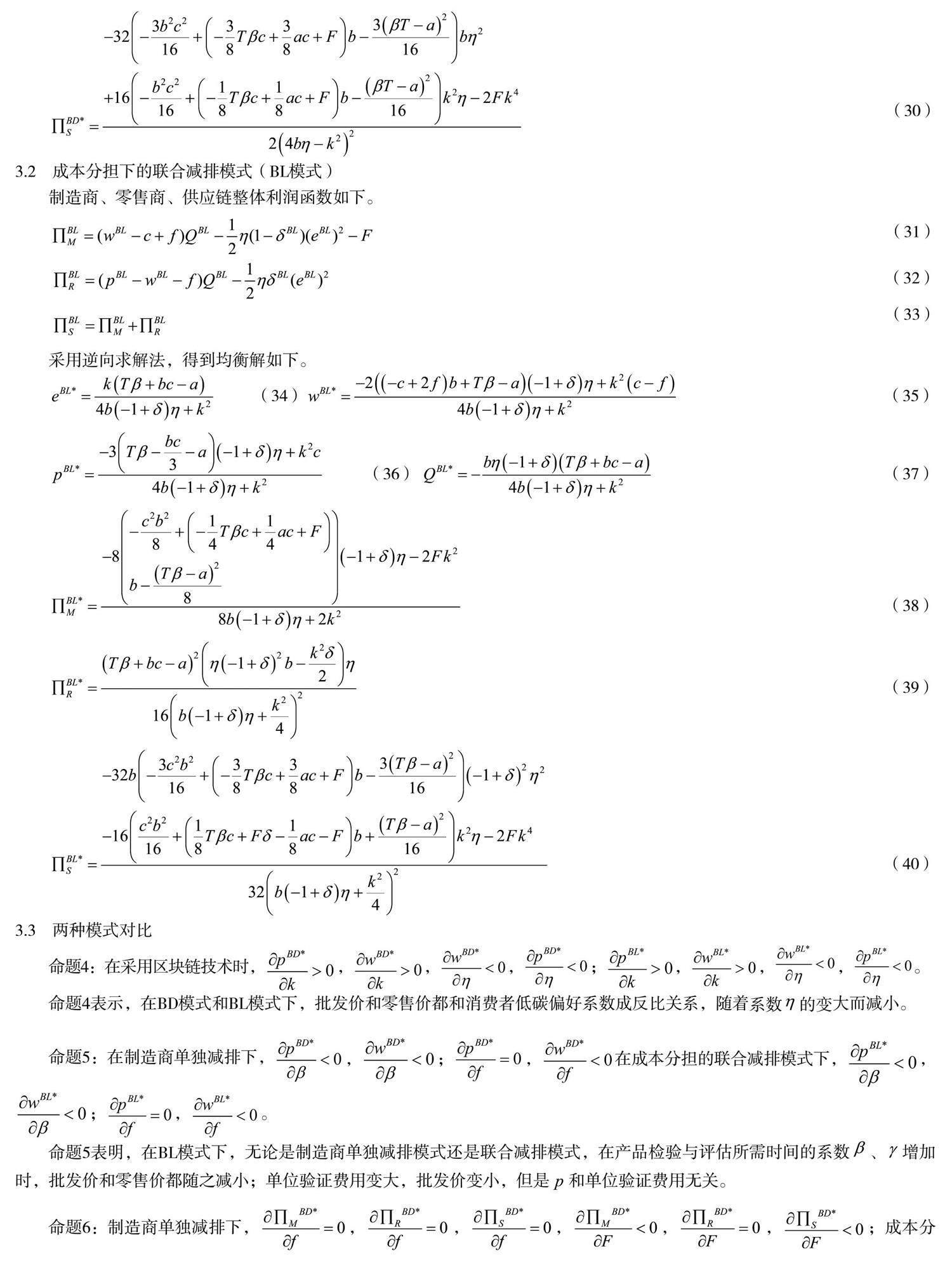
摘 要:针对制造商主导下的联合减排问题,设计研究区块链技术对成本分担契约的影响,引入区块链单位验证费等参数,分析不同减排模式下区块链技术和消费者敏感对碳减排量、定价和利润的影响。研究发现:不采用区块链技术,当零售商的成本分担系数控制在一定范围内时,联合减排模式下的零售商利润和供应链利润都增加。采用区块链技术时,联合减排模式下的制造商利润总是高于单独减排模式,当成本分担系数小于某一阈值时,联合减排模式下的零售商利润高于单独减排模式。单位验证费用只对批发价格有影响,对零售价格没有影响。
关键词:区块链;消费者敏感;低碳供应链;成本分担;联合减排
中图分类号:F274文献标志码:ADOI:10.13714/j.cnki.1002-3100.2024.10.026
Abstract: In response to the issue of joint emission reduction led by manufacturers, the paper designs and studies the impact of blockchain technology on cost sharing contracts, introduces parameters such as blockchain unit verification fees, and analyzes the impact of blockchain technology and consumer sensitivity on carbon emissions reduction, pricing, and profits under different emission reduction modes. Research has found that without the use of blockchain technology, when the cost sharing coefficient of retailers is controlled within a certain range, both retailer profits and supply chain profits under the joint emission reduction model increase. When using blockchain technology, the profits of manufacturers under the joint emission reduction model are always higher than those under the individual emission reduction model. When the cost sharing coefficient is less than a certain threshold, the profits of retailers under the joint emission reduction model are higher than those under the individual emission reduction model. The unit verification fee only affects wholesale prices and has no impact on retail prices.
Key words: blockchain; consumer sensitivity; low carbon supply chain; cost sharing; joint emission reduction
0 引 言
近年来,我国政府大力推进绿色低碳经济发展,《关于积极推进供应链创新与应用的指导意见》提出要用新发展理念打造高水平绿色供应链。但是制造商偏于运用研究和直接制造低碳产品的方式来减少供应链上下游的碳排放(如华为),而大型零售商通常更喜欢通过培养消费者的低碳意识,增加消费者对低碳产品的购买,以此推动上游制造商采取低碳减排的生产方式(如沃尔玛)。
纵观市场,依旧存在信息不透明、不可溯源等一系列难题,考虑到区块链具有的可追溯、公开透明等特点[1],其能够支持产品在整个供应链网络中实现信息的全面传递[2]。
针对以上问题,张成堂等[3]分析了在半合作、合作模式下制造商和零售商分别为主导者时对减排效果和利润的影响。……