敦煌本《父子互托》刍议
2023-07-13段小强刘旸
段小强 刘旸

内容摘要:敦煌草書写本《杂缘起抄》中有一段内容讲述父子在集市相互做“托”,从而盈利的故事。被父子欺骗的顾客并不知情,还因从购物中得到方便就“心生欢喜”;佛与菩萨得知后也装为顾客,以此宣扬佛法教化众人。故事用日常生活中的事例来宣传佛教教义,内容体现佛教“缘起”的法则,认为世间因缘和合、万事万物都存在着关联。此外还蕴含“方便之门”的思想,反映着佛教在中国传教过程中的本土化特点。
关键字:敦煌草书写本;父子互托;缘起;方便法门
中图分类号:K877.9 文献标识码:A 文章编号:1000-4106(2023)03-0110-08
A Preliminary Study on the Dunhuang Version of A Con Played
By Father and Son
DUAN Xiaoqiang LIU Yang
(School of History and Culture, Northwest Minzu University, Lanzhou 730030, Gansu)
Abstract:There is a section in the Dunhuang version of Za Yuanqi Chao杂缘起抄(Transcriptions of Various Pratītya-
samutpāda) in cursive writing which tells a story about a father and his son“running a con together” in the market in order to make money. The customers are cheated by the father and son without knowing it, and even they“feel joy” because their shopping experience is so convenient. Buddhas and Bodhisattvas also pretended to be customers so as to spread Buddhism and enlighten lay people. Such stories publicize Buddhist doctrine by using examples from daily life, while the contents of the stories reflect the Buddhist principle of “pratītya-samutp da,” which believes that karma and harmony exist together in the world, and that all things are related. Finally, the stories can be seen as relating to the idea of the“way of convenience,” and reflects the localization characteristics that Buddhism underwent while being spread in China.
Keywords:Dunhuang manuscripts in cursive writing; father and son playing a con together; pratītya-samutp da; way of convenience
序 《父子互托》故事及出处
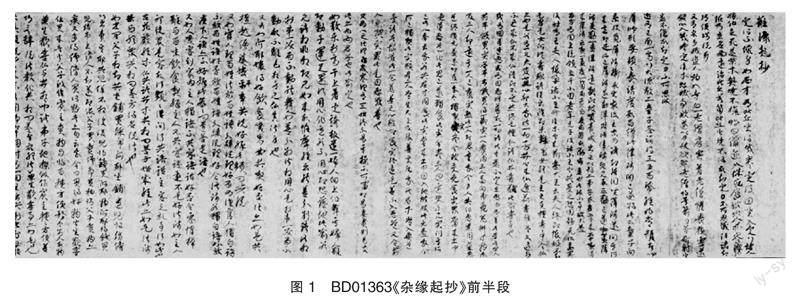
敦煌草书写本BD01363,正面内容为经疏,分别为与瑜伽师地论和菩萨地持经有关联的内容,先后被定名为《瑜伽师地论》[1]和《菩萨地持经》[2]。背面2件标题原有,分别是《起世经》和《杂缘起抄》(图1){1}。
《杂缘起抄》存238行,除末端几行有残缺外,基本保存完好,内容大多为传教用的各类佛教因缘故事,也有一些手抄经文或是佛理阐述。马德先生曾就《杂缘起抄》中第126行至129行所述中国历史上有名的烽火戏诸侯和晋宪帝宠妃失邦做过研究{2}。受此启发,本文拟就《杂缘起抄》中所述父子互托故事谈一点自己学习的体会,以求教于方家。
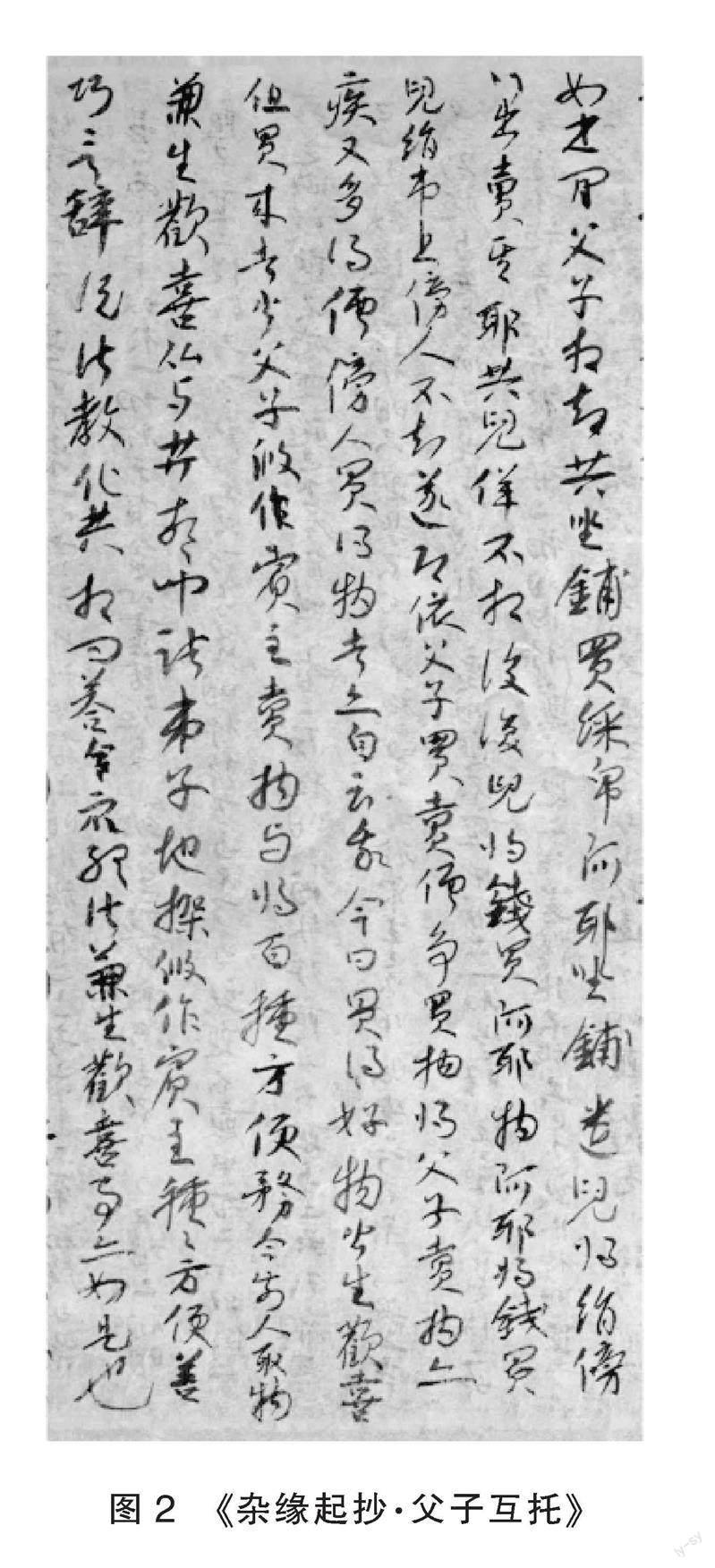
《父子互托》故事在《杂缘起抄》第46—52行,原文如下(图2){3}:
如世间父子相知,共坐铺买(卖)彩帛,阿耶坐铺遣儿将绢傍行出卖,其耶共儿佯不相[知]。后复儿将钱买阿耶物,阿耶将钱买儿绢,市上傍人不知,遂即依父子买卖,价争买物将父子,卖物亦疾又多,得价傍人买得物者,亦自云我今日买得好物,皆生欢喜。……