盆腔脏器脱垂患者中医证候规律分析及其针药治疗的有效性研究
2021-11-22栾俊霞
栾俊霞
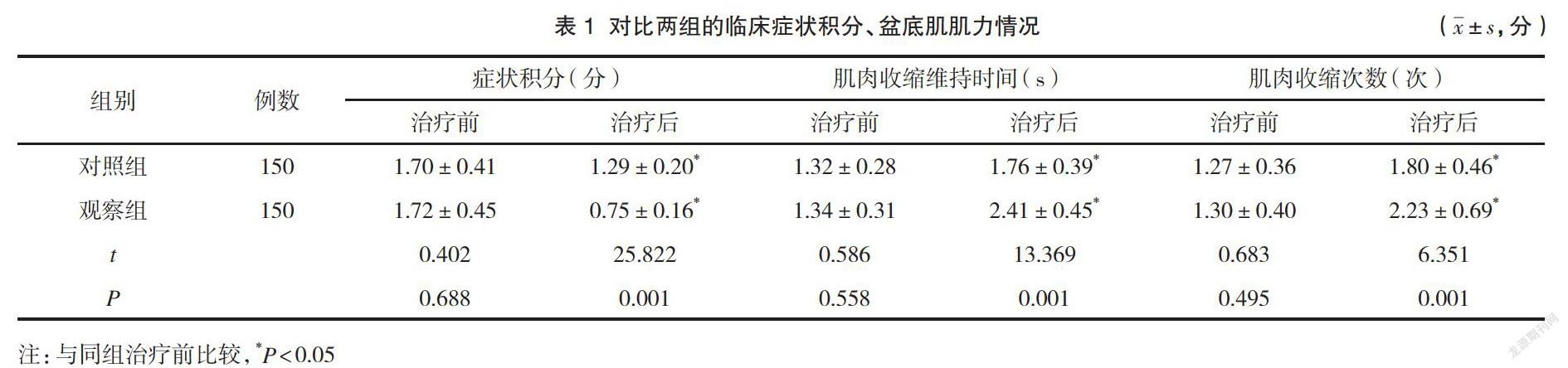
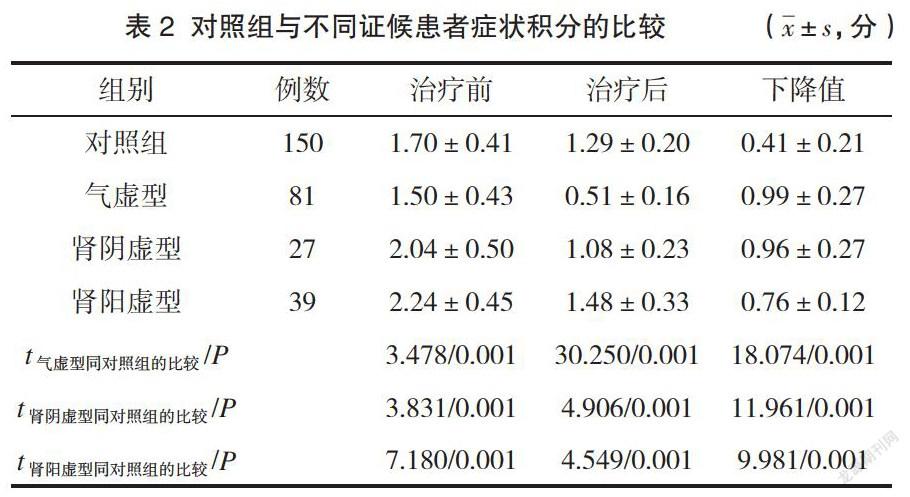

摘 要:目的 研究盆腔臟器脱垂患者中医证候规律分析及其针药治疗的有效性。方法 回顾性分析2018年1月~2020年12月泰安市中医医院收治的300例盆腔脏器脱垂患者的临床资料,按照治疗方法的不同分为两组,对照组150例实施生物反馈治疗,观察组150例在对照组基础上根据中医证候规律分析结果进行针药治疗。比较两组的临床症状积分、盆底肌肌力情况、盆底功能障碍问卷(PFDI-20)评分、盆底疾病生活质量影响问卷短表(PFIQ-7)评分。结果 观察组患者治疗后的症状积分、PFDI-20评分及PFIQ-7评分均低于对照组,肌肉收缩维持时间长于对照组,肌肉收缩次数多于对照组,差异具有统计学意义(P<0.05);观察组中气虚型、肾阴虚型、肾阳虚型患者症状积分下降值均大于对照组,差异具有统计学意义(P<0.05)。结论 气虚、肾虚为盆腔脏器脱垂的常见中医证候,在生物反馈治疗的基础上根据中医证候规律分析结果实施针药治疗更有利于改善临床症状以及盆底功能,效果显著。
关键词:盆腔脏器脱垂;中医证候;中药;针灸
中图分类号:R271.9文献标识码:A文章编号:1009-8011(2021)-14-000-03
Analysis of TCM Syndromes of Patients with Pelvic Organ Prolapse and Study on Effectiveness of Acupuncture and Medicine Treatment
LUAN Jun-xia
(Department of Obstetrics and Gynecology, Tai'an Hospital of Traditional Chinese Medicine, Shandong, Tai'an, 271000, China)
Abstract: Objective To study the regularity of TCM syndromes in patients with pelvic organ prolapse and the effectiveness of acupuncture and medicine treatment. Methods A retrospective analysis of the clinical data of 300 patients with pelvic organ prolapse admitted to Tai'an Hospital of Traditional Chinese Medicine from January 2018 to December 2020.According to the different treatment methods, they were divided into two groups.150 cases in the control group were treated with biofeedback, and 150 cases in the observation group were treated with acupuncture and medicine according to the analysis results of TCM syndrome law.The scores of clinical symptoms, pelvic floor muscle strength, pelvic floor dysfunction questionnaire(PFDI-20)scores, and pelvic floor disease quality of life impact questionnaire(PFIQ-7)scores were compared between the two groups.Results After treatment, the symptom score, PFDI-20 score and PFIQ-7 score of the observation group were lower than those of the control group.The maintenance time of muscle contraction was longer than that of the control group.The number of muscle contractions was more than that of the control group.The difference was statistically significant(P<0.05);In the observation group, the symptom scores of patients with Qi deficiency, Kidney Yin deficiency, and Kidney Yang deficiency were lower than those of the control group, and the difference was statistically significant(P<0.05).Conclusion Qi deficiency and kidney deficiency are common TCM syndromes of pelvic organ prolapse.Based on biofeedback treatment, acupuncture treatment based on the analysis of TCM symptom law is more conducive to improving clinical symptoms and pelvic floor function, and the effect is significant.
Keywords: Pelvic organ prolapse; TCM syndromes; Traditional Chinese medicine; Acupuncture and moxibustion
盆腔脏器脱垂是常见的女性盆底功能障碍性疾病[1-2],多因妊娠、分娩或其他原因导致盆底支持结构张力下降,引起子宫、相邻膀胱及直肠移位而发生盆腔脏器脱垂。43%以上的患者需要进行手术治疗[3],但临床上对轻中度盆腔脏器脱垂患者,尤其是中老年患者,多采取保守治疗。中医在该病治疗中具有独特的优势,为了充分发挥中医特色和优势,本文就盆腔脏器脱垂的中医证候规律进行探究,并分析针药治疗在该病中的实施效果,特择取2018年1月~2020年12月泰安市中医医院收治的盆腔脏器脱垂患者300例开展研究,正文阐述如下。
1 资料与方法
1.1 一般资料
回顾性分析2018年1月~2020年12月泰安市中医医院收治的300例盆腔脏器脱垂患者临床资料。……