精神病科住院患者医院获得性感染的相关危险因素分析及干预策略研究
2021-09-22邓素卿
邓素卿
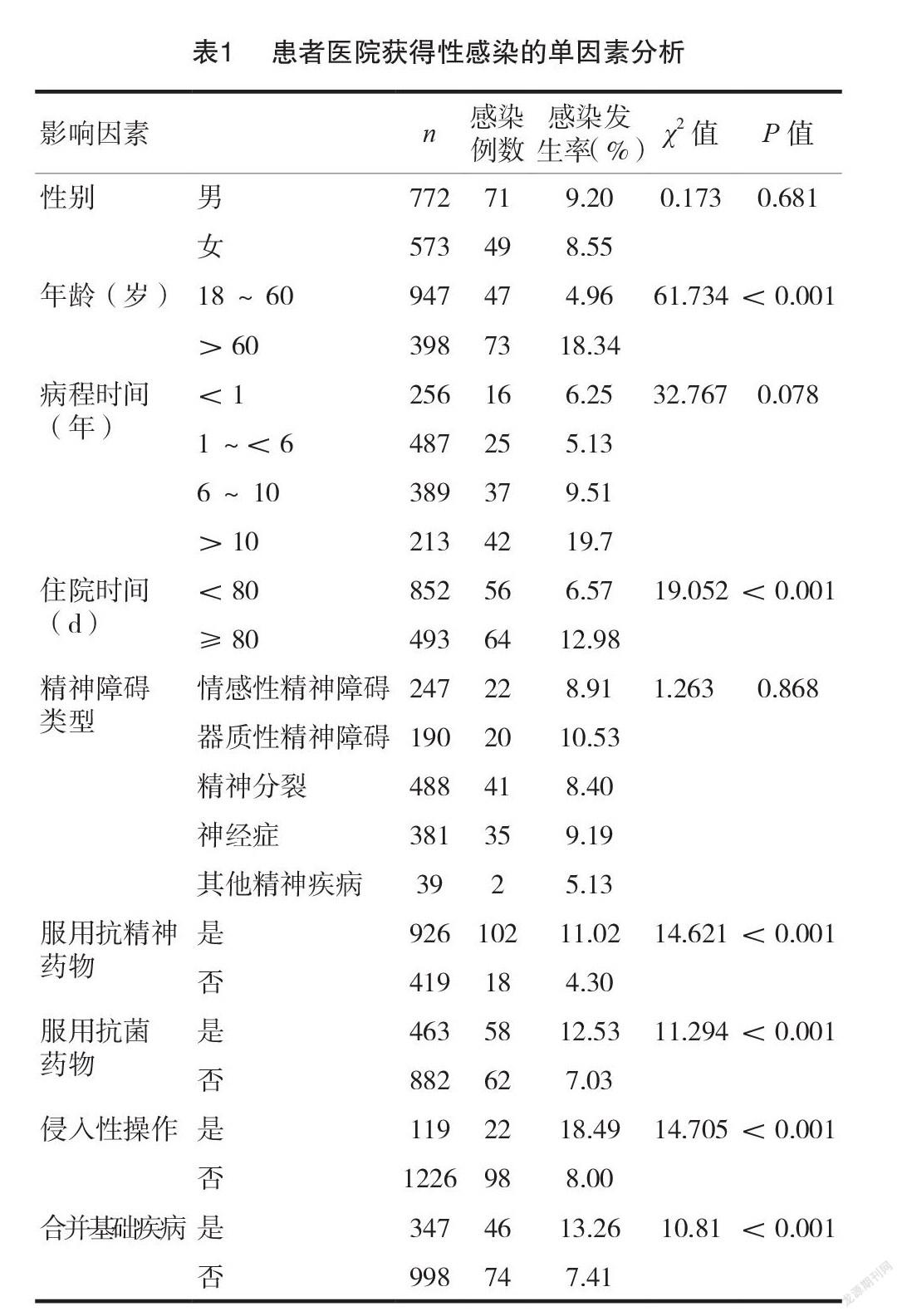
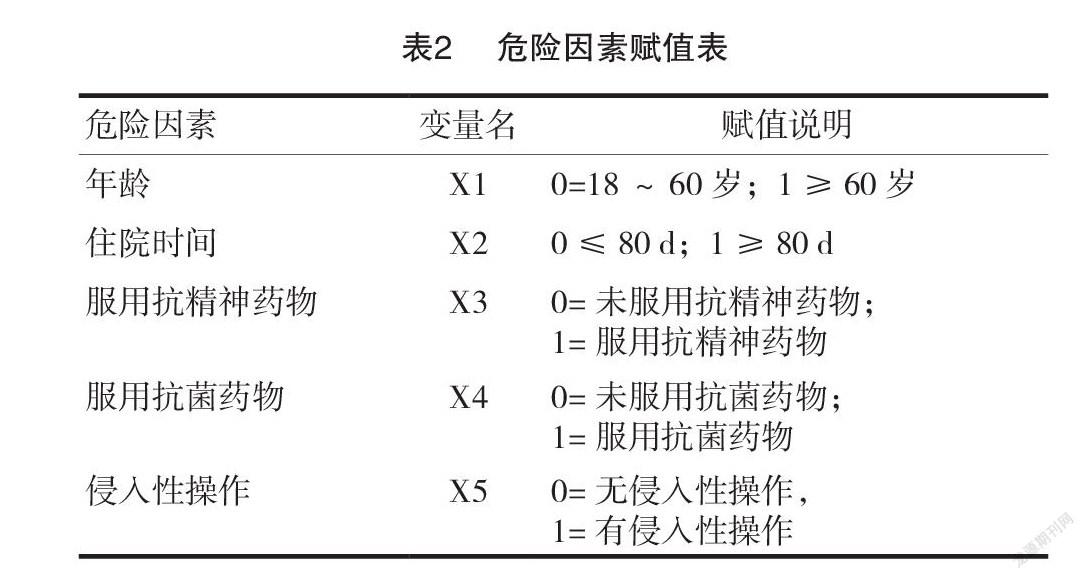
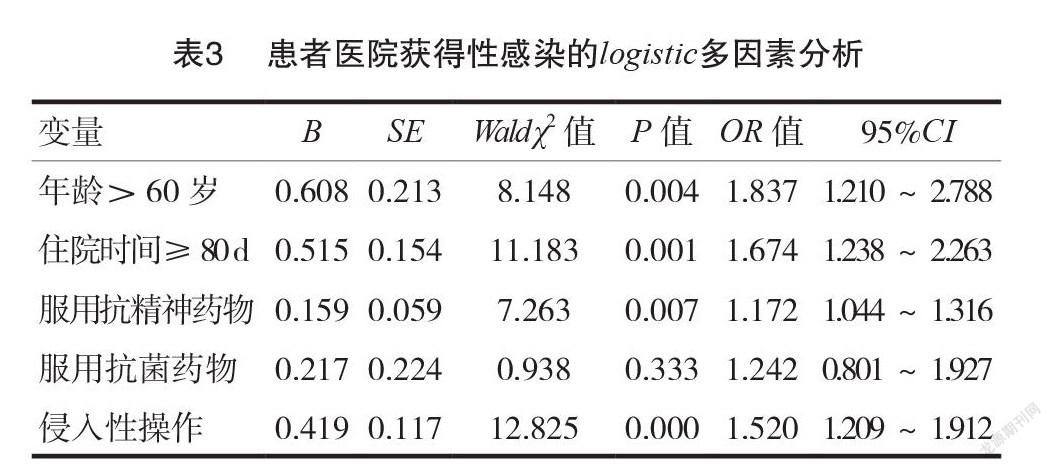
[摘要]目的探究精神病科住院患者醫院获得性感染情况,分析相关危险因素,并探讨应对的干预策略。方法选取2017年12月至2020年12月于龙岩市第三医院精神病科接受住院治疗的1345例患者作为研究对象并进行回顾性分析,收集研究对象完整的临床资料,主要包括患者的年龄、所患疾病病程、住院时间、所患精神疾病类型、是否服用抗精神药物或抗菌药物、是否接受留置导尿管等侵入性操作、是否合并糖尿病或高血压等基础疾病;统计1345例研究对象中出现获得性医院感染的例数以及感染部位,对其危险因素进行统计和分析。结果在1345例研究对象中有120例患者发生医院获得性感染,医院获得性感染的发生率为8.92%,经过单因素分析显示精神病科住院患者医院获得性感染与患者的年龄、病程时间、住院时间、服用抗精神药物、服用抗菌药物以及是否有侵入性操作和合并基础疾病的因素相关( P <0.05);logistic 多因素分析结果显示,年龄>60岁( OR=1.836)、住院时间≥80 d( OR=1.673)、抗精神药物的服用(OR=1.172)以及侵入性操作(OR=1.520)为影响精神病科住院患者医院获得性感染的危险因素( P <0.05)。结论在精神病科中患者的年龄较大、住院时间长、服用抗精神药物以及接受侵入性操作均为影响住院患者医院获得性感染的危险因素,因此在临床中对于具有相关因素的患者应多给予关注,改善相应的干预措施,预防获得性医院感染的发生。
[关键词]精神疾病;医院感染;危险因素;干预策略; logistic 多因素分析
[中图分类号] R473.74 [文献标识码] A [文章编号]2095-0616(2021)23-0227-04
Analysis on risk factors associated with hospital-acquired infections in psychiatric inpatients and study of intervention strategies
DENG Suqing
Department of Hospital Infection, Third Hospital of Longyan, Fujian, Longyan 364000, China
[Abstract] Objective To explore hospital-acquired infections (HAIs) in psychiatric inpatients, analyze the associated risk factors, and investigate the targeted intervention strategies. Methods A total of 1345 patients who received inpatient treatment in the Department of Psychiatry of the Third Hospital of Longyan from December 2017 to December 2020 were selected as the subjects of this study and retrospectively analyzed. The complete clinical data of the study subjects were collected, including patients' age, disease duration, hospital stay, type of mental illness, whether they were taking antipsychotic or antibacterial drugs, whether they received invasive operations such as indwelling urinary catheters, and whether they had concomitant underlying diseases such as diabetes mellitus or hypertension. The number of cases that developed HAIs among 1345 study subjects and the site of infection were counted, and the associated risk factors were statistically analyzed. Results There were 120 patients in 1345 study subjects developed HAIs, with an incidence of 8.92%. The univariate analysis showed that the occurrence of HAIs was associated with patients' age, disease duration, hospital stay, administration of antipsychotic and antibacterial drugs, as well as the presence of invasive operations and concomitant underlying diseases (P <0.05). The single factors with significant differences were further adopted as variables for logistic multivariate analysis, and the results showed that age >60 years (OR=1.836), hospital stay ≥80 days (OR=1.673), administration of antipsychotic drugs (OR=1.172), and the presence of invasive operations (OR=1.520) were the key factors influencing the occurrence of HAIs in psychiatric inpatients (P <0.05). Conclusion Older age, long hospital stay, administration of antipsychotic drugs, and the presence of invasive operations are key factors influencing the occurrence of HAIs in psychiatric inpatients, so more attention should be paid to patients with these factors in clinical practice, and targeted interventions should be improved to prevent the occurrence of HAIs.
[Key words] Mental illness; Hospital-acquired infections; Risk factors; Intervention strategies; logistic multivariate analysis
随着我国经济的快速增长,面对快节奏的生活发展趋势,人们承受越来越大的心理压力,因此我国在近几年来的患有精神疾病患者越来越多,患病率呈现逐年递增趋势 [1]。由于精神病科住院患者本身患有不同程度、不同类型的精神障碍 [2-3],同时又缺乏自知力,无法进行有效的自我防范行为,所以患者很容易发生医院获得性感染 [4-5]。……
