基于新型材料的柔性生物电干电极的研究进展
2021-08-09马美静刘丽妍高新华刘皓
马美静 刘丽妍 高新华 刘皓
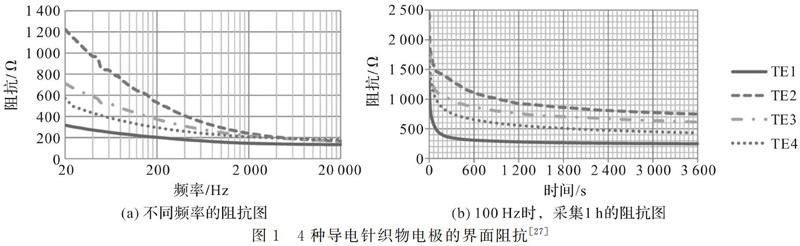

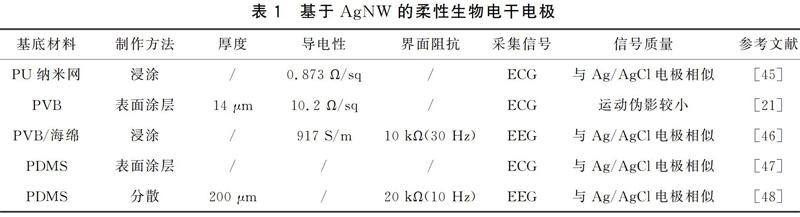
摘 要:柔性生物电干电极是可穿戴健康监控系统的重要组成部分,近几年,研究领域对于生物电干电极的关注逐渐增多。为探讨基于柔性材料的生物电干电极的研究进展,首先对干电极的几个基本性能进行了介绍,生物电干电极常用的性能表征有导电性能、界面阻抗性能、运动伪影和信号噪声,并与湿电极性能进行对比。然后从界面材料方面对柔性生物电干电极进行了分类总结,银纳米线、PEDOT:PSS、聚吡咯、碳纳米管和石墨烯等新型材料的应用,为柔性生物电干电极的长期使用和规模化生产提供了可能。最后对柔性生物电干电极的研究进展进行了总结和展望。
关键词:干电极;长期监测;生物电信号;智能可穿戴;导电材料
中图分类号: TB333
文献标志码:A
文章编号:1009-265X(2021)04-0018-09
Abstract: Flexible biopotential dry electrode is an important part of wearable health monitoring system. In recent years, biopotential dry electrodes have received more and more attention in the research field. In order to discuss the research progress of biopotential dry electrodes based on flexible materials, the basic properties of dry electrodes are introduced first. The common properties of biopotential dry electrodes are characterized by conductivity, interfacial impedance, motion artifacts and signal noise, and are compared with the properties of wet electrodes. Then, the flexible biopotential dry electrodes are classified and summarized in terms of interface materials. The application of new electrode materials such as silver nanowires, PEDOT: PSS, polypyrrole, carbon nanotubes and graphene provides the possibility for the long-term use and large-scale production of flexible biopotential dry electrodes. In the end, the research progress of flexible biopotential dry electrodes is summarized and prospected.
Key words: dry electrode; long-term monitoring; biopotential signal; smart wearable; conductive material
心血管疾病(CVD)作為一种在高龄人群中具有高患病率的疾病,及早预防和治疗具有重要意义。《中国心血管病报告》(2018)的数据显示,中国CVD患病率处于持续上升阶段,推算CVD现患人数2.9亿,心血管病死亡占城乡居民总死亡原因的首位[1]。通过便携式可穿戴式远程生物电监护系统[2],可以降低医院护理费用,实现对生物电信号的日常采集[3]。生物电信号主要有心电信号(ECG),脑电信号(EEG),肌电信号(EMG)和眼电信号(EOG)等[4]。
生物电信号医疗检测用电极多为一次性Ag/AgCl凝胶湿电极,易对皮肤造成刺激,长时间使用时凝胶变干还会影响到信号质量[5],不适合集成到可穿戴设备上使用。传统干电极采用硬质金属板[6-8]、硅片[9-13]、陶瓷[14]和印刷电路板(PCB)[15]等为基底,并通过刻蚀、溅射等方法制作,这些电极通常舒适性较差,也不适合在服装上集成。……