甘薯黄烷酮3-羟化酶基因IbF3H的克隆和表达特性分析
2021-08-04宋天晓苏文瑾刘意饶莉萍SoviguidiDekaReineJudesse杨新笋朱国鹏
宋天晓 苏文瑾 刘意 饶莉萍 Soviguidi Deka Reine Judesse 杨新笋 朱国鹏
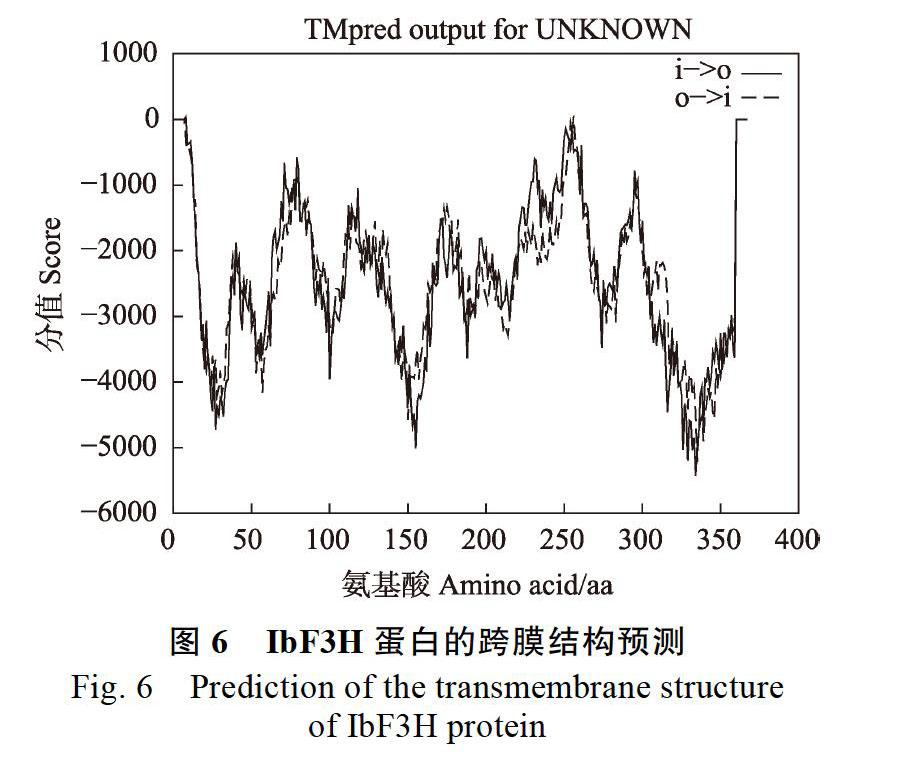
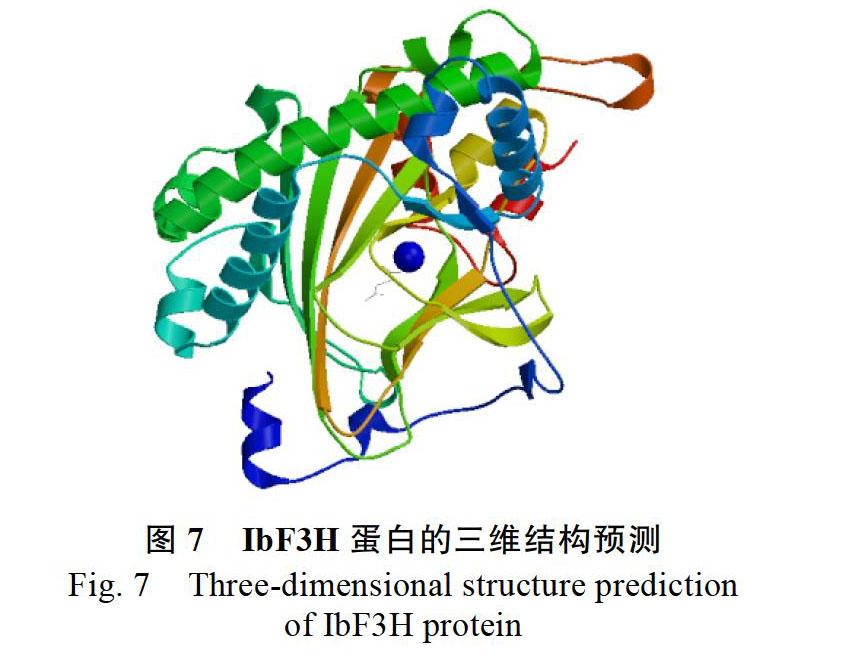
摘 要:黃烷酮3-羟化酶(flavanone 3-hydroxylase,F3H)是黄酮类化合物合成途径中的一个关键酶。本研究基于前期转录组数据,以‘福菜薯7-6叶片为材料成功克隆CDS序列长度为1107 bp的基因IbF3H,利用生物信息学分析甘薯F3H基因的序列特征、氨基酸序列对比、蛋白系统进化树、蛋白的二、三级结构、预测其跨膜结构和亚细胞定位,并利用qRT-PCR分析盐旱胁迫处理下基因的表达特性。结果表明,该基因含有3个外显子和2个内含子,编码368个氨基酸,蛋白分子量为41.12 kDa,等电点为5.83。存在多种类型的启动子顺式作用元件,如光响应元件G-Box、ACE,干旱胁迫相关的MBS元件,与脱落酸激素响应相关的ABRE元件等。与其他植物的氨基酸序列相似性达到了80%以上,可见IbF3H的编码区高度保守,且黄烷酮3-羟化酶在进化上具有较高的保守性。IbF3H蛋白含有非血红素双加氧酶结构域(DIOX-N superfamily)和典型的F3H蛋白功能结构域(2OG-FeⅡ-Oxy加氧酶结构域),属于双加氧酶超家族。IbF3H蛋白可能在细胞质中表达并且不具备跨膜结构。qRT-PCR研究结果表明,IbF3H基因并非组织特异性表达的基因,叶和茎表达量高于茎尖和根。模拟盐胁迫处理后,IbF3H基因表达量呈现先下降后上升的趋势;模拟干旱胁迫处理后,IbF3H基因表达量始终高于对照组,以响应逆境胁迫。本研究可为下一步探索IbF3H基因在调控甘薯类黄酮生物合成途径和功能作用奠定基础。
关键词:甘薯;黄烷酮3-羟化酶基因;qRT-PCR;胁迫表达
中图分类号:S531 文献标识码:A
Cloning and Expression Analysis of Sweetpotato Flavanone 3-Hy- droxylase Gene IbF3H
SONG Tianxiao1,2, SU Wenjin1, LIU Yi1,3, RAO Liping1,3, Soviguidi Deka Reine Judesse1,3, YANG Xinsun1*, ZHU Guopeng2
1. Food Crops Institute, Hubei Academy of Agricultural Sciences, Wuhan, Hubei 430064, China; 2. College of Horticulture, Hainan University / Key Laboratory for Quality Regulation of Tropical Horticultural Plants of Hainan Province, Haikou, Hainan 570228, China; 3. College of Agriculture, Yangtze University, Jingzhou, Hubei 434025, China
Abstract: Flavanone 3-hydroxylase (F3H) is a key enzyme in the synthesis of flavonoids. In this study, based on previous transcriptome data, a 1107 bp IbF3H CDS sequence was successfully cloned from ‘Fucaishu 7-6 leaves, using bioinformatics to analyze sweetpotato F3H gene sequence characteristics, amino acid sequence comparison, protein phylogenetic tree, secondary and tertiary structure of protein, predicting transmembrane structure, subcellular localization, and using qRT-PCR methods to analysis gene expression characteristics under simulated salt and drought stress. The results showed that the gene contained 3 exons and 2 introns, encoding 368 amino acids, the protein molecular weight was 41.12 kDa, and the isoelectric point was 5.83. There were types of promoter cis-acting elements, such as light-responsive elements G-Box and ACE, MBS elements related to drought stress, ABRE elements related to abscisic acid hormone response, etc. The amino acid sequence similarity with other plants was more than 80%. It could be seen that the coding region of IbF3H was highly conserved, and the flavanone 3-hydroxylase was highly conservative in evolution. The IbF3H protein contained a non-heme dioxygenase domain (DIOX-N superfamily) and a typical F3H protein functional domain (2OG-FeⅡ-Oxy oxygenase domain) and belonged to the dioxygenase superfamily. IbF3H protein may be expressed in the cytoplasm and without a transmembrane structure. The qRT-PCR experiment showed that the IbF3H gene was not a tissue-specific expressed gene, and the expression level of leaves and stems was higher than that of stem tips and roots. After simulated salt stress treatment, IbF3H gene expression showed a trend of decreasing first and then increasing; after simulated drought stress treatment, IbF3H gene expression was always higher than the control group in response to adversity stress. This study could lay the foundation for the next step to explore the IbF3H gene in regulating the sweet potato flavonoid biosynthesis pathway and function.
Keywords: sweet potato; flavanone 3-hydroxylase gene; qRT-PCR; stress expression
DOI: 10.3969/j.issn.1000-2561.2021.06.004
甘薯[Ipomoea batatas (L.) Lam.]属于旋花科、甘薯属的同源六倍体植物[1],是重要的粮食、饲料、工业原料作物和新型的生物能源作物,且具有极高的营养保健价值[2]。……
