基于图卷积和全局对齐策略的图分类网络
2021-08-02薛晖孙伟祥
薛晖 孙伟祥
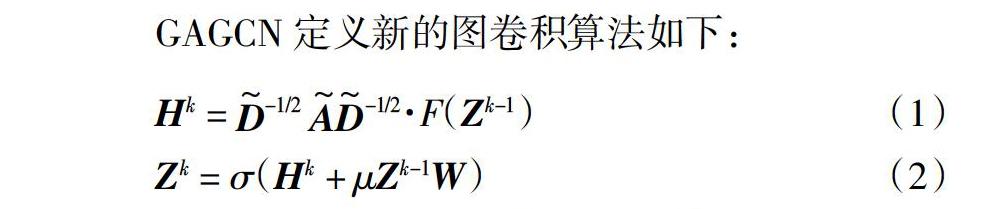
摘 要:受限于图数据拓扑结构的不规则性,以及图结点的无序性和规模多变性,现有图分类网络往往对结点嵌入向量采取简单聚合或排序等方式来构建图级别的表示向量,这会导致特征过度压缩以及特征平移等问题. 针对这些问题,提出基于全局对齐策略的图卷积网络,通过构建子图特征近似分布将图表示特征向量做全局对齐,在避免过度压缩和特征平移、有效提高下游分类网络对于特征信息挖掘效率的同时,又利用子图特征的分布信息,进一步学习图数据之间内在的结构相似性,从而提升整体网络对于图分类任务的推理能力. 在多个图分类数据集上的实验结果表明,采用全局对齐的图卷积网络相较于其他网络模型有2%~6%左右分类精度的稳定提升,消融实验和超参数敏感性分析实验也进一步证实了全局对齐策略的有效性和鲁棒性.
关键词:图表示学习;图分类;图神经网络;深度学习
中图分类号:TP391 文献标志码:A
Graph Classification Network Based on Graph
Convolutional Network and Globally Aligned Strategy
XUE Hui1,2?,SUN Weixiang1,2
(1. College of Computer Science and Engineering,Southeast University,Nanjing 211189,China;
2. Key Laboratory of Computer Network and Information Integration(Southeast University),
Ministry of Education,Nanjing 211189,China)
Abstract:Limited by the irregularity of graph topology, permutation independence of graph nodes and variability of graph node scale, the majority of neural networks designed for graph classification adopts simple aggregation or sort operation to generate graph-level representation, leading to over-compression and translation of features. In order to address such problems, this paper proposes a novel graph convolutional network, called Globally Aligned Graph Convolutional Network(GAGCN),where graph-level representations are globally aligned by constructing a sub-structural approximate distribution. GAGCN can not only avoid over-compression and feature translation, but also utilize sub-structural distribution to further learn the internal structural similarity among graph data, thereby effectively improving the efficiency of information mining for the downstream classification network and the inference ability for graph classification, respectively. Experimental results show that GAGCN achieves superior results and improves 2%~6% average accuracy on a range of graph datasets,compared with several state-of-the-art graph classification algorithms. The ablation study and the hyper-parameter analysis further reflect the effectiveness and robustness of our approach.
Key words:graph representation learning;graph classification;graph neural network;deep learning
圖数据(Graph-Structured Data)作为一类用于描述实体(点)及实体之间关系(边)的非欧氏数据(Non-Euclidean Data),广泛存在于知识图谱[1]、社交网络[2]、计算机视觉[3]以及生物化学[4]等众多交叉学科领域. 图数据的诸多复杂特性,例如结点的无序性与规模可变性,给现有的机器学习算法带来了巨大的挑战. 幸运的是,近年来,随着深度学习和图表示学习的兴起,DeepWalk[5]、Node2Vec[6]以及图卷积神经网络等算法[7]相继被提出. 特别是图卷积神经网络算法,能够将……