联合透析治疗对尿毒症患者营养状况、心肾功能及微炎症状态的影响
2021-07-05李强曹敏李凯
李强 曹敏 李凯
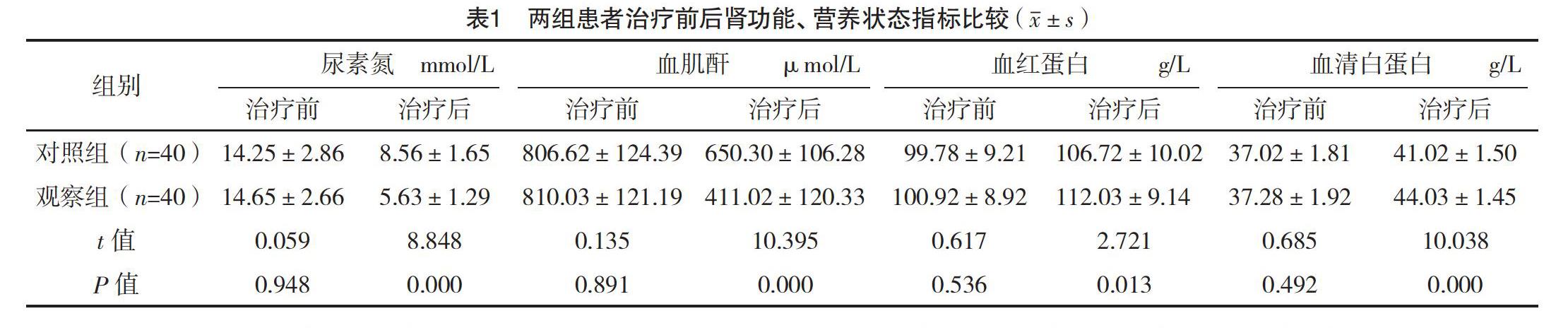
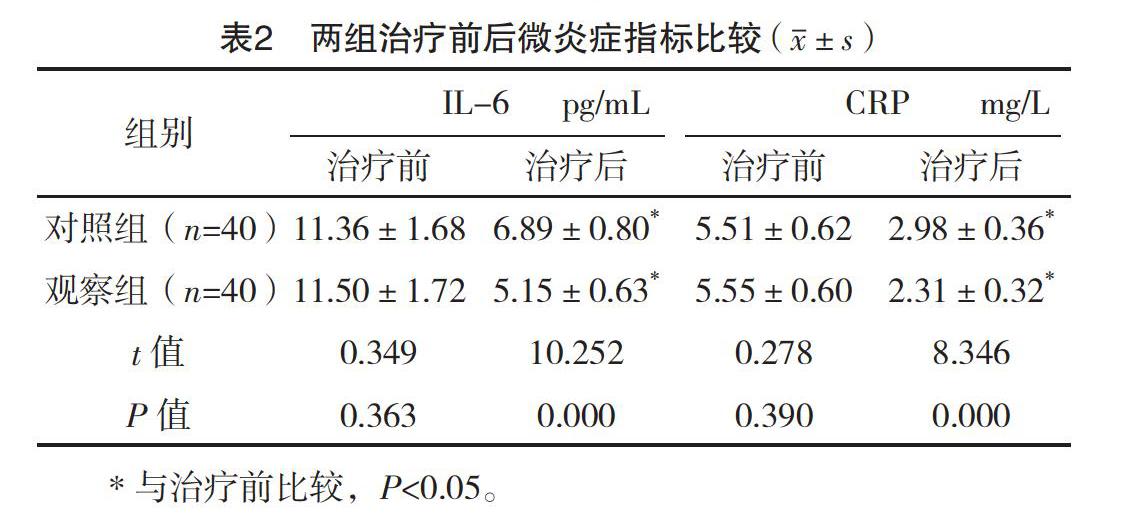
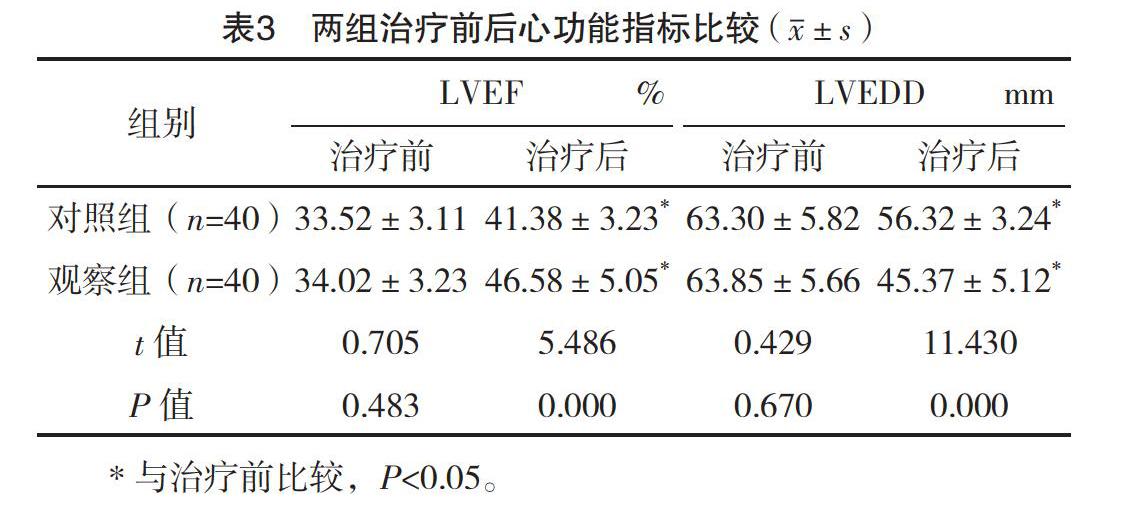
【摘要】 目的:通過观察腹透、血透两种透析方式联合治疗对尿毒症患者营养状况、心肾功能及微炎症状态的影响,深入探讨腹透、血透联合治疗的优势、临床效果及应用前景。方法:选取2016年1月-2018年12月中国中医科学院广安门医院南区收治的80例尿毒症患者,根据不同的透析方案,将80例患者分为对照组和观察组,每组40例。对照组行腹膜透析治疗,观察组行腹膜透析联合血液透析治疗,均持续治疗3个月。治疗前及治疗3个月后,分别采取两组患者的空腹静脉血检测血清炎症介质水平变化,检测血红蛋白、血清白蛋白水平评估患者营养状态,检测尿素氮、血肌酐水平评估患者残肾功能,行心脏彩超检查左心室相关指数评估患者心功能。结果:观察组治疗后血红蛋白、血清白蛋白和LVEF均高于对照组,LVEDD短于对照组,尿素氮、血肌酐、白细胞介素-6(IL-6)、超敏C反应蛋白(hs-CRP)均低于对照组,差异均有统计学意义(P<0.05)。结论:联合透析治疗可有效改善尿毒症患者的营养状况及心肾功能,并可有效降低炎症介质水平,因此在尿毒症透析患者中具有较高的应用价值。
【关键词】 血液透析 腹膜透析 尿毒症 心功能 肾功能 微炎症状态
Effects of Combined Dialysis Therapy on Nutritional Status, Cardio-renal Function and Microinflammatory Status in Patients with Uremia/LI Qiang, CAO Min, LI Kai. //Medical Innovation of China, 2021, 18(14): 0-034
[Abstract] Objective: To observe the effect of peritoneal dialysis combined with hemodialysis on nutritional status, cardiac and renal function and microinflammatory state in uremic patients with chronic renal failure, and to further explore the advantages, clinical effects and application prospects of combined dialysis. Method: A total of 80 patients with uremia who were admitted to Guanganmen Hospital, China Academy of Chinese Medical Sciences (CACMS) from January 2016 to December 2018 were selected, they were divided into control group and observation group according to different dialysis regimen, with 40 patients in each group. The observation group was treated with peritoneal dialysis combined with hemodialysis, while the control group was only treated with peritoneal dialysis for 3 months. Before and after treatment, fasting venous blood was taken to detect the changes of serum inflammatory mediators, hemoglobin and serum albumin were detected to evaluate nutritional status, urea nitrogen and serum creatinine were detected to evaluate renal function, and left ventricular correlation index was used to evaluate cardiac function. Result: After treatment, hemoglobin, serum albumin and LVEF in the observation group were higher than those in the control group, LVEDD was shorter than that in the control group, urea nitrogen, serum creatinine, interleukin-6 (IL-6) and hypersensitive C-reactive protein (hs-CRP) were lower than those in the control group, the differences were statistically significant (P<0.05). Conclusion: Peritoneal dialysis combined with hemodialysis can effectively improve the nutritional status and cardiac and renal functions of uremic patients, and can effectively reduce the level of inflammatory mediators, so it has high application value in uremic patients.
[Key words] Hemodialysis Peritoneal dialysis Uremia Cardiac function Renal function Microinflammatory state
First-authors address: South District of Guanganmen Hospital, China Academy of Chinese Medical Sciences, Beijing 102600, China
doi:10.3969/j.issn.1674-4985.2021.14.008
尿毒症作为各种慢性肾脏疾病的终末阶段,发病率呈逐年上升趋势。尿毒症患者肾功能明显衰退,并发症多,严重影响生活质量,并威胁患者生命安全。长期、大量的临床研究发现,尿毒症患者5年存活率不足35%[1],综合性治疗后病情缓解率不足50%[2]。临床上治疗尿毒症,除常规药物治疗外,主要通过肾脏替代的方式,目前常用的肾脏替代方式为肾移植和透析治疗。肾移植作为肾脏替代治疗的最佳选择,可成功恢复肾功能;但因肾源有限、匹配困难,且价格昂贵,故未能广泛开展,患者接受度较低。……