湖北省随州地区稻瘟病菌群体结构分析及生态模式菌群的建立
2021-06-29吴尧韩玉揭春玉王林吴双清
吴尧 韩玉 揭春玉 王林 吴双清
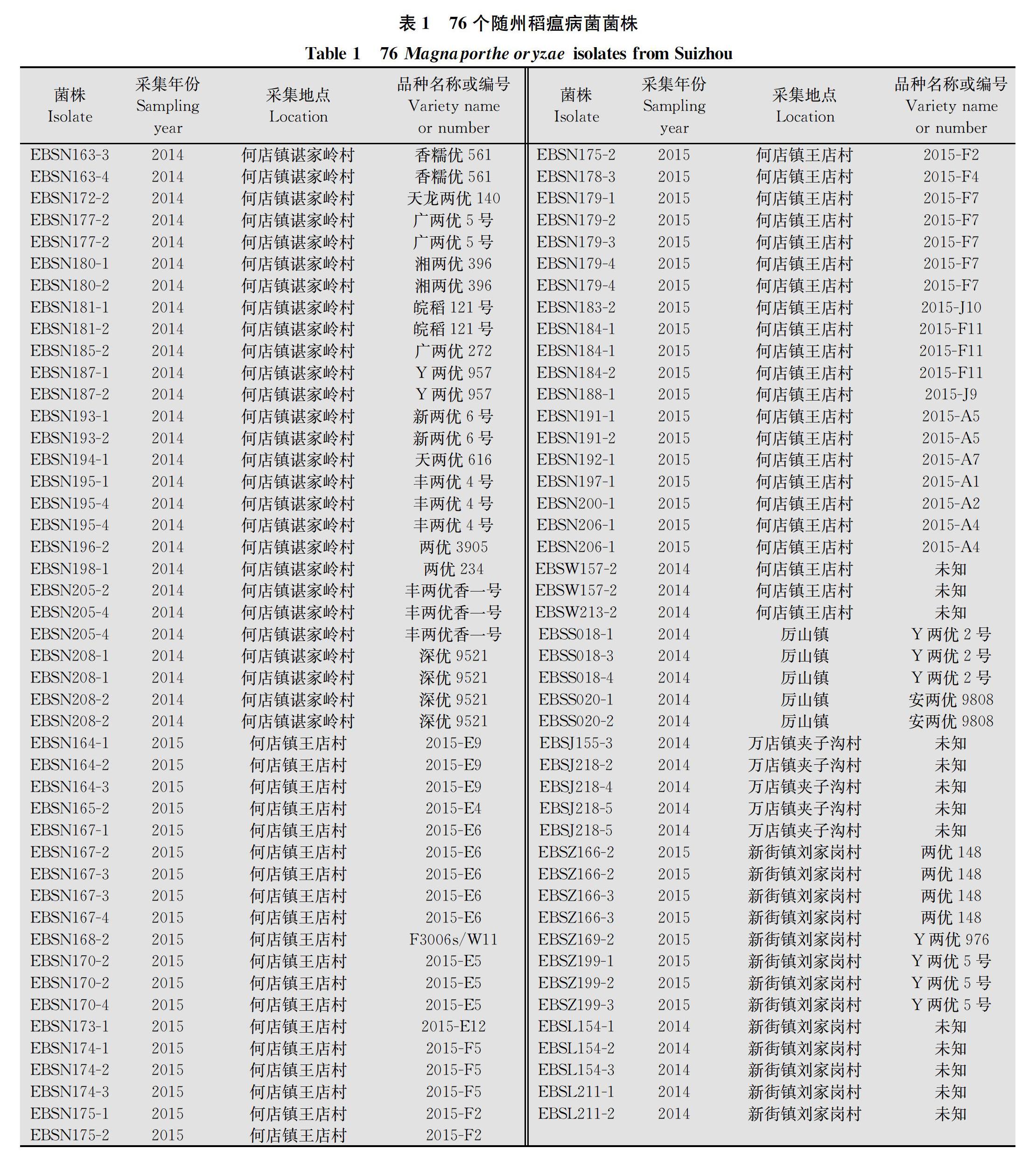
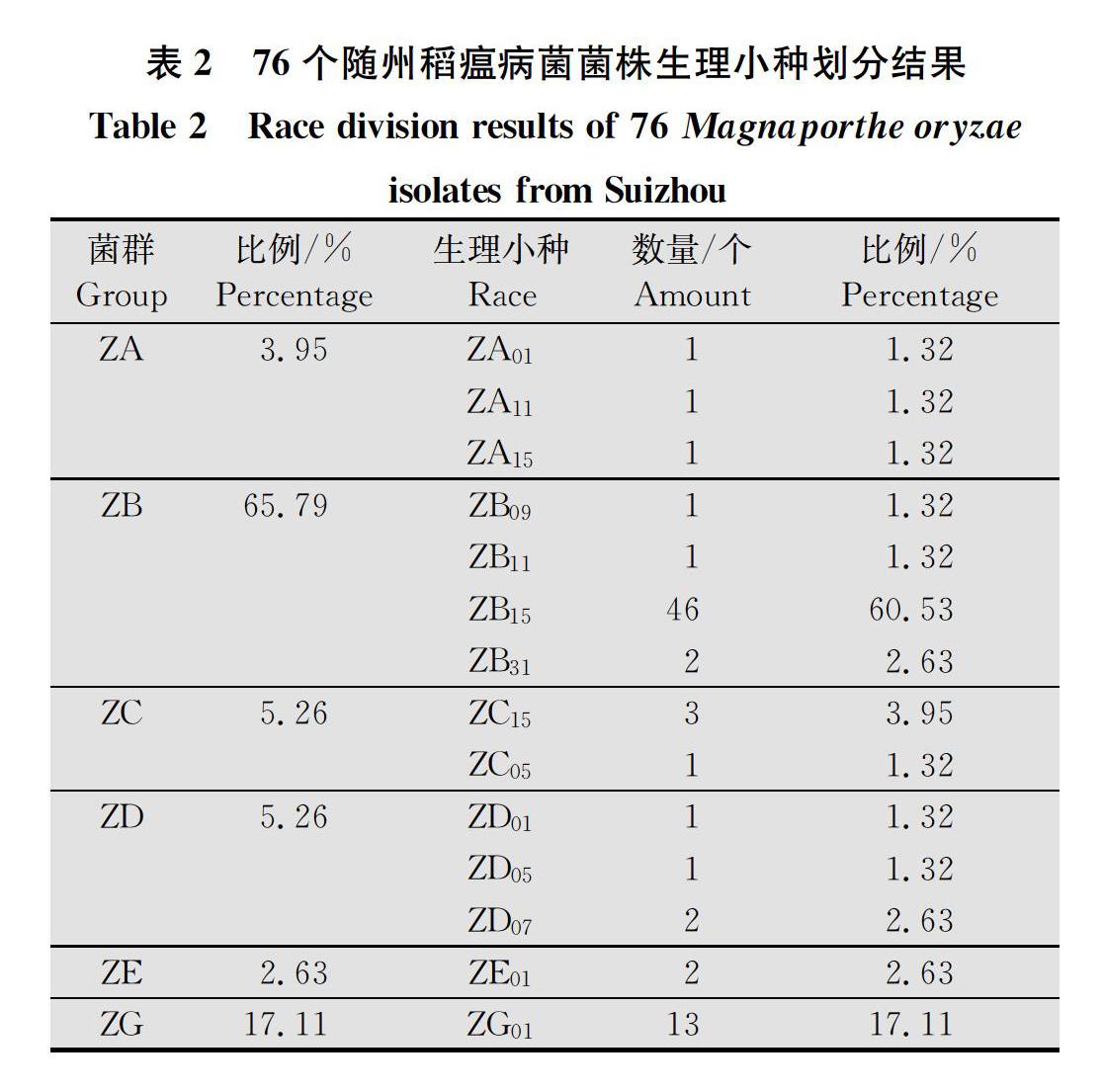
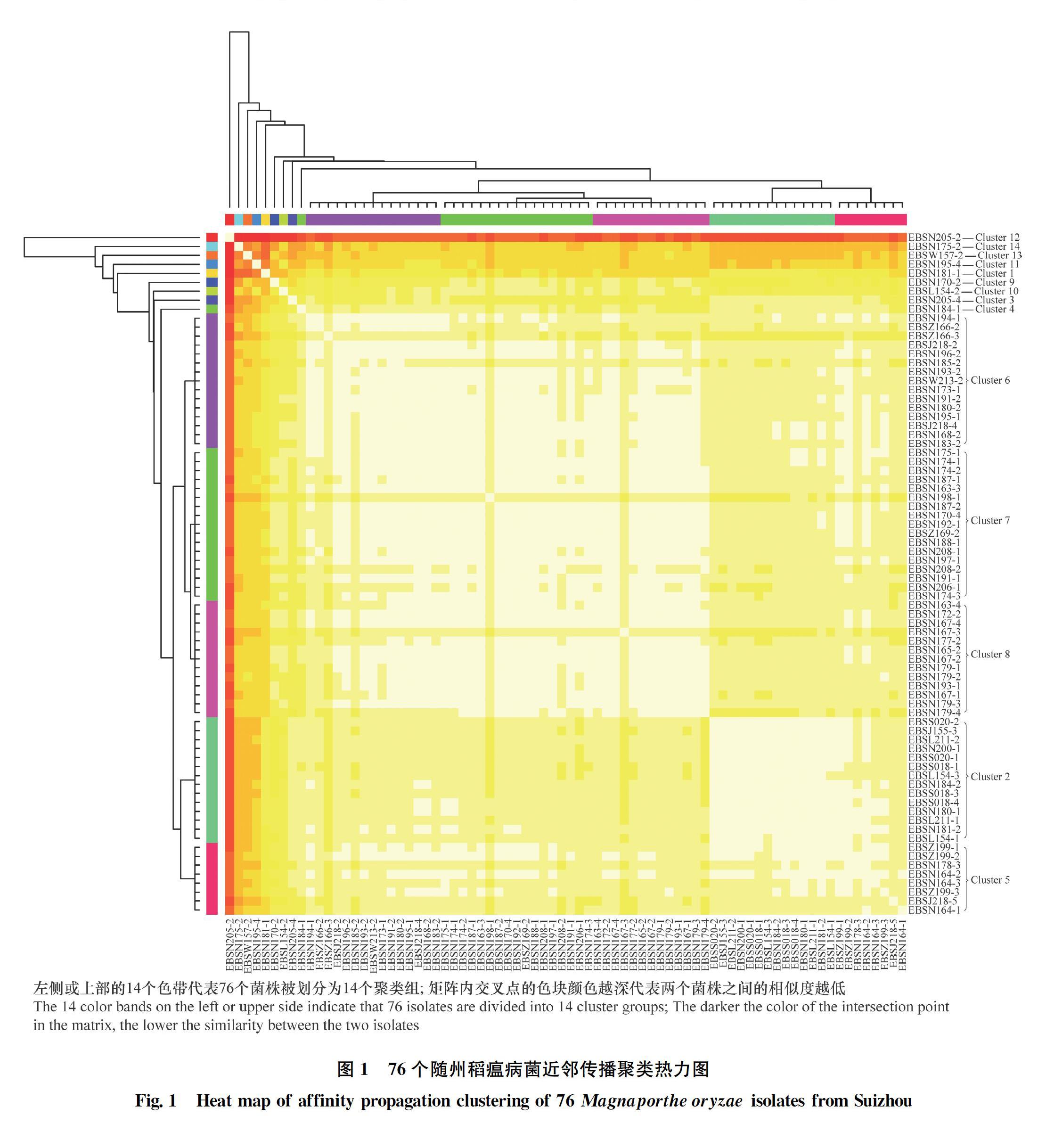
摘要 :采用人工接種方法,用7个中国鉴别品种和95个自选资源材料对2014年至2015年间采自湖北省随州地区的76个稻瘟病菌单孢菌株进行致病型鉴定。分别利用传统生理小种种群划分方法和近邻传播聚类法(affinity propagation clustering,AP聚类法)进行菌群结构分析,比较两种方法的差异。结果表明,传统生理小种种群划分方法将76个菌株分为6个菌群,14个中国小种, ZB菌群为优势种群,占比65.79%,ZB15为优势生理小种,占比达到60.53%;近邻传播聚类法将76个菌株分为14个菌群,Cluster 2、Cluster 6、Cluster 7、Cluster 8为随州地区优势菌群,占比分别为18.42%、19.74%、22.37%、17.11%,Cluster 6、Cluster 7和Cluster 8具有相对较高的致病力;两种方法划分结果虽不完全一一对应,但划分趋势相同,近邻传播聚类法在稻瘟病菌种群结构研究中具有一定应用前景;根据试验结果筛选出1个代表随州地区稻瘟病总致病谱的菌群,菌群由12个菌株组成,将其命名为“随州生态模式菌群”。
关键词 :湖北; 随州; 稻瘟病菌; 菌群结构; 生态模式菌株; 近邻传播聚类
中图分类号:
S 435.111.41
文献标识码: A
DOI: 10.16688/j.zwbh.2020122
Population structure analysis of rice blast fungus (Magnaporthe oryzae) and
the establishment of ecological type flora in Suizhou area of Hubei province
WU Yao, HAN Yu, JIE Chunyu, WANG Lin, WU Shuangqing*
(Enshi Tujia and Miao Autonomous Prefecture Academy of Agricultural Sciences, Hubei Province, Enshi 445000, China)
Abstract
Seven Chinese cultivars and 95 self-selected varieties were used to artificially inoculate and identify 76 isolates of Magnaporthe oryzae collected from Suizhou area of Hubei province from 2014 to 2015. The population structure was analyzed by using traditional race population division method and affinity propagation clustering. The differences between the two methods were compared. The results showed that 76 isolates were divided into six groups and 14 Chinese races by the traditional race population division method. ZB group was the dominant population, accounting for 65.79%, and ZB15 was the dominant race, accounting for 60.53%. 76 isolates were divided into 14 clusters by affinity propagation clustering, and Cluster 2, Cluster 6, Cluster 7 and Cluster 8 were the dominant groups in Suizhou, accounting for 18.42%, 19.74%, 22.37%, and 17.11%, respectively. Cluster 6, Cluster 7 and Cluster 8 have relatively high pathogenicity. Although the division results of the two methods are not completely one-to-one, but the division trend is the same. The affinity propagation clustering has certain application prospects in studying the population structure of M.oryzae. A group of isolates, representing the total pathogenic spectrum of M.oryzae in Suizhou area, was selected, consisting of 12 isolates, which was named “Suizhou ecological type flora”.
Key words
Hubei; Suizhou; Magnaporthe oryzae; population structure; ecological type isolate; affinity propagation clustering
稻瘟病是影响水稻生产的主要病害之一,水稻整个生育期均可感染稻瘟病。稻瘟病大暴发在我国各水稻种植区时有发生。2014年和2015年湖北省中稻稻瘟病大发生,除鄂西南山区稻瘟病常发区外,随州、孝感、荆州、荆门等地区稻瘟病也严重发生,其中随州损失最大,造成400 hm2水稻基本绝收[12]。
到目前为止,抗病品种的选育与利用依然是防治稻瘟病最为环保且经济的手段。但在生产中发现,原本抗性表现较好的水稻品种在连续种植多年后,抗性逐渐丧失,其最主要的原因是稻瘟病菌种群结构发生了变化。……
