平原河网地表水空间分布特征
2021-06-17祝新明李莉王翡吴伟超
祝新明 李莉 王翡 吴伟超

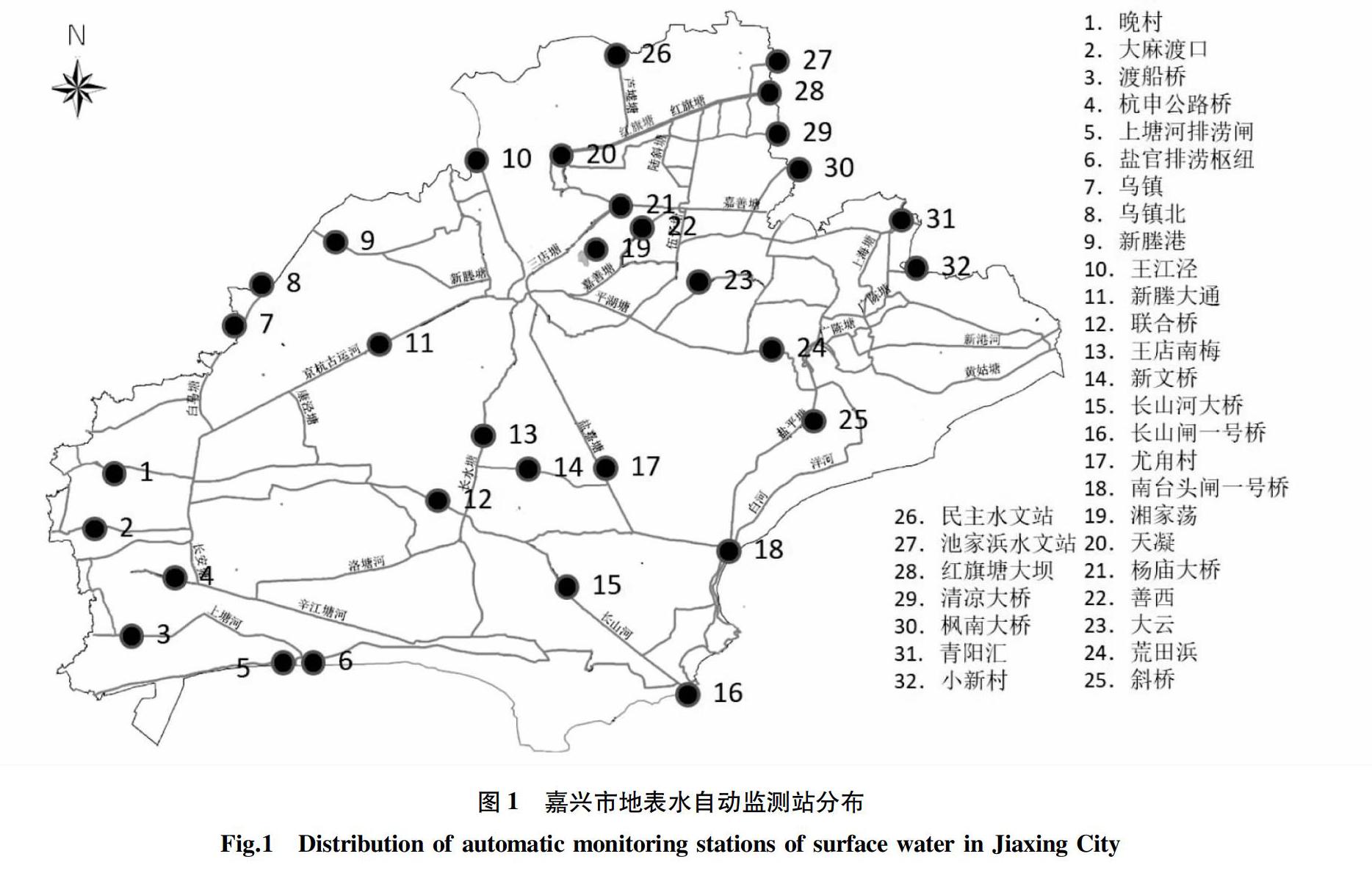
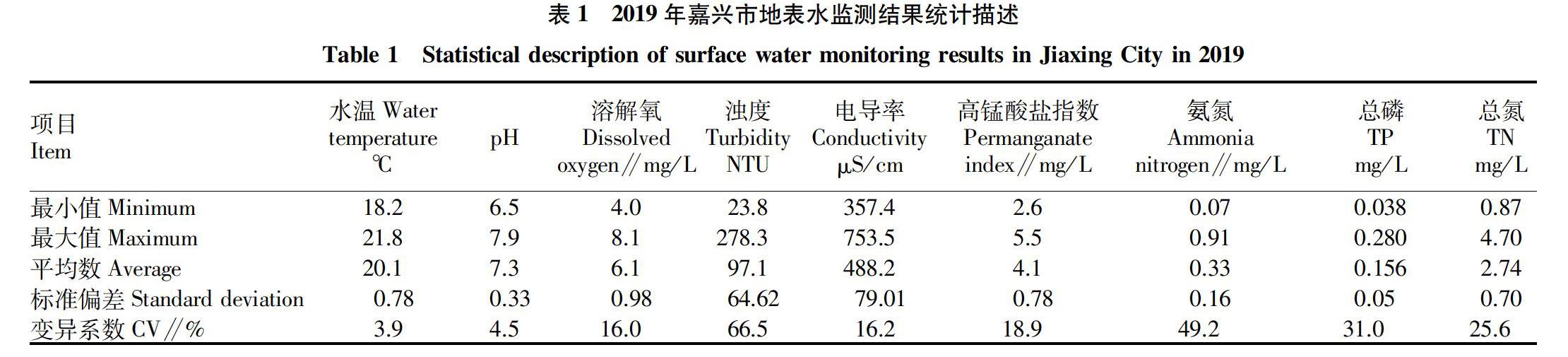
摘要 以布设在嘉兴市主要水系32个水质自动监测站2019年水质监测数据为基础,综合运用主成分分析和聚类分析等多元统计分析方法,对嘉兴市平原河网地表水的空间分布特征进行分析。结果表明,主成分分析表明嘉兴市平原河网地表水主要受总磷、氨氮、总氮等指标的影响,pH、溶解氧、电导率、高锰酸盐指数等指标的影响较小。聚类分析表明嘉兴市平原河网水系主要分为3类,第1类以澜溪塘为代表的河道,水质较好;第2类为南部排入钱塘江、东部排入黄浦江、中部环嘉兴市区河道,水质次之;第3类为西部和北部入境河道,水质最差;聚类分析结果与主成分综合评判结果基本一致。
关键词 地表水;空间分布;主成分分析;聚类分析;嘉兴市
中图分类号 X832 文献标识码 A
文章编号 0517-6611(2021)02-0038-04
doi:10.3969/j.issn.0517-6611.2021.02.012
开放科学(资源服务)标识码(OSID):
Characteristics of Spatial Distribution of Surface Water in Plain River Networks—Taking Jiaxing City as an Example
ZHU Xinming,LI Li,WANG Fei et al (Jiaxing Ecoenvironmental Monitoring Center of Zhejiang Province,Jiaxing,Zhejiang 314000)
Abstract Based on the water quality monitoring data of 32 automatic water quality monitoring stations deployed in the main water systems of Jiaxing City in 2019,the spatial distribution characteristics of surface water in plain river networks of Jiaxing City were discussed by using the methods of principal component analysis (PCA) and cluster analysis (CA). PCA showed that surface water in plain river networks of Jiaxing City was mainly affected by total phosphorus, ammonia nitrogen and total nitrogen. pH, dissolved oxygen, conductivity and permanganate index had little influence. CA showed that the plain river networks of Jiaxing City were mainly divided into three clusters. The first cluster was the river represented by Lanxitang River, with good water quality;the second cluster was discharged into Qiantang River in the south, discharged into Huangpu River in the East and around Jiaxing Rivers in the middle,followed by water quality;the third cluster was imported river in the west and the north, with the worst water quality. The results of CA were basically consistent with the results of PCA evaluation.
Key words Surface water;Spatial distribution;Principal component analysis;Cluster analysis;Jiaxing City
近幾十年经济飞速发展和城市化造成的水体污染,严重制约了高质量发展和美丽中国生态目标的实现。影响河流水体水质的因素是多方面的,通过对河流的持续监测和评价,摸清其空间分布特征,有利于管理部门分区分类开展水环境管理[1-2]。聚类分析、主成分分析、方差分析、判别分析等多元统计方法,已广泛应用于识别不同水体时空分布特征和污染源[3-6]。黄金良等[7]借助主成分分析、聚类分析和一元线性回归等方法,识别九龙江流域水质的时空分布和影响因素;李典宝等[8]利用聚类和判别分析,研究了上海河流秋季水质在空间分布的相识性、差异性,并表征了空间差异性的显著水质指标;唐玉兰等[9]综合运用方差分析、聚类分析和多维多尺度分析方法,对浑河流域沈抚段水质时空变化特征进行了分析。……
