江苏省南京市现代物流业竞争力影响因素分析
2021-05-12伍瑞涵宋淑鸿
伍瑞涵 宋淑鸿
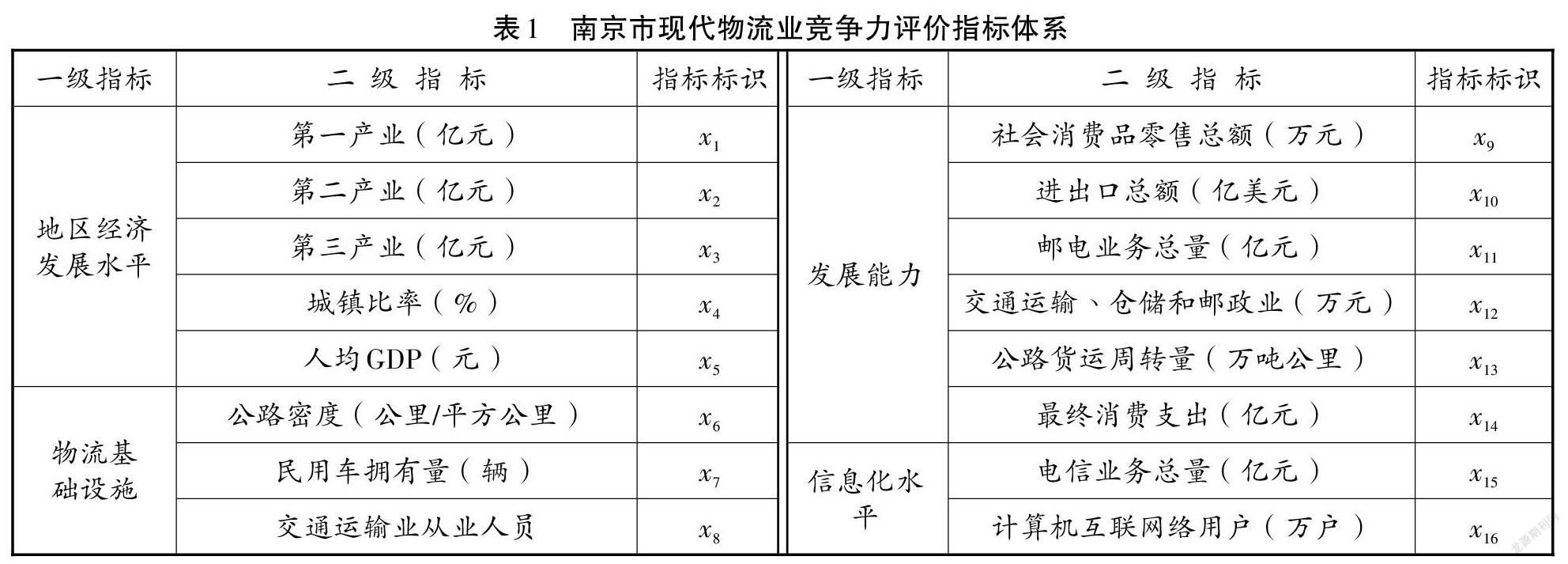


摘 要:随着经济的飞速发展,全国的许多地区都加大了对物流业的投入。南京作为江苏省的省会城市,虽然在物流方面发展较为领先,但是仍然存在约束物流业发展的问题。为了科学有效地分析影响南京市物流业竞争力的因素,构建了4个一级指标和16个二级指标体系,运用灰色关联分析方法对南京物流业的发展进行分析评价,结合实际情况,为南京开展高层次高质量的物流活动提出有效的发展对策。
关键词:竞争力;南京市;灰色关联度分析;现代物流业
中图分类号:F259.27 文献标识码:A
Abstract: With the rapid development of the economy, many regions across the country have increased their investment in the logistics industry. As the capital city of Jiangsu province, Nanjing is a leading city in logistics development, but there are still problems that limit the development of logistics industry. In order to scientifically and effectively analyze the factors affecting the competitiveness of Nanjing's logistics industry, a system of four primary indicators and 16 secondary indicators is constructed, and the development of Nanjing's logistics industry is analyzed and evaluated using the gray correlation analysis method, and effective countermeasures are proposed for the development of high-level and high-quality logistics activities in Nanjing, taking into account the actual situation.
Key words: competitiveness; Nanjing; gray correlation analysis; modern logistics industry
0 引 言
现代物流业是指将原材料、产成品以最经济的费用,从供给地向需求地转移的过程。中国物流业起步较晚,物流业需求持续扩大,这就使得物流业在地方经济发展及产业转型升级中发挥着重要作用。南京市是江苏省的省会城市,现代物流业的发展不容忽视。
从南京的物流现状看,南京市的优势条件有很多。南京市处于上海和长江经济的交叉地带,东面是上海。上海市的物流发展非常发达,能推动南京市物流产业发展[1]。且南京有南京港和禄口国际机场2个一类口岸,也是国内唯一设有统辖市域海关业务隶属海关的省会城市[2]。此外,货运量是衡量物流水平的重要指标,据南京统计年鉴数据表明,2015~2019年南京市公路货运周转量(万吨公里)分别为:1 821 582、1 917 038、2 197 884、2 532 622、2 748 401,呈现逐年上升趋势。
近年来,国内相关学者对提升物流业竞争力有着各种看法。郑秀恋和朱璐瑶(2021)认为资金和人才对于提升物流核心竞争力十分重要[3]。……
