大城市夜间公交出行状况与选择因素分析
2021-05-12周易敏韩宝睿简玉成何丽丽
周易敏 韩宝睿 简玉成 何丽丽
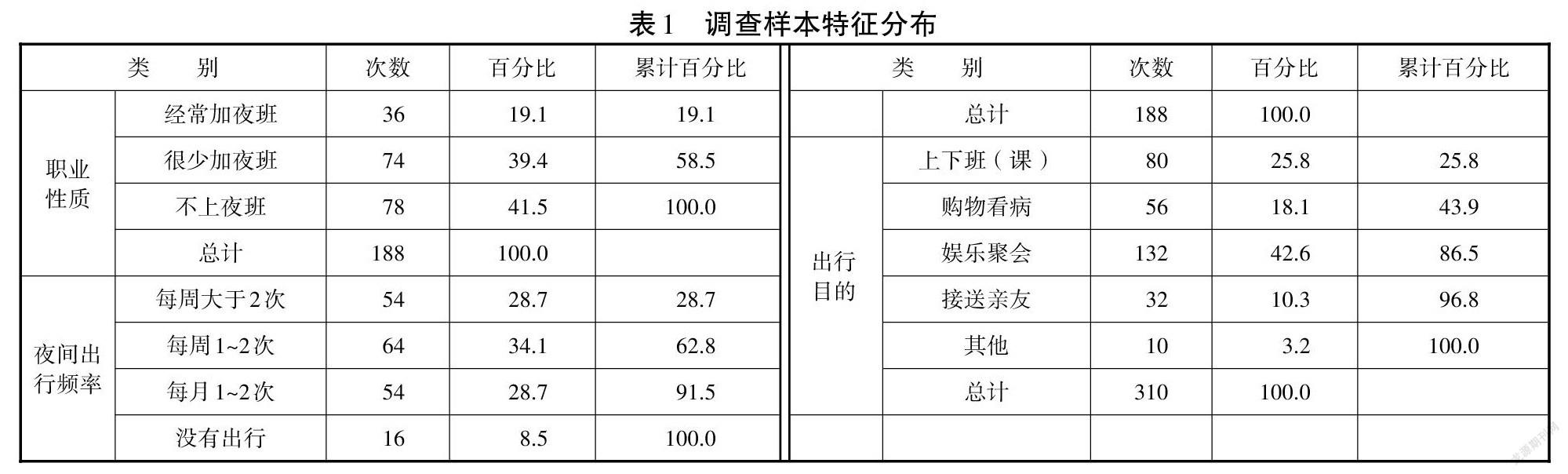
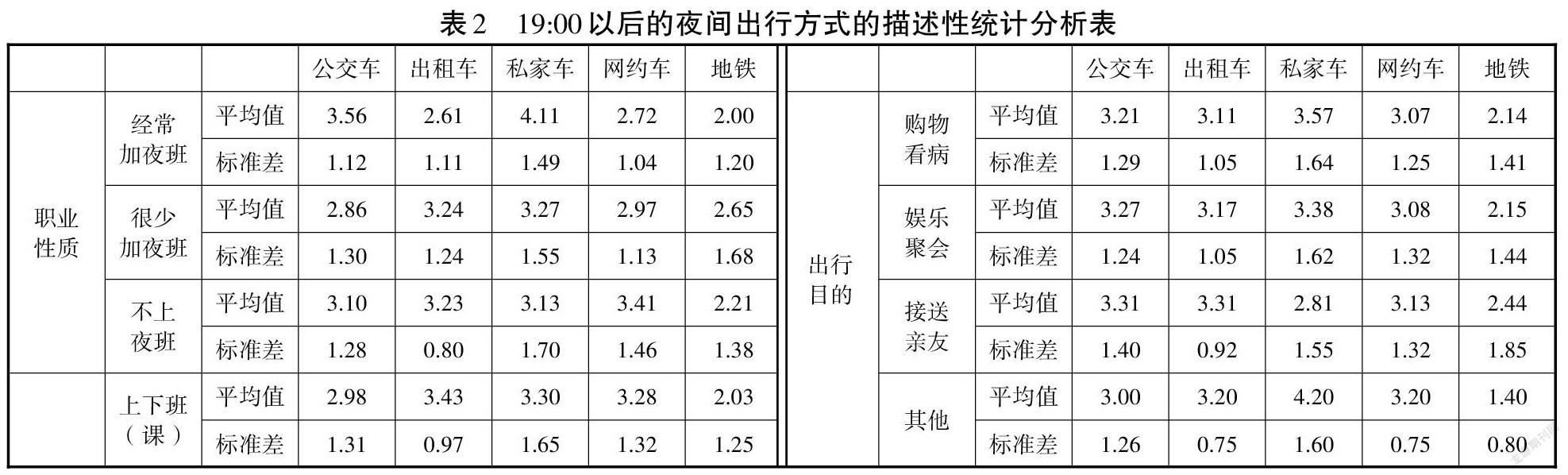
摘 要:为了解大城市夜间公共交通运营状况以及乘客的潜在需求,文章通过SP & RP问卷调查形式对交通客流展开研究。首先,文章分析了南京两条代表性公交线路夜间客流在时间和空间上的分布情况,在时间上,夜间客流明显低于日间客流,并且随着时间的推移没有产生较大的变化,但是会在22:00之后明显减少;在空间上,客流随着距离市中心的距离逐渐递减,并且越靠近地铁线路客流越少。其次,通过网络及现场问卷,发现了城市夜间出行人群构成以及出行频率的特征。最后,利用二项Logit离散选择模型分析夜间出行是否选择夜间公交的主要影响因素,结果发现选择公交的可能性与候车时间、夜间出行频率以及夜间公交的准时性、安全性高度相关。
关键词:夜间公交;出行需求;客流分布;离散选择模型
中图分类号:F570 文献标识码:A
Abstract: In order to understand the operation status of night public transport in big cities and the potential demand of passengers, this study carried out the research through SP & RP questionnaire survey and traffic passenger flow survey. Firstly, the paper analyzes the temporal and spatial distribution of the night passenger flow of two representative bus lines in Nanjing. In terms of time, the night passenger flow is significantly lower than the day passenger flow, and there is no significant change with the passage of time, but it will decrease significantly after 22:00; In space, the passenger flow decreases with the distance from the city center, and the closer to the subway line, the less the passenger flow. Secondly, through the network and on-site questionnaire, we found the characteristics of the composition of the urban night travel crowd and travel frequency. Finally, this paper uses binomial logit discrete choice model to analyze the main influencing factors of whether to choose night bus for night travel. The results show that the possibility of choosing night bus is highly related to waiting time, night travel frequency, punctuality and safety of night bus.
Key words: night bus; travel demand; passenger flow distribution; discrete choice model
0 引 言
近年来,随着城市经济的进一步繁荣,尤其是夜间经济的兴起,公共交通系统在每日的常规运营时间可以有效保障数以万计的出行需求,但却往往忽视了非常规运营时间数量级依然庞大的出行需求,例如夜间出行。大城市夜间需求不断增长,但是夜间公交却可能存在客流稀疏的现象。据相关社会调查反映,上海存在一些公交夜宵线近几年客流稀少的现象[1]。同时,由于居民在夜间的出行随机性较大,需求分布较分散,常规夜间公交按照固定线路运行,运营过程中实载率低,导致经营效益低,这带给了公交企业很大的成本压力。……
