PASS视角下书写困难儿童认知特点研究
2021-02-22王梅张海丛毛荣建刘颂祝平尤思凡
王梅 张海丛 毛荣建 刘颂 祝平 尤思凡

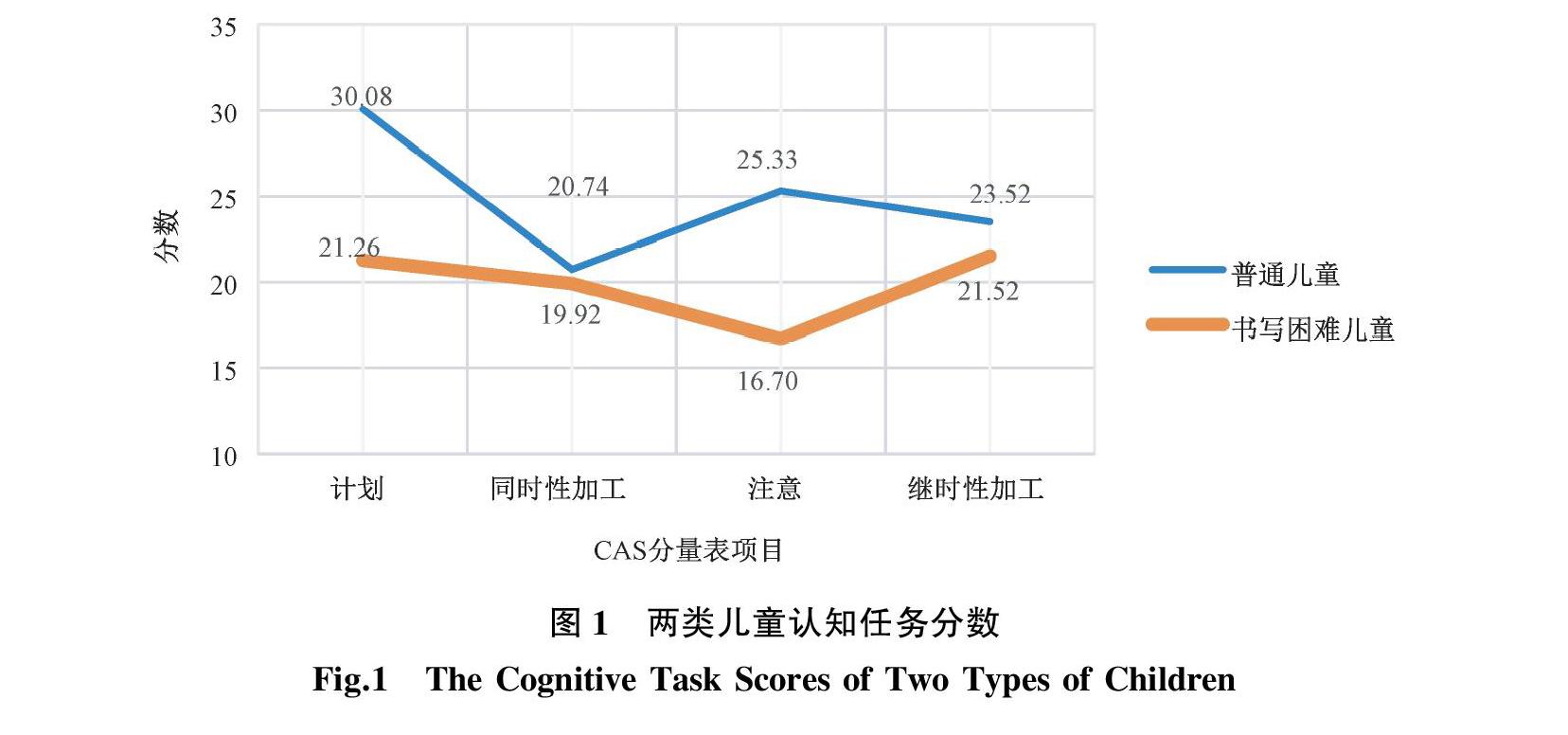
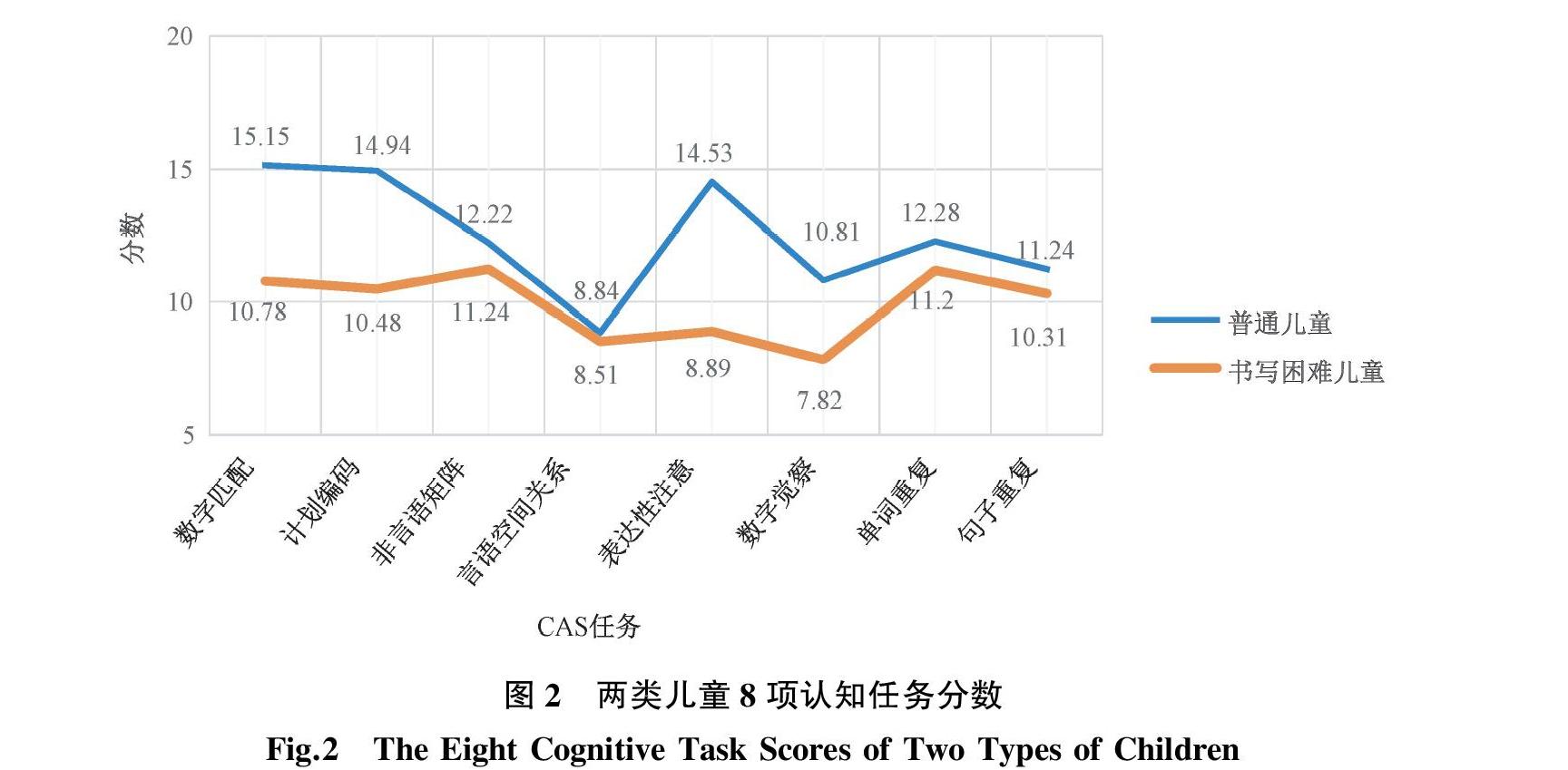
[摘要]以CAS认知评估系统对北京市4所普通小学的60名书写困难儿童和60名普通儿童进行测试,探讨其认知过程的特点。结果发现,书写困难儿童的认知总分及计划、注意、继时性加工得分均非常显著地低于普通儿童;书写困难女生的同时性加工得分低于男生,认知总分和其他3个过程得分皆高于男生,但不存在显著差异;书写困难儿童在完成任务时使用的认知策略与普通儿童不同。教育者可先行诊断,根据书写困难儿童的认知薄弱点,制定补救计划,改善其书写状况。
[关键词]书写困难;儿童;认知评估系统;认知特点
[中图分类号]G 623.2[文献标志码]A[文章编号]10050310(2021)01008107
A Study of Cognitive Characteristics of
Children with
Dysgraphia from the Perspective of PASS Based on
Four Urban Schools in Beijing
Wang Mei1, Zhang Haicong1, Mao Rongjian1, Liu Song1, Zhu Ping1, You Sifan2
(1. College of Special Education, Beijing Union University, Beijing 100075, China;
2. Chongwen Primary School, Beijing 100062, China)
Abstract: Cognitive Assessment System (CAS) was used to test 60 children with dysgraphia and 60 ordinary children in 4 ordinary primary schools in Beijing to explore their cognitive characteristics. Results show that total cognitive score, planning, attention and successive processing scores of children with dysgraphia were significantly lower than those of ordinary children. Female students with dysgraphia scored lower than male students in simultaneous processing, and higher than male students in total cognitive score and other three processes, but there was no significant difference. The cognitive strategies used by children with dysgraphia in completing tasks were different from those used by ordinary children. Educators should diagnose first and develop remedial plans based on the cognitive weakness of children with dysgraphia to improve their writing performance.
Keywords: Dysgraphia; Children; Cognitive Assessment System; Cognitive characteristics
1問题提出
书写困难又称书写障碍,分为发展性和获得性两种。获得性书写困难一般指由于某些疾病或脑损伤导致的书写困难。发展性书写困难指儿童的书写技能落后于同龄儿童, 影响日常学习, 进而导致学业成绩显著落后[1]。国外学者根据书写障碍的成因及特点,将其分为视觉空间型、动作执行型和语言型[2]。视觉空间型的主要表现是字的笔画正确,但位置错误;动作执行型的主要表现是在与年龄水平相对应的动作技能上有问题,线条不均,书写速度慢,书写字迹潦草不易辨认;语言型书写障碍表现为拼写困难和语法困难,如笔画添减、遗漏、形近替代、字词错写等。对于儿童来说, 80%的在校时间均与书写相关, 包括描红、临摹、抄写及听写等,书写能力作为影响儿童学业成就的关键因素应该得到足够的重视和关注。……