基于“活态共生”的中小型河流遗产保护与复兴
2021-02-18李桂芳吴曼妮郑文俊
李桂芳 吴曼妮 郑文俊

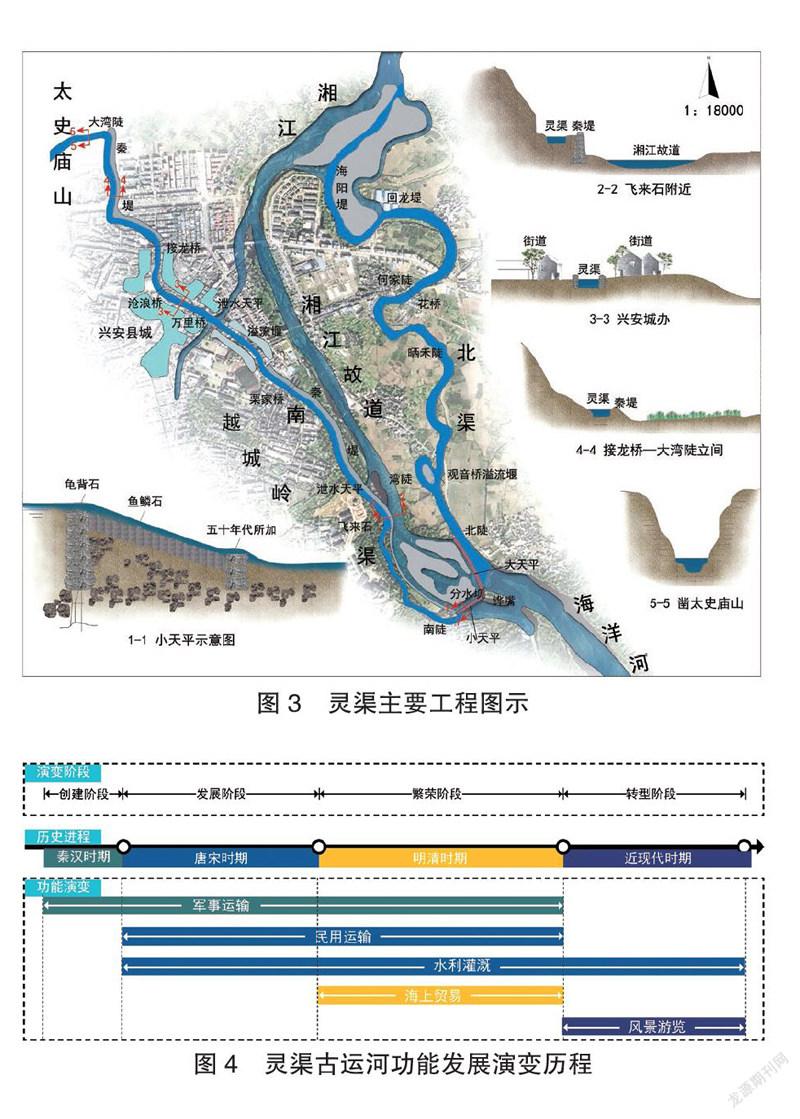


摘要:中小型河流遗产是流动着的活态遗产,对其进行保护与复兴的核心问题是如何平衡河流遗产的活态传承与复兴发展,寻求两者共生的策略。以“活态遗产”“共生理论”为基础,提出适合中小型河流遗产保护与复兴的“活态共生”策略框架,并选取世界灌溉工程遗产桂林灵渠为研究案例,识别其空间形态、历史功能的4个演变阶段,析出灵渠的活态变化特征及与城市、社区、农业、旅游的共生特性。基于活态共生的视角,从空间、时间、功能、文化4个维度总结出灵渠古运河遗产保护与复兴的经验,可为中小型河流遗产的保护与复兴提供启示。
关键词:活态共生理论;河流遗产保护;遗产复兴;灵渠
中图分类号:TU986
文献标志码:A
文章编号:1671-2641(2021)06-0007-06
收稿日期:2021-11-04
修回日期:2021-12-17
Abstract: Small and medium-sized river heritage is a flowing living heritage. The core issue of its protection and revival is how to balance the living heritage and development of river heritage, and seek the symbiosis of the two. Based on “living heritage” and “symbiosis theory”, this study puts forward a strategic framework of “living symbiosis” suitable for the protection and revival of small and medium-sized river heritage, and takes the Ling Canal in Guilin , the world irrigation engineering heritage, as a case study. By identifying the four evolution stages of morphology and historical function of the Ling Canal, the characteristics of its living changes and its symbiosis with cities, communities, agriculture and tourism are obtained. Finally, based on the perspective of living symbiosis, the paper summarizes the experience of the protection and revival of the Ling Canal from the four dimensions of space, time, function and culture, which can provide enlightenment for the protection and revival of small and medium-sized river heritage.
Key words: Living symbiosis theory; River heritage protection ; Heritage revival; The Ling Canal
以京杭大運河、都江堰等为代表的历史河流遗产是典型的“活态文化遗产”,具有大尺度、跨区域、综合性等资源特点,引起了诸多学者关注。学者们取得的成果涉及运河遗产廊道的保护传承与活态利用[1~2]、遗产保护管理模式[3]、遗产的适应性管理[4]等方面,但缺少对中小型河流遗产的保护策略、管理与价值研究等的讨论,及其保护与复兴理论分析框架的系统构建。中小型历史河流遗产是指大运河、都江堰等以外的规模、影响力相对较小的河流遗产,具有鲜明的地域性、地理空间连续性的特征,传递着城市的地域文化和风土生态。因此,对其进行保护与复兴的理论研究和实践总结非常必要。……