桂林市寺庙园林植物应用探究
2021-02-18范钟琪

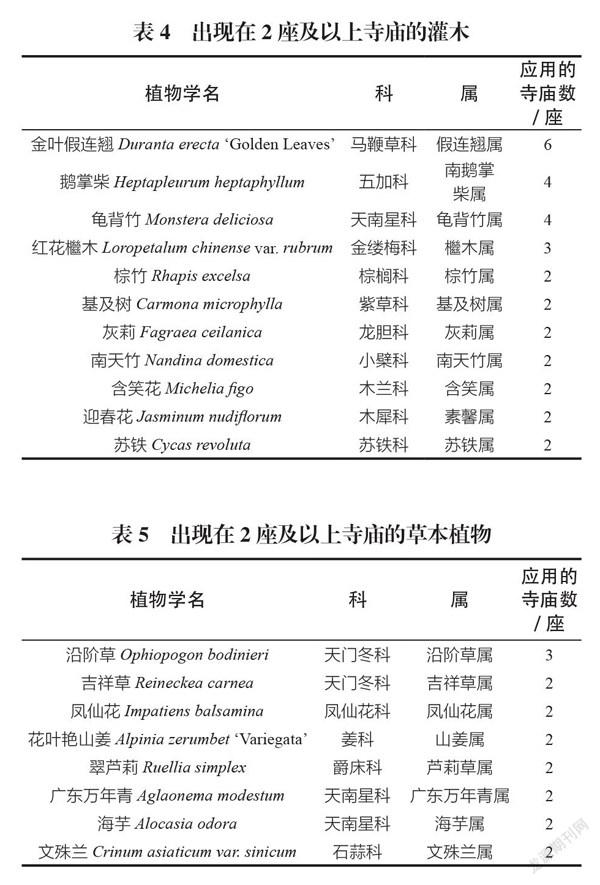
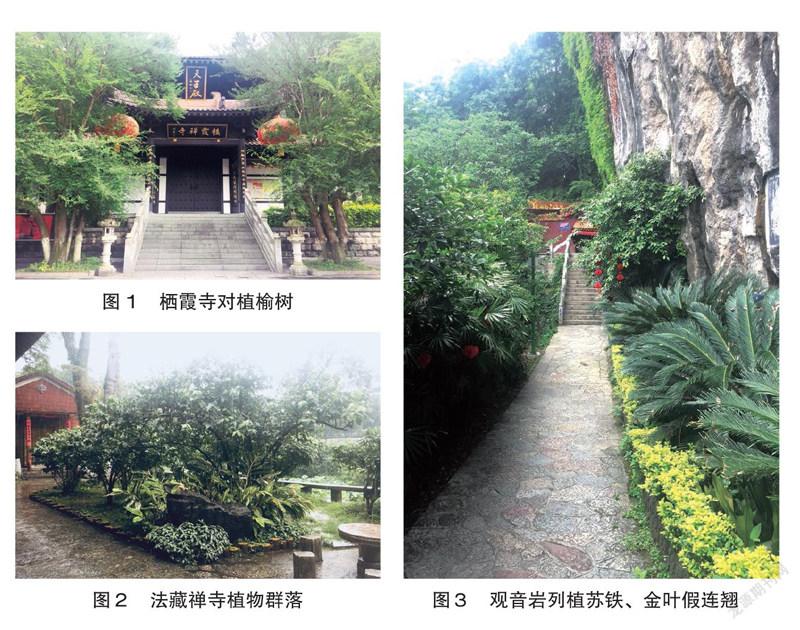
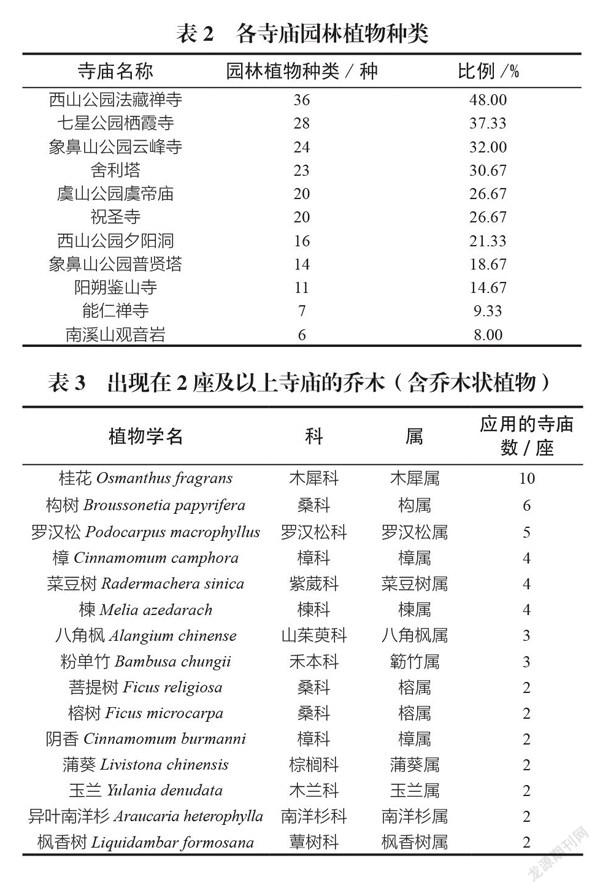
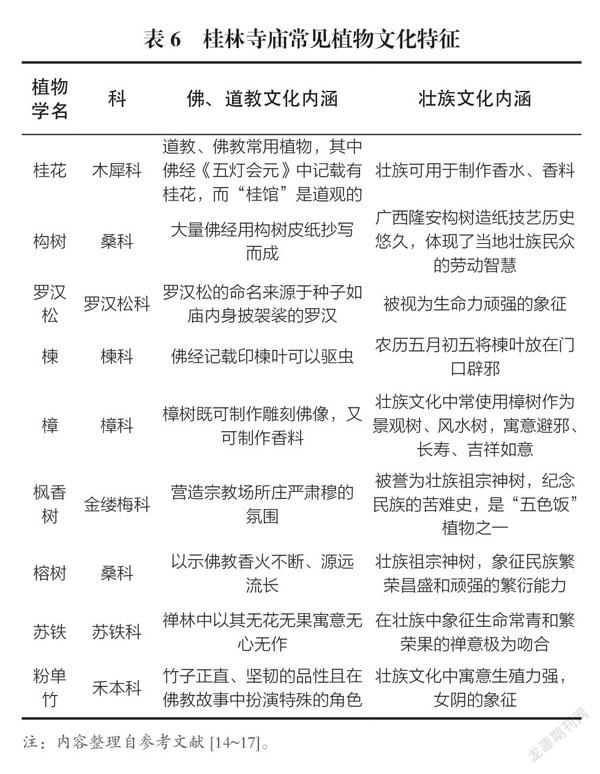
摘要:寺庙园林历史底蕴深厚,文化内涵丰富,园内的植物更是其独特内涵的体现。以唐代岭南佛教中心桂林的寺庙园林为例,研究其中植物景观的种类特点与配置结构。结果发现:11处寺庙园林共有园林植物75种,隶属52科67属,其中桑科榕属Ficus植物和天门冬科植物是最主要的组成部分;并且有些园林植物(如桂花Osmanthus fragrans、樟Cinnamomum camphora等)既蕴含佛教内涵又体现了壮族文化。总体而言,桂林寺庙园林植物景观建设不仅体现了独特的山水特征,也包含着壮族文化底蕴。
关键词:寺庙园林;园林植物;广西桂林
中图分类号:S688
文献标志码:A
文章编号:1671-2641(2021)06-0013-04
收稿日期:2021-11-06
修回日期:2021-12-14
Abstract: Temple gardens have profound historical background and rich cultural connotations, and the plants in the gardens are the embodiment of their unique connotations. This paper takes the temple gardens in Guilin, the center of Buddhism in Lingnan in the Tang Dynasty, as an example, to study the species characteristics and configuration of the plant landscape. The results show that there are 75 species of garden plants in 11 temple gardens, belonging to 52 families and 67 genera, among which the plants belonging to Ficus of Moraceae and the plants belonging to Asparagaceae are the main components. And some garden plants (such as Osmanthus fragrans, Cinnamomum camphora, etc.) not only contain Buddhist connotations, but also reflect the culture of the Zhuang nationality. In general, the plant landscape construction of temple gardens in Guilin not only embodies the unique landscape characteristics, but also contains the cultural deposits of the Zhuang nationality.
Key words: Temple garden; Landscape plants; Guangxi Guilin
1 研究背景
寺庙园林是指佛寺和道观的附属园林,包括寺庙内外的园林化环境,同样可泛指为宗教信仰和意识崇拜服务的建筑群所附设园林[1~2]。道、佛教思想影响着中国人对自然的态度,从而使寺庙园林讲究内部山水之间的诗意气氛与外部园林环境的有机结合,强调山、水、城、人和谐共生的设计理念。目前,关于寺庙园林的研究多涉及选址、建筑群体布局[3~4]、历史[5~6]、风水与宗教文化的关联[7]、园林造园意境[8~9]等方面,其中众多学者认为自然植物景观和人文内涵是贯穿寺庙的重要部分[10]。
桂林作为唐代岭南佛教中心,古代佛教繁荣,留下众多寺庙,共1 164座寺庙[11]。至唐代,唐人莫休符在《桂林风土记》中说:“寺在府之西郭郊三里,甫近隐山,旧号西庆林寺。武宗废毁,宣亲再崇。峰峦牙张,云木交映,为一府胜游之所。寺有古像,征于碑碣,盖卢舍那佛之所报身也”。……