景观基因图示视角下的江西省瓘山村景观结构解析
2021-02-18蔡彩红吴建楠江俊杰
蔡彩红 吴建楠 江俊杰
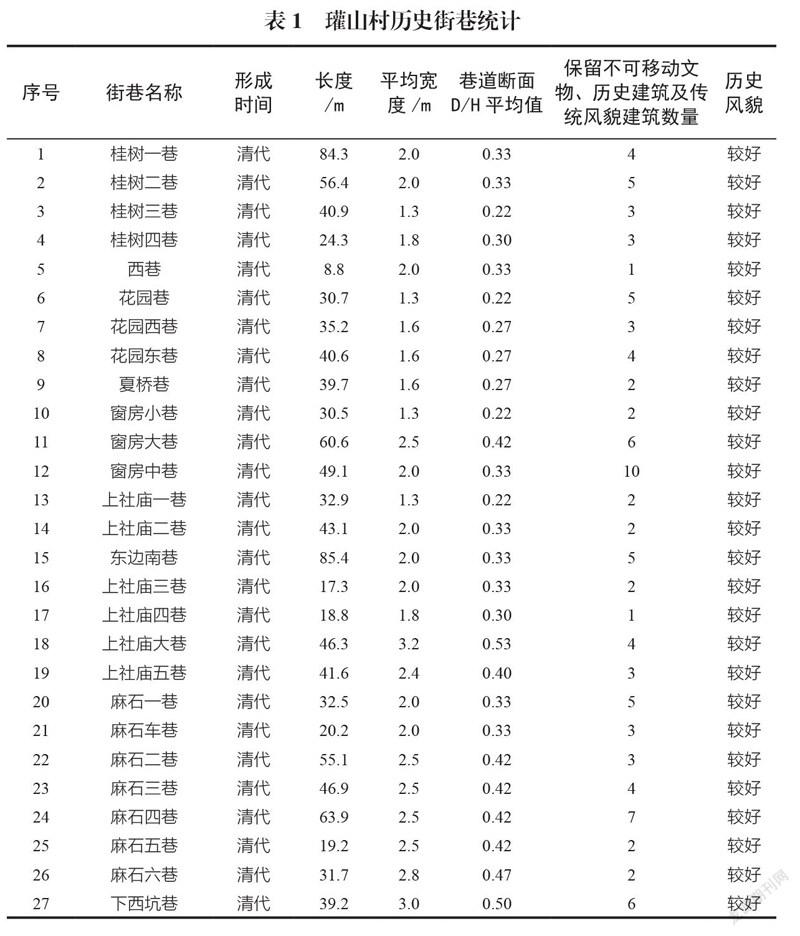
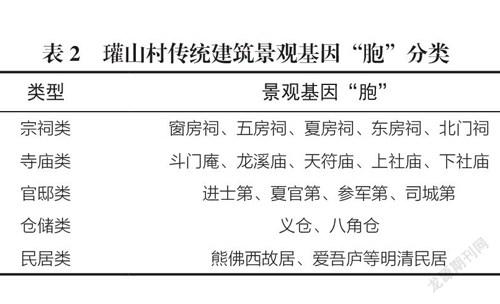
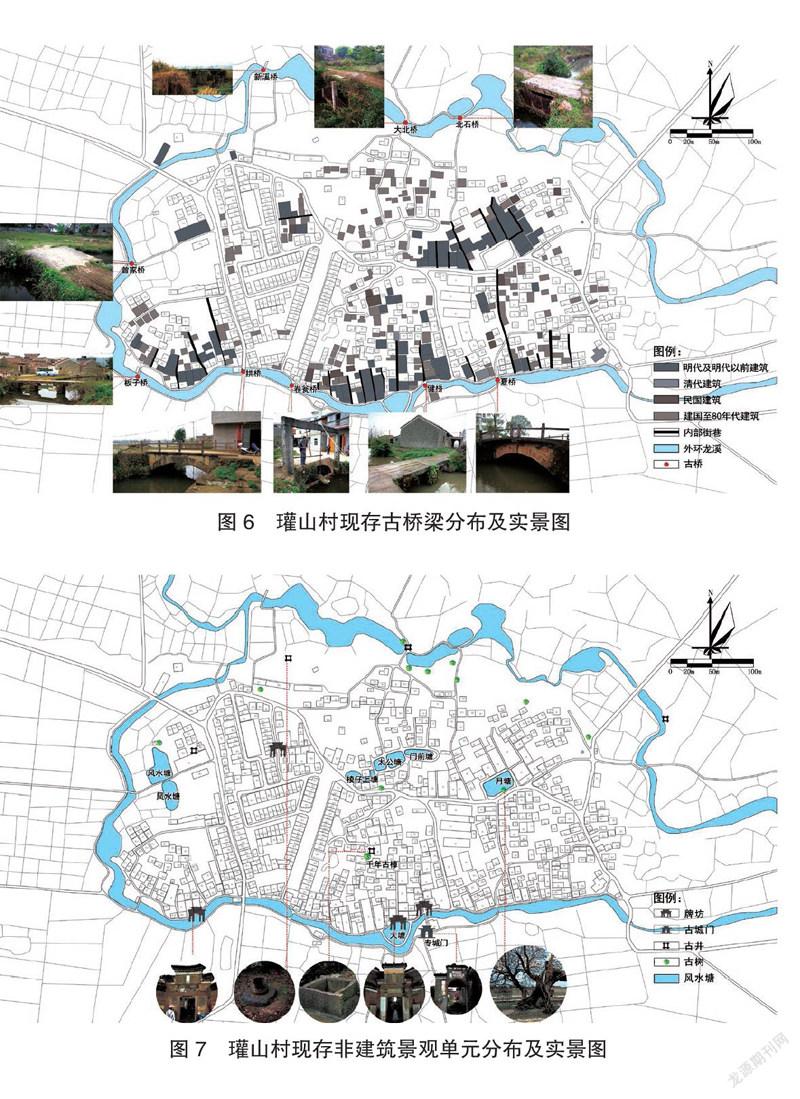
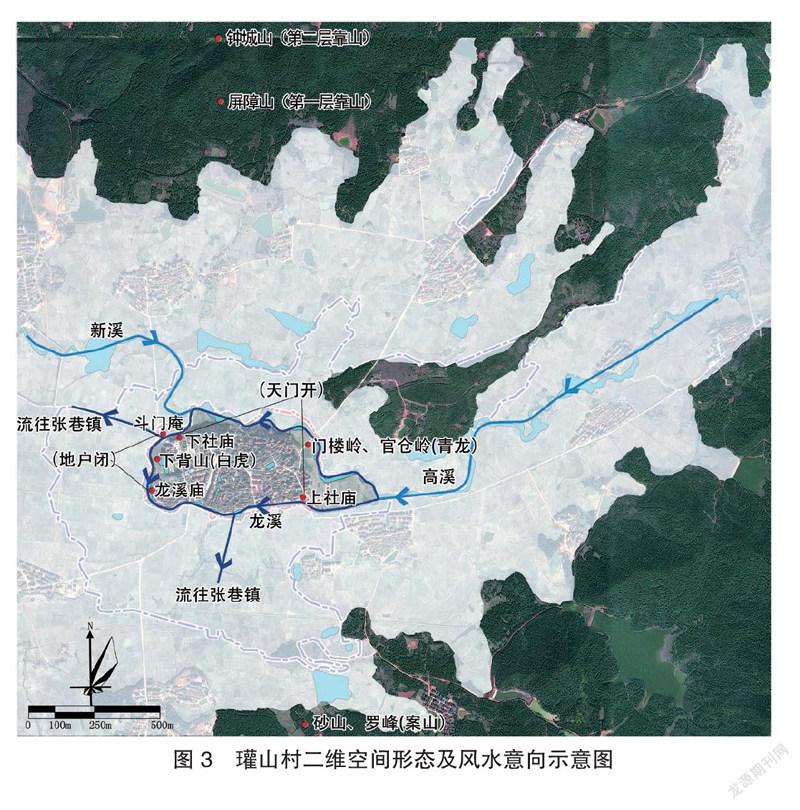
摘要:“景观基因”作为传统村落景观信息遗传的载体,蕴含了传统村落独特的景观环境特征与景观演变发展的内在逻辑。因此,景观基因图示可为探索传统村落景观结构提供新视角。以江西省丰城市瓘山村为例,从传统聚落景观基因的“胞—链—形”图示体系出发,揭示瓘山村在景观整体形态、景观连接通道和景观基本单元等方面的景观结构特色:景观基因“形”体现在二维空间形态和三维空间环境;景观基因“链”以外环龙溪和内部街巷结合为代表;景观基因“胞”体现在建筑和非建筑景观单元。从而总结出:风水理论、尊重自然的生态理念和景观集称文化三大景观基因共同孕育出了瓘山村的景观结构特色。
关键词:景观基因图示;传统村落;景观识别;景观结构
中图分类号:TU986
文献标志码:A
文章编号:1671-2641(2021)06-0022-05
收稿日期:2021-04-27
修回日期:2021-07-15
Abstract: As the carrier of traditional village landscape information inheritance, “landscape gene” contains the unique landscape environment characteristics of traditional villages and the internal logic of landscape evolution and development. Therefore, landscape gene mapping can provide a new perspective for exploring the landscape structure of traditional villages. Taking Guanshan Village in Fengcheng city, Jiangxi Province as an example, based on a “cell-chain-shape” pictorial system of traditional settlement landscape genes, this paper explains the landscape structure characteristics of Guanshan Village in terms of overall landscape form, landscape connecting channel and landscape basic unit. The “form” of landscape gene is embodied in two-dimensional space form and three-dimensional space environment. The “chain” of landscape gene is represented by the combination of outer ring Longxi River and inner streets and lanes. And the “cells” Landscape gene is embodied in architectural and non-architectural landscape units. Therefore, it is concluded that geomantic omen theory, ecological concept of respecting nature and landscape naming culture jointly breed the landscape structure characteristics of Guanshan Village.
Key words: Landscape gene mapping; Traditional villages; Landscape identification; Landscape structure
随着城镇化进程的加快,许多地域特色鲜明、文化景觀丰富的传统聚落在经济的快速发展中逐渐湮灭。多数古村古镇的空间结构、环境尺度、交通容量等已经越来越不能满足现代生活的要求,而追求舒适便捷的现代生活,可能会导致传统聚落的景观被破坏和文化遗产流失。为此,本文从“景观基因”概念的“胞—链—形”表达形式的研究视角出发,以江西省传统聚落丰城市瓘山村为例,分析其景观基因特征,以保护村落独特的生态景观和文化景观,并将提取的景观基因运用到瓘山村传统村落保护规划中,同时有助于进一步丰富江西省传统聚落景观基因研究。……