新生儿社区获得性细菌性肺炎的病原学特点及耐药分析
2021-02-03刘林
刘林
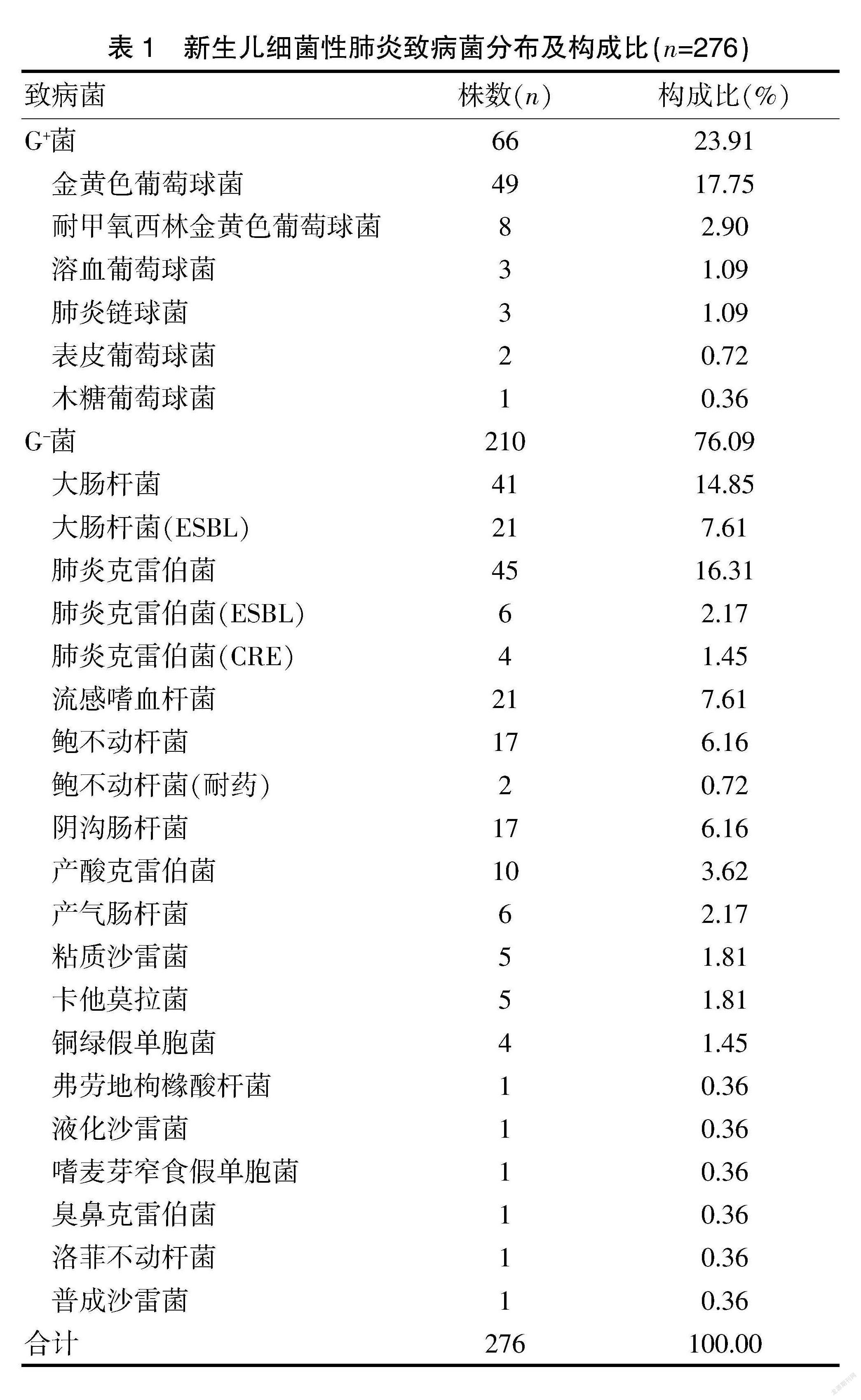

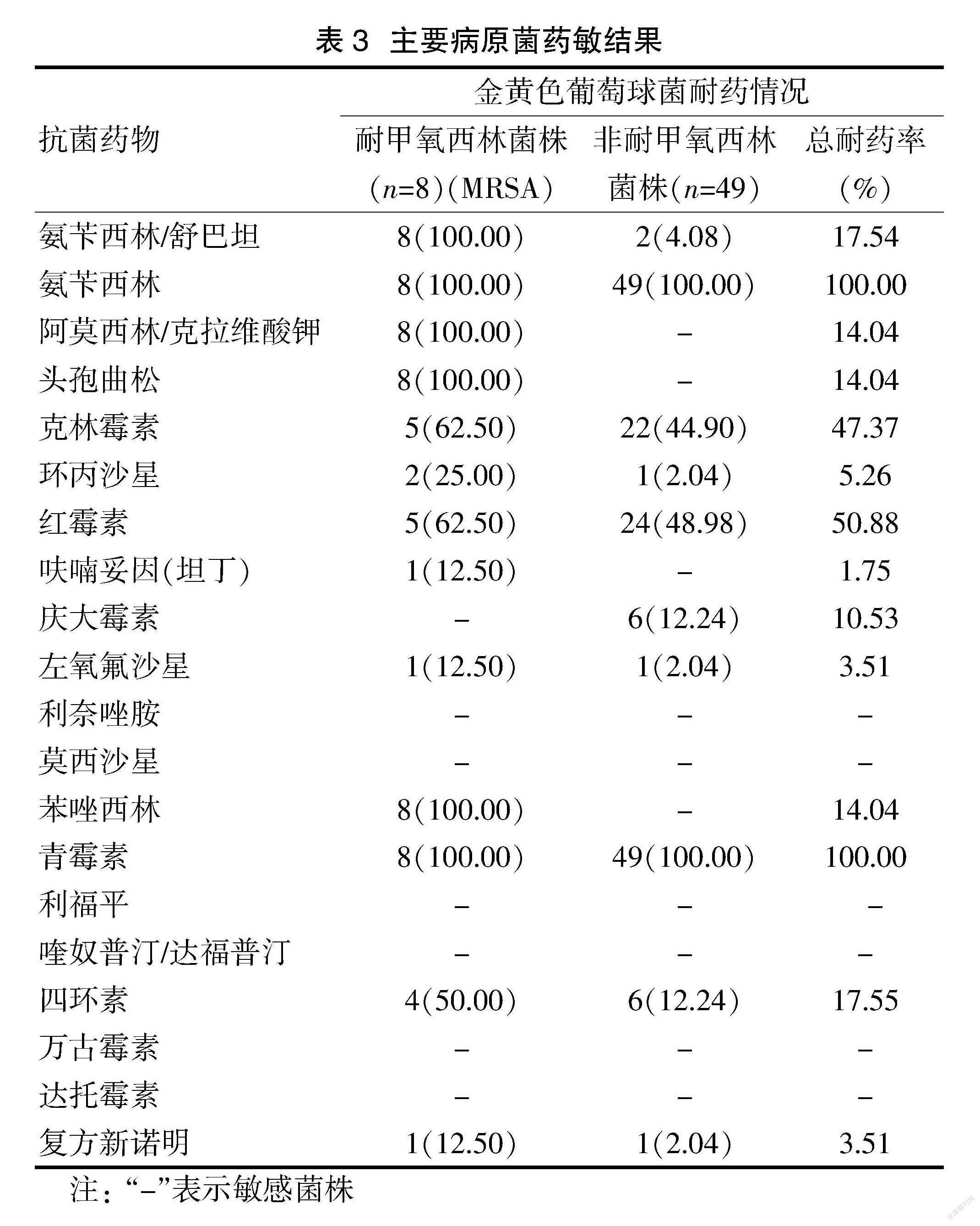
[摘要] 目的 分析我院新生儿社区获得性细菌性肺炎的病原菌分布特点及耐药性,以指导临床防治。 方法 回顾性分析我院2015年1月至2019年10月新生儿社区获得性肺炎的痰菌及药敏结果。 结果 纳入病例522例,细菌培养阳性247例(47.32%),检出细菌276株,其中G-菌210株(76.09%),以大肠埃希菌为主。发现产超广谱β内酰胺酶(ESBLs)的肠杆菌,对头孢菌素、氨曲南普遍耐药,同时发现耐碳青霉烯的肺炎克雷伯菌(CRKP)4株。G+菌66株(23.91%),以金黄色葡萄球菌为主,青霉素、氨苄西林100.00%耐药。 结论 新生儿社区获得性细菌性肺炎致病菌以革兰阴性菌为主,对常用抗菌药物均表现出不同程度的耐药,尤其应重视ESBLs阳性及耐碳青霉烯的肠杆菌,需密切监测病原菌及药敏结果,以指导临床合理用药。
[关键词] 肺炎;新生儿;病原菌;耐药性;抗菌药物
[中图分类号] R725.6 [文献标识码] B [文章编号] 1673-9701(2021)35-0066-04
Etiological characteristics and drug resistance analysis of neonatal community-acquired bacterial pneumonia
LIU Lin
Department of Pediatrics, Affiliated Hospital of Chengdu University, Chengdu 610000, China
[Abstract] Objective To analyze the distribution characteristics and drug resistance of pathogenic bacteria of neonatal community-acquired pneumonia(CAP) in our hospital, so as to guide clinical prevention and treatment. Methods The sputum bacteria and drug sensitivity of neonatal CAP in our hospital from January 2015 to October 2019 were analyzed retrospectively. Results A total of 522 cases were enrolled, 247 cases(47.32%) were positive for bacterial culture, and 276 strains of bacteria were detected, including 210 strains of G- bacteria(76.09%), mainly Escherichia coli. Enterobacteriaceae producing extended spectrum β lactamases (ESBLs) were found to be generally resistant to cephalosporins and aztreonam, and 4 strains of Klebsiella pneumoniae(CRKP) resistant to carbapenem were found. Moreover, 66 strains of G+ bacteria(23.91%), mainly Staphylococcus aureus, were resistant to penicillin and ampicillin (the drug resistance rate 100.00%). Conclusion The pathogens of neonatal CAP are mainly gram-negative bacteria, which exhibit different degrees of resistance to commonly used antibacterial drugs. Special attention should be paid to ESBLs-positive and carbapenem-resistant enterobacteriaceae, and the pathogenic bacteria and drug sensitivity should be closely monitored to guide clinical rational drug use.
[Key words] Pneumonia; Newborns; Pathogen; Drug resistance; Antibacterials
新生兒期是生后的过渡阶段,对外界环境适应差,抵抗力差,易导致各种感染性疾病。新生儿肺炎是新生儿期最常见的疾病之一,尤其重症肺炎是各国新生儿面临的重要疾病负担,同时也是导致新生儿死亡的重要原因[1-2]。新生儿肺炎可由细菌、病毒、衣原体及支原体等病原体引起,以细菌为主[3],随着社会快速发展,抗菌药物的广泛使用[4],细菌感染及耐药性的变迁,耐药菌逐渐增加,给临床诊疗工作带来了严峻挑战。明确病菌种类及抗生素耐药性规律,对指导临床合理使用抗生素极为重要,所以监测菌株分布情况及耐药性变迁尤为重要[5]。……