北京市丰台区社区脑卒中患者主观幸福感现况及其影响因素分析
2020-09-26薛娇
薛娇
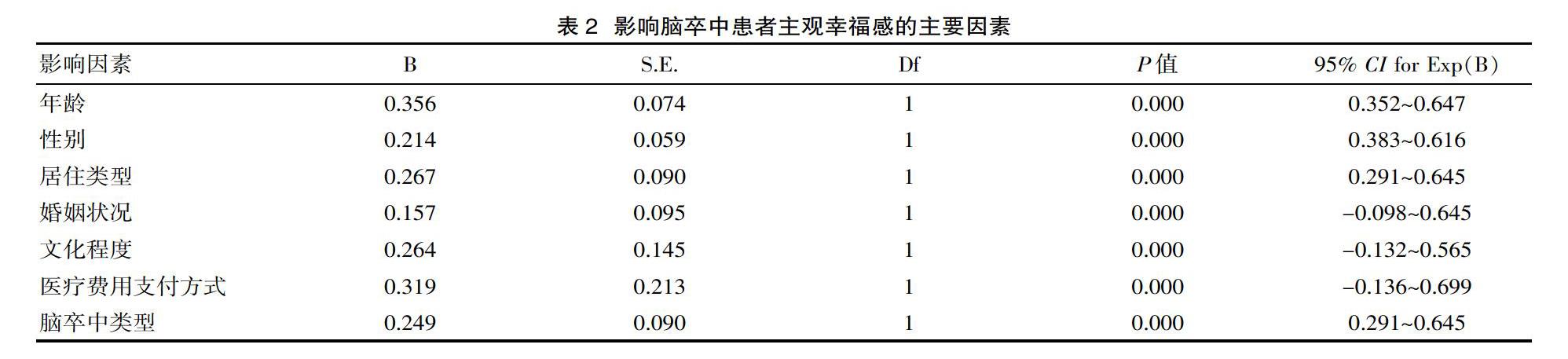
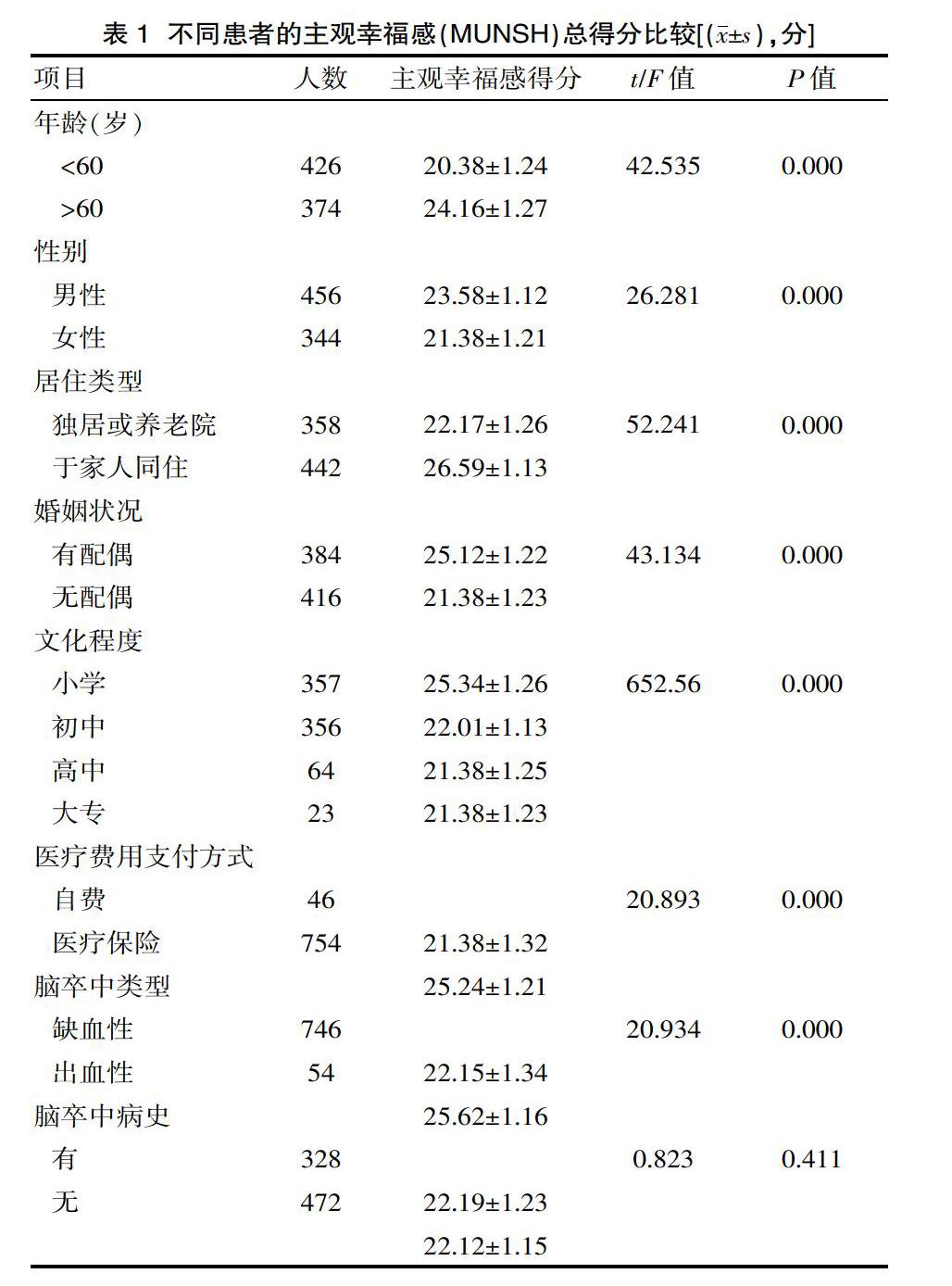
[摘要] 目的 探讨北京市丰台区脑卒中患者主观幸福感现况及影响因素分析。方法 运用随机抽样法选取北京市丰台区34个社区中的脑卒中患者,在社区卫生人员的协助下,对患者实施问卷调查,利用纽芬兰大学幸福度量表,了解此类患者主观幸福感现况及影响因素。结果 脑卒中患者的主观幸福感得分在年龄、性别、患者是否独居、有无配偶、文化程度、医疗费用支付方式、脑卒中类型等方面差异有统计学意义(P<0.05);其中年龄大于60岁、男性、与家人同住、有配偶、文化程度低、医保及出血性卒中患者,主观幸福感得分较高(P<0.05)。经Logistic回归分析得出,年龄、性别、患者是否独居、有无配偶、文化程度、医疗费用支付方式以及脑卒中类型是影响脑卒中患者主观幸福感的主要因素(P<0.05)。结论 社区医务人员应根据脑卒中患者情况实施相应措施,了解患者是否存在不良心理情绪,实施相应的指导措施,才能够有效避免不良情况的出现,提升患者主观幸福感。
[关键词] 社区;脑卒中;主观幸福感;影响因素
[中图分类号] R19 [文献标识码] A [文章编号] 1672-5654(2020)06(c)-0187-03
Analysis of the Status and Influencing Factors of Subjective Well-being of Stroke Patients in Fengtai District of Beijing
XUE Jiao
Department of General Practice, Fengtai Community Health Service Center, Fengtai District, Beijing, 100141 China
[Abstract] Objective To investigate the status and influencing factors of subjective well-being of stroke patients in Fengtai District, Beijing. Methods Random sampling method was used to select stroke patients in 34 communities in Fengtai District, Beijing. With the assistance of community health personnel, a questionnaire survey was conducted on the patients. The Newfoundland University Happiness Scale was used to understand the subjective well-being of such patients. Status and influencing factors. Results The subjective well-being scores of stroke patients have significant differences in age, gender, whether the patient lives alone, with or without spouse, education level, medical expenses payment method, stroke type, etc., with statistical significance difference(P<0.05); Patients older than 60 years of age, male, living with family members, having spouses, low education, medical insurance and hemorhagic stroke had higher subjective well-being scores(P<0.05). Logistic regression analysis showed that age, gender, whether the patient lives alone, with or without spouse, education level, medical expenses payment method and stroke type were the main factors that affect the subjective well-being of stroke patients(P<0.05). Conclusion Community medical staff should implement corresponding measures according to the situation of stroke patients, understand whether the patients have bad psychological emotions, and implement corresponding guiding measures, in order to effectively avoid the occurrence of adverse situations and enhance the patient's subjective well-being.
[Key words] Community; Stroke; Subjective well-being; Influencing factors
腦卒中是临床常见疾病,分为缺血性卒中和出血性卒中两大类,临床约80%为缺血性卒中,通常是因各种诱发因素造成的急性脑血液循环障碍和由此而引起的永久性或一过性脑功能异常,临床表现常以口眼歪斜、半身不遂、言语障碍,甚至昏迷为主要特征。现阶段我国脑卒中患者的病死率呈现逐渐下降的趋势,但致残率仍然高居不下,绝大多数脑卒中患者在疾病逐渐稳定时进入社区,但患者机体功能的康复仍是提升生活质量的核心,能够帮助减轻患者不适[1-2]。主观幸福感(SWB)泛指人民对自身生活质量作出的评价,可有效反映出人们长期的情绪状态以及生活满意度,其内容归纳于心理学。有研究结果表明对脑卒中患者进行心理建设,能够帮助其情绪恢复稳定,可促进家庭和睦,可有效避免不良情况的出现[3]。鉴于此,该文对北京市丰台区脑卒中患者主观幸福感进行调查研究,分析其影响因素,为提升社区康复服务提供科学性的参考依据,主要内容报道如下。……