基于FasterR-CNN与BRNN的车牌识别
2020-09-02潘安琪门玉英
潘安琪 门玉英
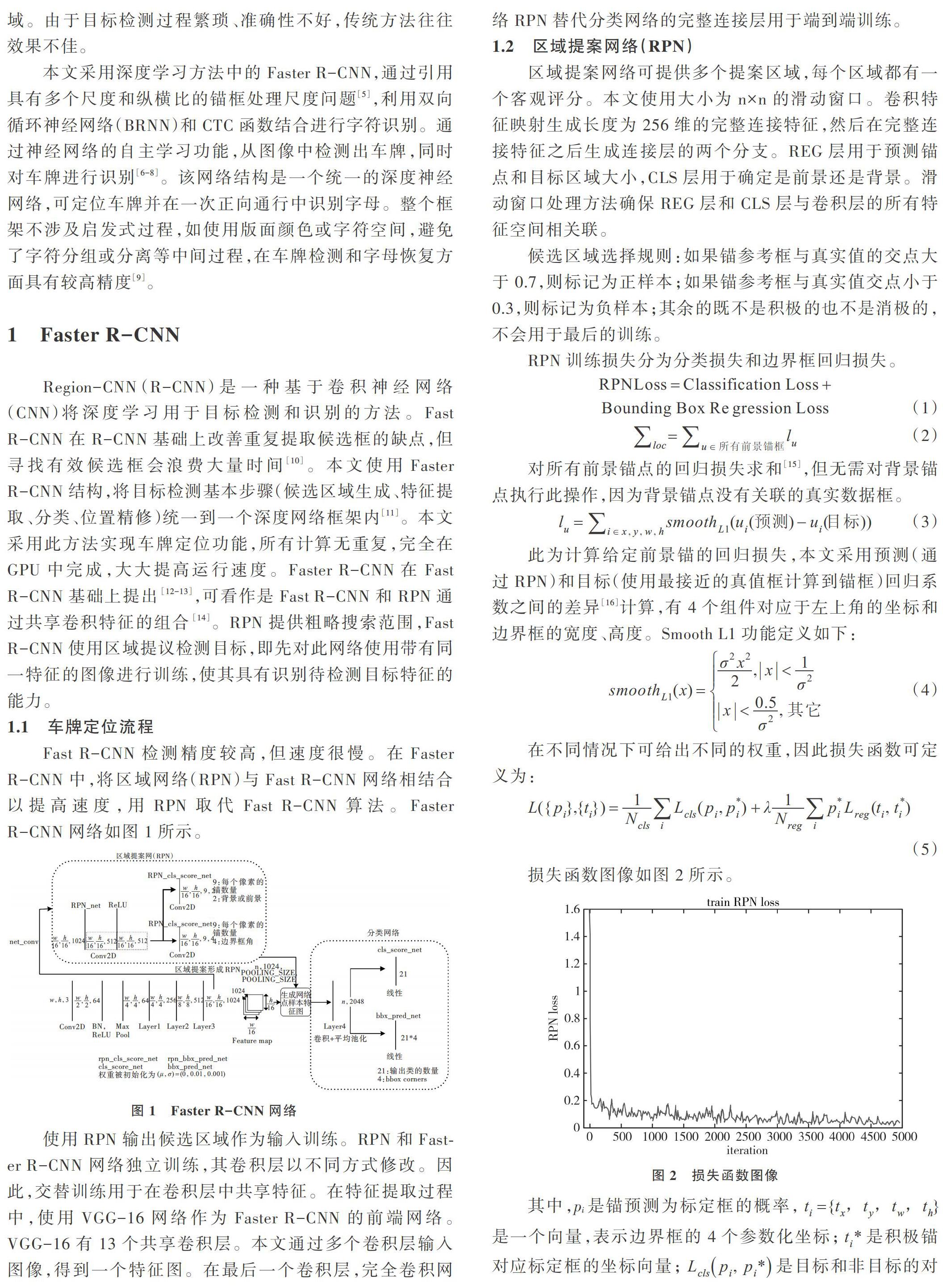
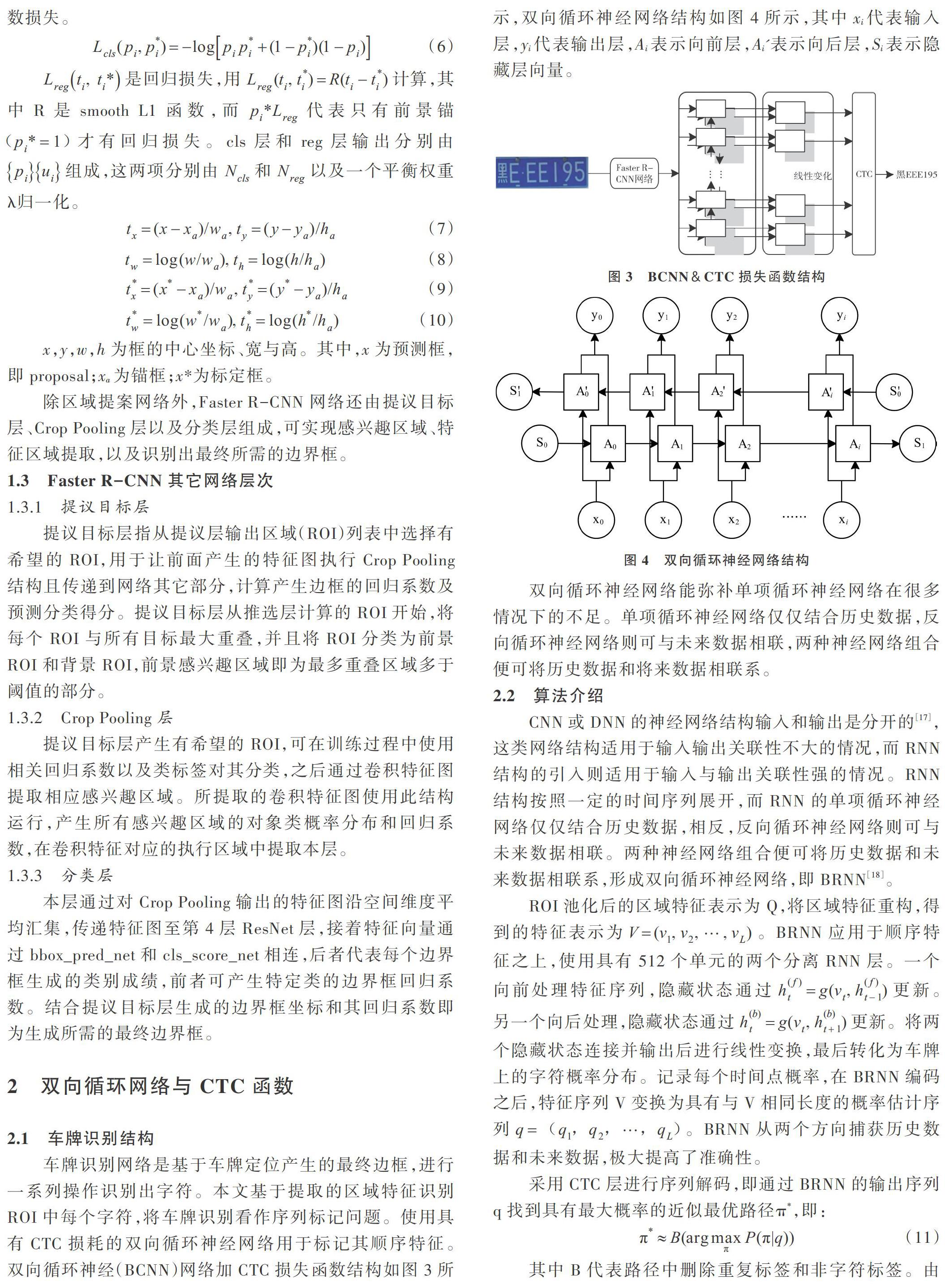
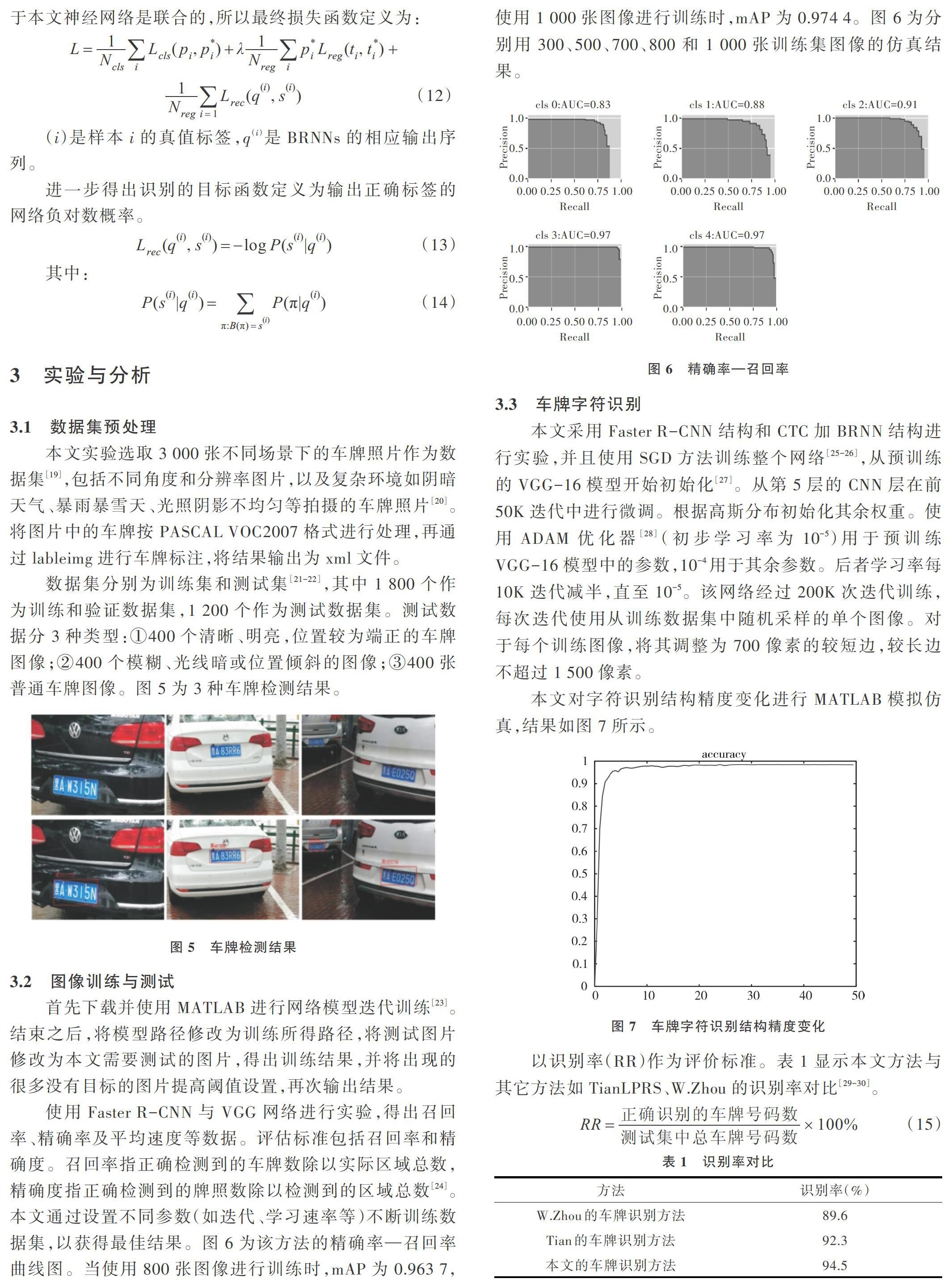
摘 要:针对传统车牌检测方法在复杂环境下识别准确率不高且过程繁复问题,提出一种基于Faster R-CNN和BRNN统一深度神经网络的车牌识别方法。首先,使用Faster R-CNN网络进行车牌定位:先通过RPN(区域提案网络)进行候选区域提取与输出,提供粗略搜索范围,再通过分类层结合提议目标层生成的边界框坐标和其回归系数,生成所需的最终边界框;然后,将车牌识别看作序列标记问题,使用具有CTC损耗的BRNN(双向循环神经网络)用于标记其顺序特征,实现车牌字符识别。试验结果表明,该技术识别准确率高达94.5%。
关键词:卷积神经网络;深度学习;车牌识别;图像识别;R-CNN
DOI:10. 11907/rjdk. 201323 开放科学(资源服务)标识码(OSID):
中图分类号:TP301文献标识码:A 文章编号:1672-7800(2020)008-0049-05
Abstract:Aiming at the problem of low recognition accuracy and complicated process in traditional license plate detection methods in complex environments, we propose a license plate recognition method based on Faster R-CNN and BRNN unified deep neural network. First, we use the Faster R-CNN network for license plate location. Candidate regions is extracted and output through RPN (regional proposal network) to provide a rough search range; then the classification layer is combined with the bounding box coordinates generated by the proposed target layer and its regression coefficient to generate the final bounding box required. Secondly, the license plate recognition is regarded as a sequence marking problem. A BRNN (Bidirectional Recurrent Neural Network) with CTC loss is used to label its sequential features to realize the character recognition of the license plates. According to the experimental results, the recognition accuracy rate is as high as 94.5%.
Key Words:convolutional neural network; deep learning; license plate recognition; image identification; R-CNN
0 引言
随着人们生活水平的提高,我国汽车需求量快速增长。机动车无疑便利了人们生活,但随之而来的是愈来愈严重的交通问题。车牌检测和识别对智能运输系统非常重要,从安全性到交通控制有众多应用。然而,很多算法只有在受控条件下或使用复杂的图像捕获系统才能很好地工作[1],在不受控制的环境中准确读取牌照仍存在很多问题[2]。
以前车牌检测和识别工作通常将定位和识别视为两个独立任务,分别采用不同方法,步骤通常为图片预处理、字符分割、文本识别。
基于颜色特征的边缘检测方法[3],通过分析局部区域内指定颜色的分布特征,将车牌颜色和纹理特征同时提取。该算法具有速度快、准确性高和适应性强的优点。……
