晋江市森林资源动态变化分析
2020-04-13王碧英
王碧英
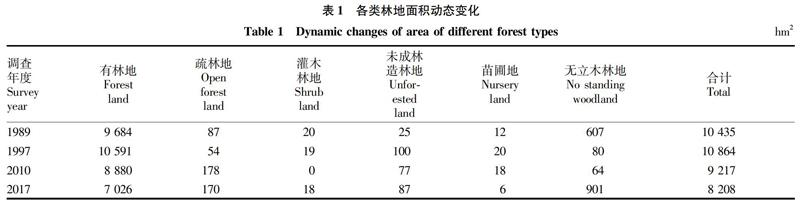
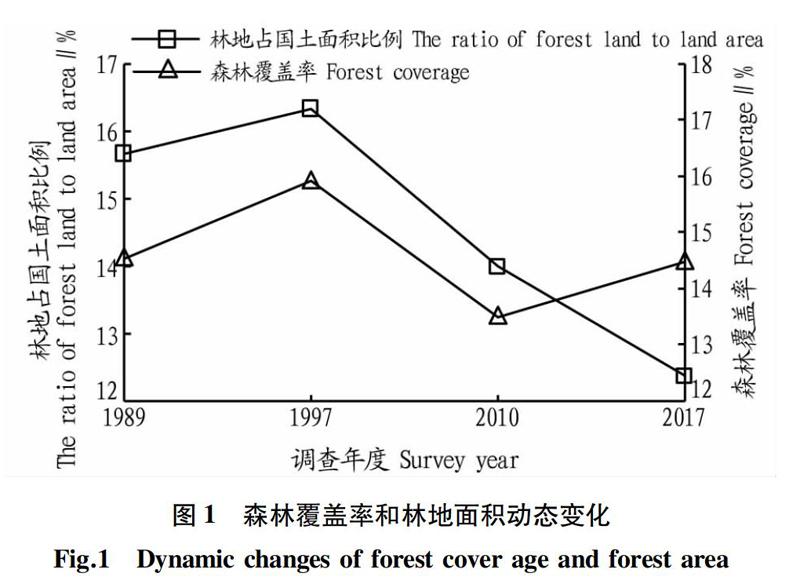
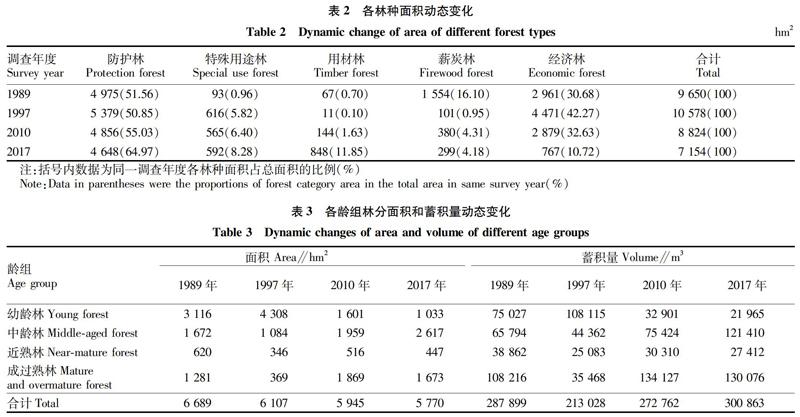
摘要 森林资源是晋江生态建设重要组成部分。根据森林资源清查结果,对晋江市1989—2017年的森林资源面积、林木蓄积、组成结构等动态变化进行分析。结果表明,在28年间,林地面积呈先升后降趋势,共减少2 227 hm2,森林覆盖率呈升—降—升变化,后期加大非林地造林力度,有效提高了森林覆盖率,林种结构趋于合理,突出生态效益和社会效益,各时期防护林占各林种总面积51.56%~64.97%,薪炭林和经济林面积下降明显,共减少面积3 449 hm2,特殊用途林和用材林面积增加1 280 hm2,2017年的林分面积比1989年减少919 hm2,但是林木总蓄积量净增12 964 m3,森林资源林分质量不断提高,但是林分单位面积蓄积量仍然偏低,林分林龄结构趋于合理,截至2017年,中龄林的面积和蓄积量所占比重较大,分别达45.36%和40.35%。通过分析,提出今后晋江市森林资源可持续发展的对策和建议。
关键词 森林资源,动态变化,对策和建议,晋江市
中图分类号 S757.2文献标识码 A
文章编号 0517-6611(2020)06-0093-04
Abstract Forest resources is an important component of ecological construction in Jinjiang City.Based on the forest resource inventory data, dynamic changes of forest resources area, forest volume and composition of Jinjiang City in 1989-2017 were analyzed.The findings showed that during the 28 years, the forest land area increased first and then decreased, with a total decrease for 2 227 hm2.The change of forest coverage was ascending-descending-ascending, because the forest coverage was increased by increasing the afforestation of nonforest land in the later period.The structure of forest category tended to be reasonable, with shelter forests accounting for 51.56% to 64.97%, and highlighting ecological and social benefits.The area of fuel forest and economic forest decreased by 3 449 hm2, while the area of special purpose forest and timber forest increased by 1 280 hm2.The area of forest in 2017 was 919 hm2 less than in 1989.However, the net increase of stock volume was 12 964 m3, which indicated that the forest stock volume per unit area of forest was still on the low side.By 2017, the age structure of forest stands tended to be reasonable, and the area and stock volume of middleaged forest accounted for 45.36%, 40.35%, respectively.Through the analysis, the countermeasures and suggestions for the sustainable development of forest resources in Jinjiang City were presented.
Key words Forest resources,Dynamic change,Countermeasure and suggestion,Jinjiang City
黨的十九大指出,当前我国社会主要矛盾已经转化为人民日益增长的美好生活需要和不平衡不充分的发展之间的矛盾[1],“生态兴则文明兴,生态衰则文明衰”,这就要求林业部门既要创造更多林产品和精神产品以满足人民日益增长的美好生活需要,也要提供更多优质生态产品以满足人民日益增长的优美生态环境需要[2]。森林作为陆地生态系统的主体,在生态文明建设中扮演重要角色。森林资源动态不仅与人类经济活动息息相关,而且影响到社会经济发展,同时也是森林可持续经营的研究热点。……