中重度智力落后儿童性别恒常性与同伴群体关系研究
2019-09-10卢宇刘晓明束丽菲韩硕朱天然胡萍
卢宇 刘晓明 束丽菲 韩硕 朱天然 胡萍

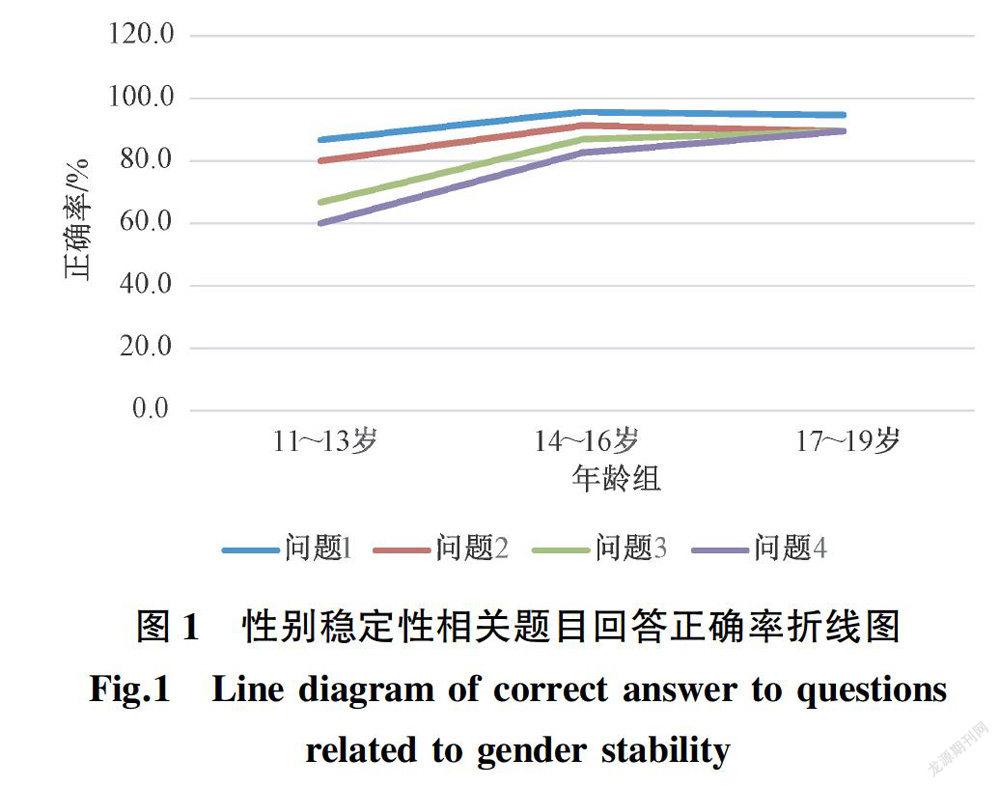
[摘要]采用自编问卷了解儿童性别恒常性即性别同一性、性别稳定性、性别一致性水平的发展情况;对任课教师进行问卷调查,获得儿童同伴群体关系的类型即孤立、单一性别群体、与另一性别群体互动;并通过访谈法和观察法进一步了解学生发展情况,旨在探讨中重度智力落后儿童性别恒常性与同伴群体类型在年龄、性别上的关系。结果表明:中重度智力落后儿童在19岁仍未完全获得性别恒常性,女生的性别恒常性发展情况好于男生;随着年龄的增长,中重度智力落后儿童性别恒常性发展水平较好;随着性别恒常性的稳定发展,11~19岁的中重度智力落后儿童的同伴群体关系逐步倾向于单一性别群体、与另一性别群体互动。
[关键词]中重度智力落后儿童;性别恒常性;同伴群体关系
[中图分类号]G 764[文献标志码]A[文章编号]1005-0310(2019)02-0087-06
Abstract: A self-designed questionnaire was used to understand the development of children’s gender constancy, that is, gender identity, gender stability, and gender consistency, and a questionnaire survey was conducted among teachers. The types of peer group relationships of children are isolated, single sex groups, interacting with another gender group. The purpose of this study was to investigate the relationship between gender constancy and peer group in children with moderate and severe mental retardation. The types of peer relationships of children were determined by questionnaire survey. The results are as follows: Children with moderate and severe mental retardation at the age of 19, the development of gender constancy of girls is better than that of boys;With the increase of age, the development level of gender constancy becomes better. With the steady development of gender constancy, children aged 11~19 years with moderate and severe mental retardation tend to interact with single sex group and with another sex group.
Keywords: Children with moderate and severe mental retardation; Gender constancy; Peer group relationship
0引言
以科爾伯格为代表的认知发展理论认为儿童的性别心理发展服从于一般的心理发展规律,并提出了“性别恒常性”的概念[1],本研究引用Slaby等[2]的分类方法,将儿童性别恒常性分为3个阶段:性别同一性阶段,即儿童识别自己和他人性别的能力[3];性别稳定性阶段,即儿童认识到自己的性别是稳定不变的,不会伴随时间、年龄的改变而改变[4];性别一致性阶段,即儿童认识到他们的性别不随外界条件(发型、衣着等)的变化而变化[5-6]。
相关研究表明,在青少年期,男女混合的社会群体的……