血清肾胺酶测定在慢性肾病患者中的意义
2017-10-10解冰周逊江利萍王军夏商
解冰+周逊+江利萍+王军+夏商
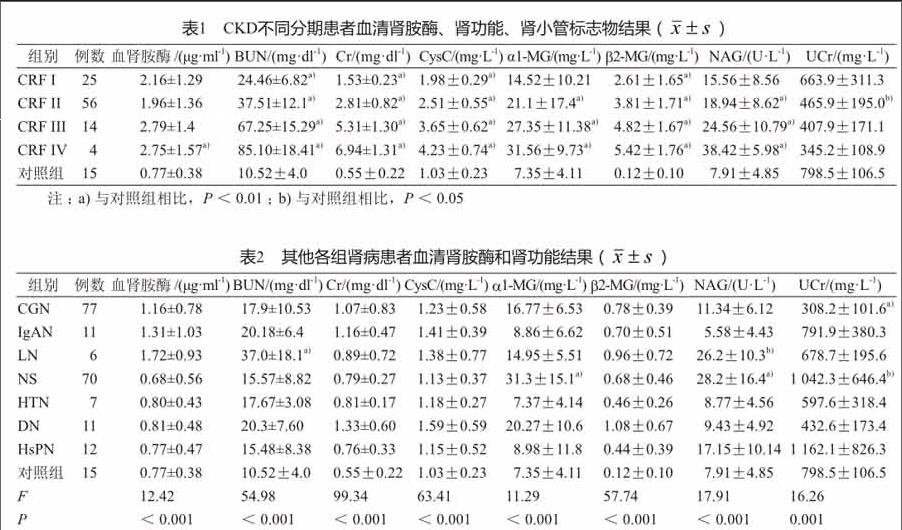
摘 要 目的:测定血清肾胺酶在慢性肾病患者中的结果,以期了解其在肾间质纤维化过程的作用。方法:选择不同疾病的肾脏病患者作为研究对象,采用ELISA法测定血清肾胺酶浓度,同时测定血生化指标(BUN、Cr、CysC)和尿液肾小管标志物(a1-MG、b2-MG、NAG及UCr)。结果:只有肾胺酶与BUN呈线性正相关性,其余指标的相关分析均显示无相关性。对其余病例组各指标之间进行相关分析,显示不同指标之间均无相关性。结论:血肾氨酶和BUN水平的上升是肾脏功能下降的危险因素,临床对肾脏疾病患者进行血肾氨酶和血尿素氮的检测,有益于进行肾脏疾病及分期的判断。
关键词 肾胺酶 肾功能 肾小管标志物
中图分类号:R692 文献标识码:A 文章编号:1006-1533(2017)17-0027-02
Significance of the determination of serum reninase in patients with chronic kidney disease
XIE Bing1, ZHOU Xun1, JIANG Liping2, WANG Jun1, XIA Shang1
(1. Traditional Chinese Medicine Hospital of Dantu District, Zhenjiang City, Zhenjiang 212028, China; 2. Yicheng Community Health Service Center of Dantu District, Zhenjiang City, Zhenjiang 212028, China)
ABSTRACT Objective: To understand the role of reninase in the process of renal interstitial fibrosis by determining its concentrations in patients with chronic renal disease. Methods: Patients with different renal diseases were selected as a subject and their serum levels of reninase were determined by ELISA. Blood biochemical indexes (BUN, Cr, CysC) and urinary tubular markers (a1-MG, b2-MG, NAG, UCr) were simultaneously measured. Results: Only the reninase level was linear positive correlation with BUN while the other indexes were not. The correlation analysis among the other cases showed that there was no correlation between them. Conclusion: The increase of serum reninase and BUN levels is a risk factor for the decline of renal function. Clinical determination of their levels in patients with renal diseases is of benefit to the diagnosis of kidney diseases and their stages.
KEy WORDS reninase; renal function; renal tubularm marker
腎间质纤维化(renal interstitial fibrosis,RIF)几乎是所有肾脏疾病发展的最终结果,其形成涉及到细胞、细胞因子和细胞外基质(extracellular matrix, ECM)等多种因素、多个环节相互作用和相互调节的复杂过程,最终结局是大量ECM的过度积聚形成纤维化,最终导致肾衰竭进入终未期肾衰。近年来对肾间质纤维化研究关于ECM降解的内容较多,所以我们想通过检测不同病例肾脏患者血清肾胺酶浓度,与血清肾功能相关指标及尿液肾小管标志物进行分析,以期了解肾胺酶对肾脏病的发病及治疗中的意义。
1 资料与方法
1.1 一般资料
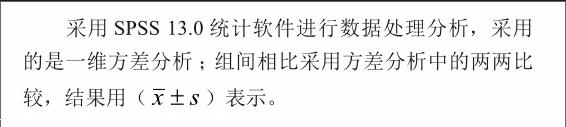
选择我院近3年住院患者293例,其中男143例,女150例,平均年龄(46.9±15.5)岁。其中慢性肾衰竭(chronic renal failure, CRF)Ⅰ期25例;CRFⅡ期56例;CRFⅢ期14例;CRFⅣ期4例;慢性肾小球肾炎(chronic glomerulonephritis, CGN)77例;IgA肾病(IgA nephritis, IgAN)11例;狼疮性肾炎(lupus nephritis, LN)6例;肾病综合征(nephrotic syndrome, NS)70例;……
