云南娃儿藤茎叶挥发性成分的GC—MS分析研究
2017-05-12林玉萍王津赵声兰虎春艳
林玉萍+王津+赵声兰+虎春艳
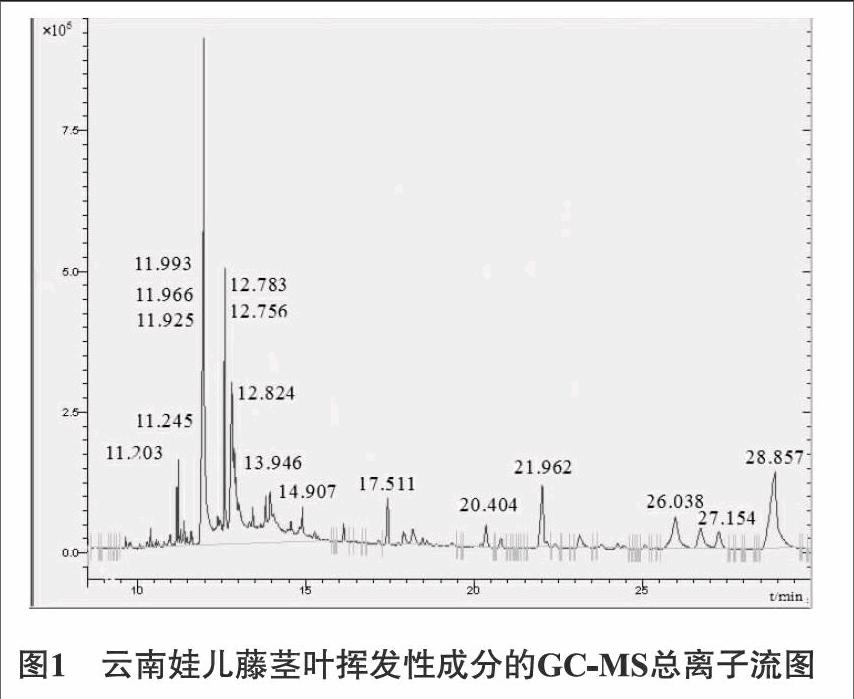
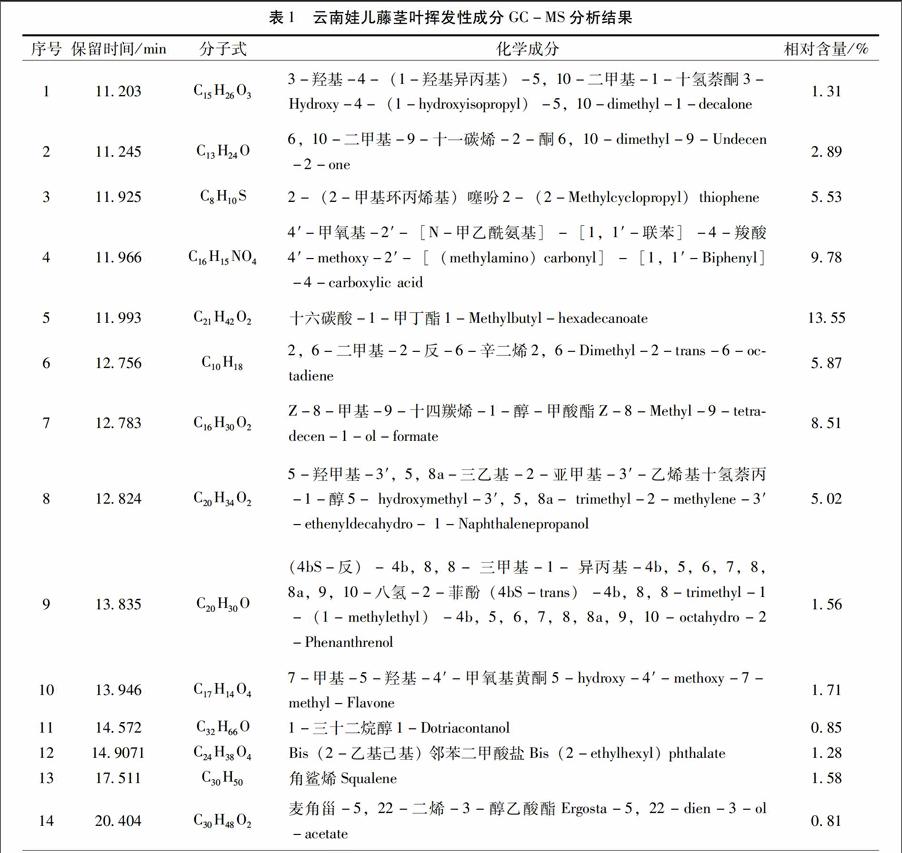
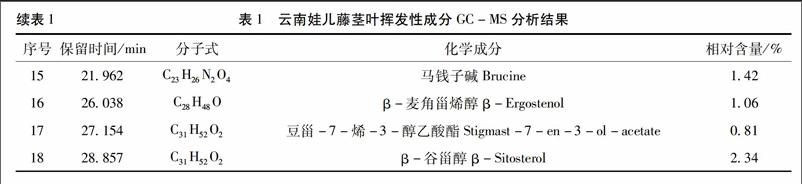
【摘要】利用气相色谱-质谱联用(GC-MS)技术对云南娃儿藤(Tylophora yunnanensis Schltr)茎叶中的挥发性成分进行分析。从云南娃儿藤茎叶中鉴定出18个化合物,其结构类型多样,并运用气相色谱峰面积百分比法确定各个化合物的相对百分含量。其结果为云南娃儿藤的化学成分和药理活性的研究提供理论依据。
【关键词】云南娃儿藤;挥发性成分;气相色谱-质谱法
【中图分类号】R2841【文献标志码】 A【文章编号】1007-8517(2017)08-0024-03
Abstract:To analyze the chemical constituents of volatile components from Tylophora yunnanensis Schltr. The air-dried stems and leaves of Tylophora yunnanensis Schltr were extracted with the petroleum ether and identified by GC-MS18 constituents were identified from the petroleum ether extraction of Tylophora yunnanensis Schltr,and the relative contents of the components were determined with area percentage method. The research provides a theoretical basis for the study of chemical constituents and pharmaceutical activities of Tylophora yunnanensis Schltr.
Keywords:Tylophora yunnanensis Schltr; Volatile components; GC-MS
云南娃儿藤(Tylophora yunnanensis Schltr)为萝藦科娃儿藤属植物,其根在彝药中称为小白薇,常用来治疗尿路感染、肾炎、痢疾、气虚无力等[1]。其主要生长于海拔2000m以下的山向阳旷野及草地,主产于云南、贵州和四川,云南分布较为广泛,在大理、楚雄、昆明等均有分布[2]。娃儿藤属植物在前期研究中具有抗肿瘤、抗炎活性[3-4]。在前期的活性研究中发现[5],云南娃儿藤乙醇提取物和不同萃取部位对炎症晚期肉芽组织增生有显著的抑制作用[5]。为进一步明确抗炎活性成分,促进资源的综合利用,研究利用气相色谱-质谱技术对其茎叶中的挥发性成分进行分析鉴定,以期为进一步全面认识云南娃儿藤的化学成分和生物活性研究提供理论依据。
1仪器与材料
11材料与试剂云南娃儿藤茎叶于采自云南楚雄,经云南中医学院药用植物教研室普春霞副教授鉴定为萝摩科Asclepiadaceae娃兒藤属Tylophora云南娃儿藤Tylophora yunnanensis Schltr,本论文研究材料为云南娃儿藤的茎叶;石油醚(分析纯,天津市风帆化学试剂科技有限公司),甲醇(色谱级,德国默克公司)。……