微博搜索、网页搜索对用户信息需求满足能力的对比分析
2016-11-18刘明珠杨建林
刘明珠 杨建林
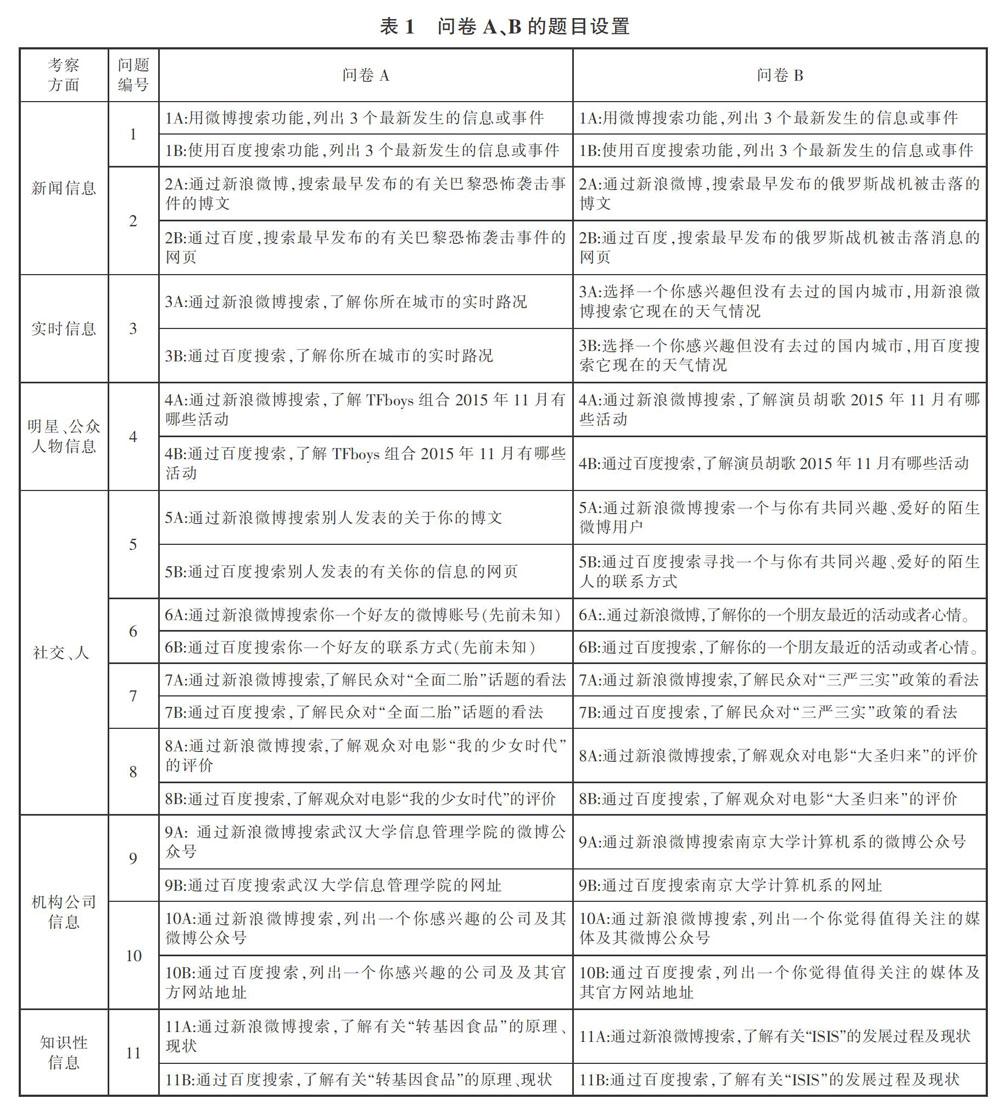
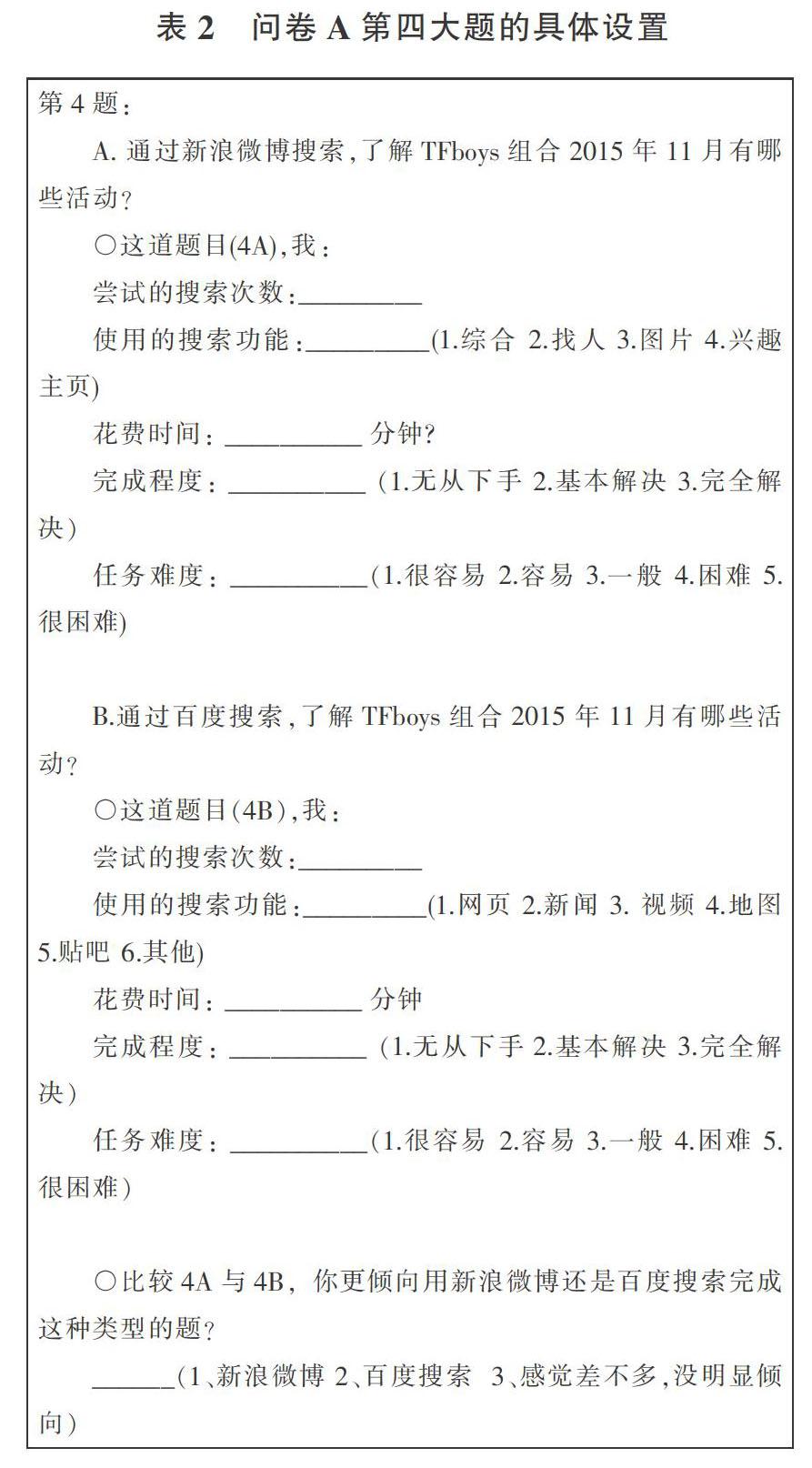

摘 要:文章通过对已有研究成果的分析总结,结合专家建议,将用户进行微博搜索时的信息需求归纳为七类:新闻信息、实时信息、明星公众人物信息、社交人际关系信息、公众舆论信息、机构公司信息、知识性信息,并基于这七类信息需求设计调查问卷,考察了微博搜索对用户信息需求的满足能力,同时与网页搜索进行对比研究,分析了两种搜索方式在满足用户不同信息需求方面的能力差异,以及产生差异的原因。
关键词:微博搜索;网页搜索;信息需求;问卷调查
中图分类号: G254.97 文献标识码: A DOI:10.11968/tsyqb.1003-6938.2016104
Abstract Based on the study of existing research results and expert suggestions, the information needs of users when searching in micro-blog are divided into 7 categories: news information, real time information, celebrity information, people information, public opinion, organization information and informative information. According to these categories, a questionnaire is designed to examine the ability of micro-blog search and web search in meeting users' information need. A comparative study is conducted to show the differences of two search engines' ability and the reasons behind the differences.
Key words micro-blog search;web search;information need;questionnaire survey
1 引言
随着互联网技术的发展,互联网应用模式已经由传统的“人-机”交互模式变为“社会化”交互模式[1]。在用户生成海量内容的Web2.0时代,如何对信息资源进行再组织,使得用户快速高效地搜索到所需信息或知识,已经成为业界学界广泛关注的话题和研究领域。
传统的网页搜索引擎利用爬虫软件采集资源,而爬虫软件抓取信息的滞后性会影响搜索结果的质量,此外,许多用户不再满足于旧式的“人-机”搜索体验,他们更期望利用在线社会网络(Online Social Networks,OSN)进行沟通协作来获得质量更高的智能化搜索结果[2]。于是,“社会化搜索”的理念应运而生。
Teevan J等[3]认为传统搜索引擎建立了信息与信息之间的关系,在线社会网络建立了人与人之间的关系,而社会化搜索则将信息与人关联起来,重建了一种人与信息之间的映射。当前,实现社会化搜索的平台与工具可以分为四类:一是专业的社会化搜索引擎,如谷歌的Social Searcher;……
