康德命题分类思想的混淆与澄清
2016-11-07尹维坤
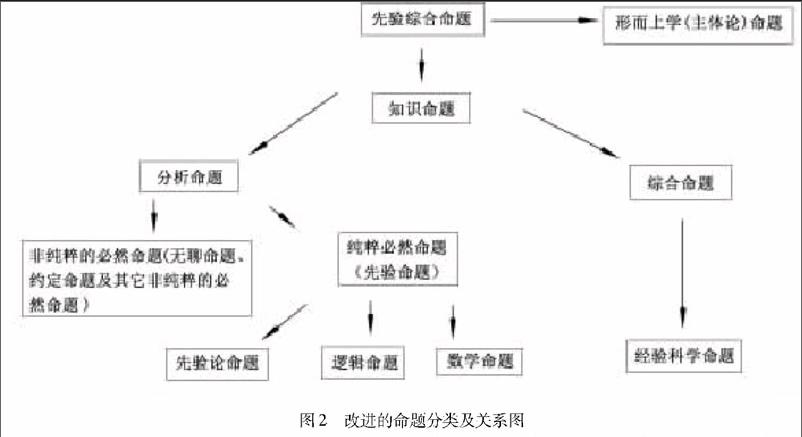
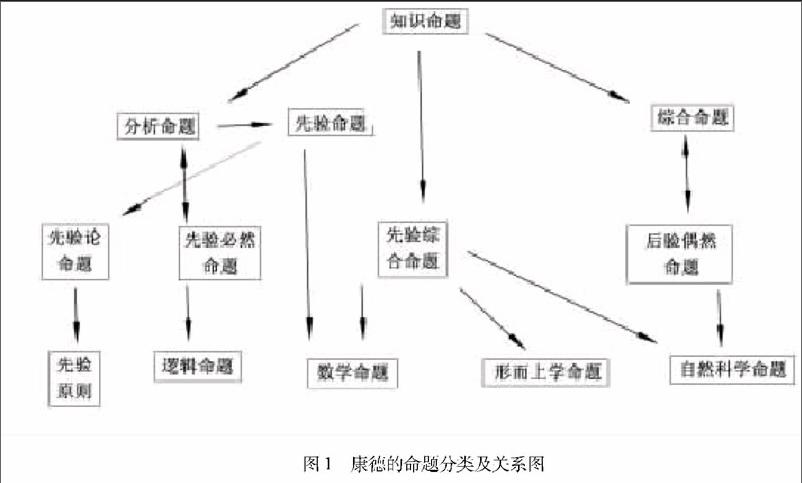
摘 要:自康德起,关于命题分类问题的争论至今不息,而且各种类型命题之间的关系仍然混乱。这种混乱的潜在原因是人们混淆了“先验”概念的两种含义。康德对此负有责任。康德将先验综合命题与分析命题、综合命题并列为三种平行的命题是引起混乱的起点。事实上,先验综合命题应该被理解为从命题形成的活动界定的命题种类,不应该与分析命题和综合命题并列。从命题形成的活动方面看,所有命题都是先验综合命题。从这些命题的成真条件来划分,可分为分析命题、综合命题和形而上学命题。康德对命题三分的思想还导致他命题分类思想的其它混淆。对康德的命题分类思想进行修改将使得命题分类更合理。
关键词:康德;先验综合命题;分析命题;综合命题
中图分类号:B141
文献标识码:A 文章编号:1672-1101(2016)03-0012-07
Abstract: From Kant onwards, disputes about the classification of propositions have been going on, and relationships between various propositions are still in confusion. An underlying reason for these confusions is that people confuse the two meanings of “transcendental”, for which Kant was partly responsible. Confusions began when Kant put priori synthetic proposition, analytic proposition and synthetic proposition together as three paralleled propositions. In fact, a priori synthetic proposition should be understood as a kind of proposition that is defined from the light of the action that leads to the formation of a proposition, and should not be understood as a kind of proposition parallel with analytic proposition and synthetic proposition. In the light of the action that leads to a proposition, all propositions are a priori synthetic proposition. From the angle of validation, these propositions can be divided into analytic proposition, synthetic proposition and metaphysical proposition. Kants triad also led to other confusions of proposition classification. To modify Kants thought of proposition classification will make proposition classification more reasonable.
Key words:Kant; a priori synthetic proposition; analytic proposition; synthetic proposition
关于知识及其表述形式(命题或判断)①
的分类的思想源远流长,在哲学的知识论转向之后,笛卡尔、莱布尼茨、洛克和休谟等人对此都有论述,但引起广泛争论的起点应该从康德对判断的分类算起。康德首先明确地区分了分析判断与综合判断,并由此引申出一种不同于二者的先验综合判断。逻辑经验主义者对康德区分分析判断与综合判断的方法做了改进,从判断的真值评判方法上将一切知识命题区分为分析命题和综合命题,取消了康德的先验综合判断[1]。蒯因更为激进,认为分析命题和综合命题的区分只不过是逻辑经验主义的教条,其间的界线根本划不出来[2]。……
